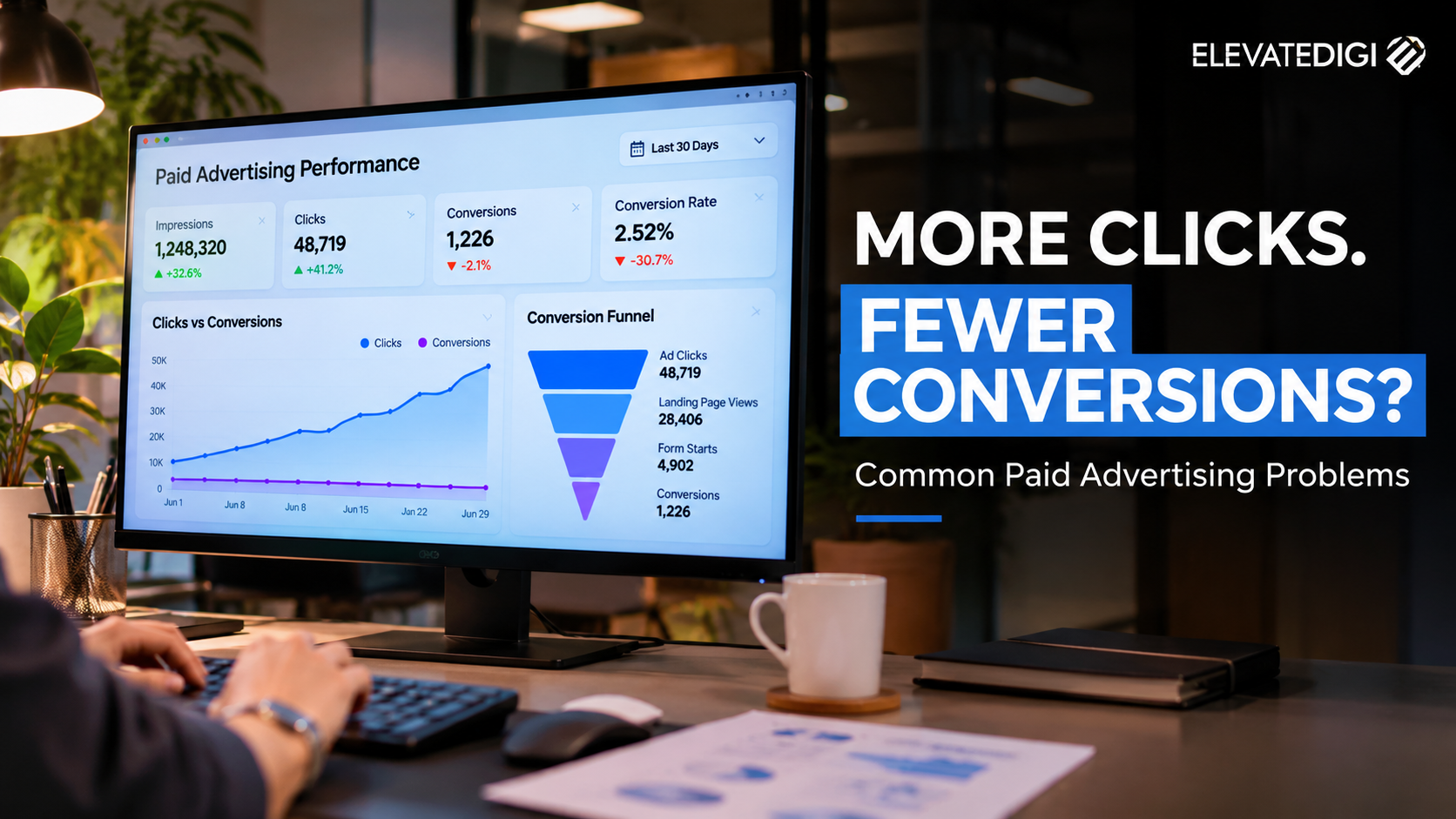
Paid advertising can bring more visitors to your website, improve brand visibility and increase engagement. But what happens when the clicks keep rising and the enquiries, purchases or sign-ups remain the same?
This is a common challenge for businesses investing in digital advertising. A campaign may attract hundreds of visitors without generating meaningful business results. While a high click-through rate can indicate that an advertisement is attracting attention, it does not necessarily mean that people are ready to buy.
The problem could lie in audience targeting, ad messaging, landing page experience, conversion tracking or the overall marketing funnel. Understanding where potential customers lose interest is essential to improving campaign profitability.
For businesses looking to get more value from their advertising budgets, working with a Performance Marketing Agency in Kolkata can help identify these gaps and develop a more effective strategy.
What Does It Mean When Clicks Increase but Conversions Do Not?
Clicks represent the number of times people interact with an advertisement, whereas conversions represent the valuable actions they complete after interacting with it. These actions may include purchasing a product, submitting an enquiry form, booking an appointment or calling a business.
For example, imagine an e-commerce business receives 2,000 clicks from a paid advertising campaign but generates only 10 purchases. If the campaign previously generated 15 purchases from 1,500 clicks, traffic has increased while the conversion rate has declined.
This does not automatically mean the campaign has failed. The quality of the traffic, the average order value, profit margins and the cost of acquiring each customer must also be considered. However, it is a clear reason to investigate what has changed.
Common Paid Advertising Problems That Prevent Conversions
1. Your Ads Are Reaching the Wrong Audience
One of the most common reasons behind poor conversion performance is attracting people who are interested in the advertisement but have little intention of purchasing.
Broad targeting, irrelevant search terms or poorly defined audience segments can bring visitors who are unlikely to become customers. For example, a premium furniture brand may attract users searching for inexpensive, ready-made furniture even though its products are designed for a completely different market.
The result is more clicks without a corresponding increase in enquiries or sales.
To address this issue, businesses should review search terms, audience segments, geographical targeting and campaign objectives. Excluding irrelevant searches and refining audience signals can help direct advertising budgets towards more relevant prospects.
2. Your Ad Copy Creates the Wrong Expectations
An advertisement may attract attention by promising an attractive discount, a free consultation or an unusually low price. However, if the landing page does not deliver what the advertisement suggests, potential customers may leave without taking action.
For example, an ad promoting a specific product discount may direct users to a general category page where the offer is difficult to find. Similarly, an advertisement promising a free consultation may lead to a form that does not clearly explain the next steps.
Google recommends maintaining a close connection between ad messaging, keywords, calls to action and landing page content. This helps visitors find what they expected after clicking.
Businesses should therefore review their advertisements as part of the complete customer journey rather than judging performance by clicks alone.
3. Your Landing Page Is Not Converting Visitors
Even a well-targeted campaign can struggle when the landing page fails to provide a smooth experience.
Visitors may leave if a page loads slowly, contains too much information, hides important details or makes the next step difficult to understand. A complicated enquiry form or an unclear checkout process can also discourage potential customers.
A landing page should communicate the main benefit quickly and make the intended action obvious. Product advertisements should lead to relevant product pages, while lead-generation campaigns should direct visitors to focused pages with clear enquiry options.
For businesses investing in paid advertising, improving the landing page can be just as important as improving the advertisement itself.
4. Your Website Experience Is Poor on Mobile Devices
Many customers discover businesses through mobile search results and social media advertisements. If the website is difficult to navigate on a smaller screen, the opportunity to convert that traffic may be lost.
Small buttons, difficult-to-read text, intrusive pop-ups and lengthy forms can make the experience frustrating. An online store may also lose potential customers if its checkout process requires too many steps.
Testing landing pages on different mobile devices, simplifying forms and making contact options easy to find can help remove unnecessary friction.
A mobile-friendly website should not simply look attractive. It should make it easy for visitors to understand the offer and complete the desired action.
5. Your Conversion Tracking Is Not Working Properly
Sometimes, conversions are happening, but advertising platforms are not recording them correctly. This can make a campaign appear less effective than it actually is.
Incorrectly configured tracking tags, duplicate conversion events, missing purchase events or problems with URL parameters can affect reporting. Google Ads and Google Analytics may also report different click and session numbers because they measure different activities and apply different reporting rules.
Businesses should verify that important actions, such as completed purchases, submitted forms and qualified calls, are being recorded correctly. They should also check whether the relevant conversion actions are configured properly in their advertising accounts.
Google provides a conversion tracking troubleshooting process to help advertisers identify tag and configuration issues. Accurate measurement is essential before making major decisions about campaign budgets or targeting.
6. Your Offer Is Not Competitive Enough
Sometimes the advertising campaign is working as intended, but the offer does not provide enough reason for customers to take the next step.
Potential buyers may compare prices, delivery options, product quality, service features and customer reviews before making a decision. If competing businesses communicate greater value or provide clearer information, visitors may leave without converting.
The solution is not always to offer a bigger discount. Businesses can improve their proposition by communicating product benefits more clearly, explaining what makes their service different and addressing common customer concerns.
For service-based businesses, displaying relevant testimonials, explaining the process and providing transparent information about deliverables can help build confidence.
7. Your Campaign Is Optimised for Clicks Instead of Business Results
A campaign designed primarily to generate website traffic may attract visitors without necessarily finding people who are likely to become customers.
This is why campaign objectives and optimisation settings deserve careful attention. Businesses should determine whether they need brand awareness, website visits, qualified leads, purchases or another measurable outcome before launching a campaign.
When the objective is lead generation, for example, the campaign should be evaluated against meaningful lead actions rather than traffic volume alone. Where sufficient reliable conversion data is available, conversion-based bidding may help platforms optimise towards the intended outcome.
A performance-focused approach connects advertising decisions with the business result the campaign is expected to deliver.
How Can Businesses Turn More Ad Clicks into Conversions?
Improving conversions starts with identifying where the customer journey is breaking down. Increasing the advertising budget before understanding the problem may simply generate more traffic without resolving the underlying issue.
Review the Complete Customer Journey
Start by examining what happens from the moment someone sees an advertisement to the point at which they complete a purchase or submit an enquiry. Look at audience relevance, ad engagement, landing page behaviour and the final conversion step.
If visitors leave immediately after reaching the website, the problem may involve page relevance or user experience. If they begin filling out a form but do not submit it, the form itself or the information requested may be creating friction.
Test Changes Instead of Guessing
Rather than changing several campaign elements simultaneously, test specific improvements. Businesses can compare different headlines, calls to action, landing page layouts and offers to understand which changes produce better results.
Allow tests enough time and traffic to generate meaningful evidence. Avoid treating small or short-term fluctuations as proof that a particular change has worked.
Measure Metrics That Reflect Business Growth
Click-through rate and website traffic are useful diagnostic indicators, but they should not be the only measures of success.
Conversion rate, cost per qualified lead, customer acquisition cost, return on ad spend and actual profitability provide a more complete picture. For businesses that depend on repeat purchases, customer lifetime value can also help determine whether the cost of acquiring customers is sustainable.
The right metrics depend on the business model, sales cycle and campaign objective.
How ElevateDigi Helps Businesses Improve Paid Advertising Performance
At ElevateDigi, performance marketing is about connecting advertising activity with measurable business objectives. More clicks may indicate stronger engagement, but the real question is whether that engagement contributes to enquiries, sales and sustainable growth.
A structured approach to performance marketing involves understanding the target audience, refining campaign messaging, reviewing landing pages and assessing conversion data. These elements work together to help businesses identify wasted spending and make more informed advertising decisions.
As a Performance Marketing Agency in Kolkata, ElevateDigi can help businesses approach paid advertising with a focus on campaign relevance, conversion opportunities and measurable outcomes. Whether a company is running Google Ads, Meta Ads or a combination of paid channels, the objective should be to understand what drives valuable customer actions rather than simply increasing traffic.
The right strategy will vary by industry, budget and audience. Consistent measurement and evidence-based optimisation are therefore more useful than relying on a fixed formula for every campaign.
Conclusion
Increasing clicks without increasing conversions is a signal that deserves attention, but it does not always mean that the advertising campaign itself is the problem. The underlying issue may be poor audience targeting, mismatched ad messaging, a difficult landing page experience, an uncompetitive offer or inaccurate tracking.
The most effective way to improve results is to examine the entire customer journey and use reliable data to identify where potential customers are dropping off.
When advertising strategy, website experience and conversion measurement work together, businesses can make better use of their budgets and build campaigns around meaningful outcomes. For companies seeking a more structured approach, partnering with a Performance Marketing Agency in Kolkata such as ElevateDigi can be a practical step towards improving campaign performance.
Frequently Asked Questions
1. Why are my paid advertising clicks increasing but conversions are not?
This can happen when advertisements attract visitors who are not ready to buy, the landing page does not match the ad, the offer is not compelling enough or the conversion process is difficult. Tracking errors may also make actual conversions appear lower than they are.
2. How can I improve the conversion rate of my paid advertising campaigns?
Start by reviewing audience targeting, ad relevance, landing page speed, mobile usability and the checkout or enquiry process. Test focused improvements and measure their impact on meaningful conversions rather than relying only on clicks.
3. Does a high click-through rate mean my advertising campaign is successful?
Not necessarily. A high click-through rate indicates that a relatively large proportion of people who see an advertisement are clicking it. Campaign success also depends on conversion rate, acquisition costs, lead quality, revenue and profitability.
4. How do I know if my conversion tracking is working correctly?
Test important conversion actions, such as form submissions and purchases, and verify that the relevant tags and conversion settings are configured correctly. Compare advertising reports with website analytics and actual business records while accounting for differences in attribution and reporting delays.
5. How can a Performance Marketing Agency in Kolkata help improve conversions?
A performance marketing agency can review campaign targeting, ad creatives, landing pages and conversion tracking to identify opportunities for improvement. It can then use campaign data and structured testing to help businesses improve lead quality, control acquisition costs and work towards measurable marketing objectives.
Leave a Reply