Category: ElevateDigi-Blogs

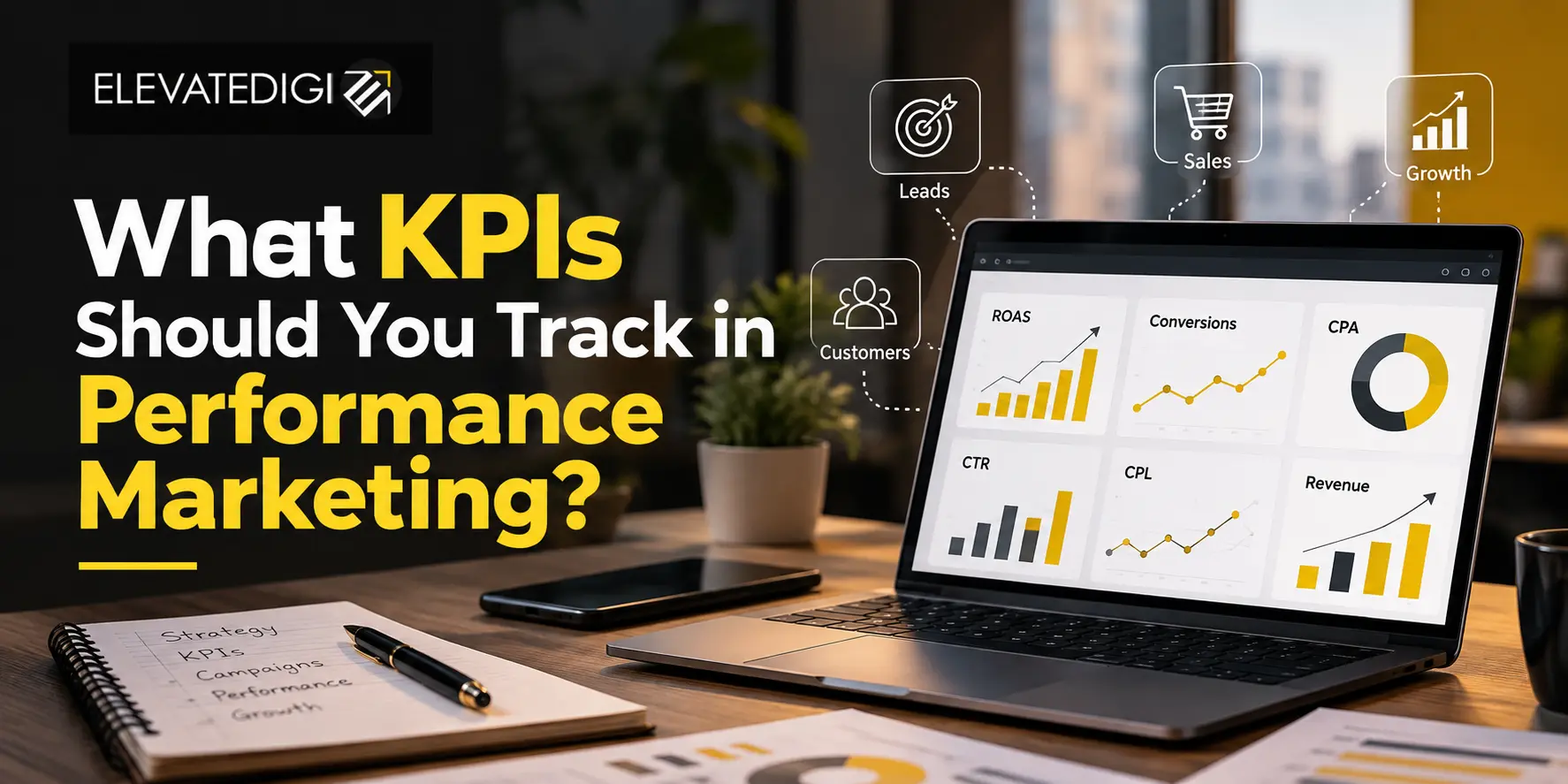
  • What KPIs Should You Track in Performance Marketing?

    What KPIs Should You Track in Performance Marketing?

    Performance marketing is often described as a numbers-driven approach to digital advertising. But simply collecting numbers does not mean you are measuring performance correctly. A campaign can generate thousands of clicks and still fail to bring meaningful business results. Similarly, a campaign with a relatively small number of conversions can be highly profitable if those conversions have strong customer value.

    This is why KPIs in performance marketing matter. They help businesses understand what is working, where money is being spent, and whether advertising activity is actually contributing to
    business growth.

    For businesses working with a Performance Marketing Agency in Kolkata, understanding these metrics can also make conversations around campaign performance much more meaningful. Instead of looking only at impressions or clicks, businesses can evaluate the metrics that directly connect advertising efforts with leads, sales and revenue.

    What Are KPIs in Performance Marketing?

    KPI stands for Key Performance Indicator. In performance marketing, KPIs are measurable values used to determine whether a campaign is achieving its intended objective.

    The right KPI depends heavily on the campaign goal. If the objective is brand awareness, impressions and reach may matter more. If the goal is lead generation, cost per lead and conversion rate become more important. For an e-commerce campaign, metrics such as ROAS, customer acquisition cost and revenue can provide a much clearer picture.

    The important thing is not to track every available metric. Instead, businesses should identify the numbers that tell them whether their advertising investment is producing the desired outcome.

    Why Are KPIs Important in Performance Marketing?

    Digital advertising generates a huge amount of data. Platforms such as Google Ads and Meta Ads can show everything from impressions and clicks to conversions and revenue.

    However, more data does not automatically mean better decision-making.

    KPIs help turn this data into useful business insights. They allow marketers to identify inefficient campaigns, understand customer behaviour and make informed decisions about budgets.

    For example, a campaign may have a high click-through rate but a poor conversion rate. This could indicate that the advertisement is attracting attention, but the landing page or offer is not convincing visitors to take the next step.

    A good performance marketing strategy therefore looks beyond surface-level numbers.

    What KPIs Should You Track in Performance Marketing?

    Return on Ad Spend (ROAS)

    ROAS is one of the most important metrics for campaigns focused on revenue generation.

    It measures how much revenue is generated for every rupee spent on advertising.

    For example, if a business spends ₹50,000 on advertising and generates ₹2,00,000 in attributed revenue, the ROAS is 4x.

    This metric helps businesses understand whether their advertising expenditure is generating sufficient revenue. However, ROAS should not always be viewed in isolation because revenue does not equal profit. Product margins, operational costs and other expenses also need to be considered.

    Cost Per Acquisition (CPA)

    Cost Per Acquisition measures how much it costs to acquire a customer or complete a desired conversion.

    If a campaign spends ₹1,00,000 and generates 200 customers, the CPA would be ₹500.

    CPA is particularly useful for businesses that have a clearly defined conversion action, such as a purchase, registration or subscription.

    Tracking CPA over time can also reveal whether campaigns are becoming more or less efficient as budgets increase.

    Cost Per Lead (CPL)

    For businesses focused on lead generation, Cost Per Lead is an important KPI.

    CPL tells you how much advertising expenditure is required to generate one lead.

    However, a low CPL does not necessarily mean that a campaign is successful. A campaign generating inexpensive but poor-quality leads can ultimately be less valuable than one producing fewer, more qualified leads at a higher cost.

    That is why CPL should ideally be evaluated alongside lead quality and eventual conversion into customers.

    Conversion Rate

    Conversion rate measures the percentage of users who complete a desired action after interacting with your campaign.

    Depending on the business, the conversion could be a purchase, enquiry, form submission, phone call, booking or sign-up.

    A simple example is a campaign that receives 1,000 landing page visits and generates 50 leads. The conversion rate would be 5%.

    Conversion rate can reveal issues that click-based metrics cannot. If advertisements receive plenty of clicks but very few conversions, marketers may need to investigate the landing page, messaging, offer, user experience or audience targeting.

    Click-Through Rate (CTR)

    Click-through rate measures how frequently people click an advertisement after seeing it.

    CTR is useful for understanding how effectively your advertisement captures attention and encourages users to take the next step.

    A strong CTR can indicate that the creative and messaging are relevant to the target audience. But it should not be treated as proof that a campaign is profitable.

    After all, getting people to click is only one part of the customer journey. Those clicks need to contribute to meaningful actions further down the funnel.

    Cost Per Click (CPC)

    CPC tells you how much you are paying, on average, for each click on an advertisement.

    It can help marketers understand advertising costs and compare campaign performance across different audiences, keywords, creatives and platforms.

    However, a lower CPC is not always better. A cheap click that never converts may be less valuable than a more expensive click from a user who becomes a customer.

    This is why CPC should be evaluated alongside conversion rate, CPA, CPL and revenue-related metrics.

    Customer Acquisition Cost (CAC)

    Customer Acquisition Cost goes beyond the cost of generating a lead or individual conversion. It looks at the overall cost involved in acquiring a new customer.

    For businesses investing significantly in marketing and sales, CAC can provide a more realistic understanding of customer acquisition efficiency.

    When tracked alongside customer lifetime value, CAC becomes even more useful because businesses can determine whether the cost of acquiring customers makes commercial sense over the long term.

    Customer Lifetime Value (CLV)

    Customer Lifetime Value estimates the total value a customer may generate throughout their relationship with a business.

    This metric is particularly relevant for subscription businesses, e-commerce brands, SaaS companies and businesses with repeat purchases.

    Suppose one customer initially purchases a product worth ₹2,000 but continues purchasing from the company over several years. Looking only at the first transaction would underestimate the actual value of that customer.

    Understanding CLV can therefore help businesses determine how much they can reasonably afford to spend on customer acquisition.

    Which KPIs Matter Most for Different Campaign Goals?

    There is no single KPI that works for every performance marketing campaign.

    For lead generation, businesses will generally pay close attention to CPL, conversion rate, qualified leads and eventual customer acquisition cost.

    For e-commerce campaigns, ROAS, revenue, CPA, conversion rate and average order value can provide a stronger picture of performance.

    For brand awareness campaigns, reach, impressions, video views and engagement-related metrics may be more relevant, although these should still connect to broader marketing objectives where possible.

    For app marketing, metrics such as cost per install, registration rate, cost per acquisition and in-app revenue can become important.

    This is why a good Performance Marketing Agency in Kolkata should not simply send clients a report filled with numbers. The reporting should explain what those numbers mean and how they relate to the business objective.

    Are Clicks and Impressions Enough to Measure Campaign Success?

    No.

    Clicks and impressions are useful, but they are often considered upper- or mid-funnel metrics. They tell you about visibility and initial user interaction, not necessarily business outcomes.

    Imagine an advertisement receives 100,000 impressions and 5,000 clicks. On the surface, those numbers may look impressive.

    But if only five people become customers, the campaign may not be commercially successful.

    On the other hand, another campaign might generate only 1,500 clicks but produce 100 high-value customers.

    The second campaign could potentially be far more valuable.

    This is why performance marketing measurement should gradually move from attention to action and finally to business outcomes.

    How Should Businesses Build a KPI Dashboard?

    A useful KPI dashboard should make performance easy to understand rather than overwhelming decision-makers with unnecessary information.

    At the top level, businesses should clearly identify their primary business objective. From there, they can select the metrics that directly measure progress toward that objective.

    For example, an e-commerce business may focus primarily on revenue, ROAS, CPA and conversion rate. Supporting metrics such as CTR and CPC can then help explain why performance is changing.

    This creates a more useful reporting structure because the dashboard answers two important questions: What happened? and Why did it happen?

    How ElevateDigi Uses KPIs to Evaluate Performance

    At ElevateDigi, performance marketing is approached with a focus on measurable outcomes rather than vanity metrics.

    Different businesses have different objectives. A real estate company may care about qualified enquiries, while an e-commerce brand may be more focused on profitable revenue and repeat purchases. Treating both campaigns in exactly the same way would not provide an accurate picture of success.

    That is why campaign analysis needs to consider the complete journey, from advertisement interaction to conversion and, where data is available, customer value.

    The role of a Performance Marketing Agency in Kolkata is not simply to spend a client’s advertising budget. It is to understand where that budget is creating value, identify areas of wastage and continuously improve campaign efficiency.

    How Often Should Performance Marketing KPIs Be Reviewed?

    The ideal reporting frequency depends on the campaign size, business model and advertising cycle.

    Large campaigns may require frequent monitoring because significant budget can be spent in a short period. Smaller campaigns may need more time before meaningful trends become visible.

    Daily monitoring can be useful for identifying unusual changes or technical issues, but not every daily fluctuation requires a strategic adjustment.

    Weekly and monthly analysis is often more useful for identifying meaningful trends. Over time, businesses can compare performance across campaigns, audiences, creatives and periods to understand what consistently works.

    What Makes a Good Performance Marketing Report?

    A good report should not simply present a collection of figures.

    It should provide context.

    If CPL increased by 20%, the report should ideally help explain why. Was there a change in audience behaviour? Did competition increase? Did the campaign expand into a new audience? Did conversion rates fall? Did the landing page change?

    Similarly, if ROAS improved, businesses should understand what contributed to that improvement.

    This approach turns reporting from a routine administrative task into a decision-making tool.

    Final Thoughts

    Performance marketing works best when advertising decisions are connected to measurable business outcomes. Metrics such as ROAS, CPA, CPL, conversion rate, CTR, CPC, CAC and CLV each provide a different perspective on campaign performance.

    The key is knowing which metrics matter most for your specific objective.

    A business should never judge a campaign solely by the number of impressions or clicks it generates. The more important question is whether those interactions are contributing to qualified leads, customers, revenue and sustainable growth.

    Whether you manage campaigns internally or work with a Performance Marketing Agency in Kolkata, having a clear KPI framework makes it easier to understand where your marketing investment is going and what needs to improve.

    For ElevateDigi, the goal is simple: use data not just to report what happened, but to understand what should happen next.

    Frequently Asked Questions

    1. What is the most important KPI in performance marketing?

    There is no single KPI that is universally the most important. The right KPI depends on the campaign objective. For revenue-focused campaigns, ROAS and revenue may be critical, while lead generation campaigns may focus more on CPL, qualified leads and conversion rate.

    2. What KPIs should I track for a lead generation campaign?

    Lead generation campaigns commonly track Cost Per Lead, conversion rate, Cost Per Acquisition, lead quality and qualified lead rate. Looking only at CPL can be misleading because inexpensive leads are not necessarily valuable leads.

    3. Is ROAS enough to measure performance marketing success?

    ROAS is an important metric, but it should not be viewed alone. It measures advertising-attributed revenue against advertising spend but does not account for every business cost. Profitability, customer acquisition cost, margins and customer lifetime value can provide additional context.

    4. How can a Performance Marketing Agency improve campaign KPIs?

    A performance marketing agency can analyse audience targeting, campaign structure, creative performance, landing pages, bidding strategies and conversion data to identify opportunities for improvement. The specific approach depends on the campaign objective and available data.

    5. Why are KPIs important when working with a performance marketing agency?

    KPIs give both the business and the agency a common framework for evaluating results. Instead of relying on subjective opinions about whether an advertisement “performed well,” both parties can assess measurable outcomes and make decisions based on data.

  • How Businesses Can Reach the Right Customers with Programmatic Advertising

    How Businesses Can Reach the Right Customers with Programmatic Advertising

    Running ads online is easy. Getting those ads in front of the right customers is where the real challenge begins.

    A business can spend a significant amount on digital advertising and still struggle to generate meaningful results if the ads are being shown to people who have little interest in the product or service. This is one of the reasons businesses are increasingly exploring programmatic advertising.

    Programmatic advertising uses technology and audience data to automate the process of buying digital advertising space. Instead of manually choosing individual websites and placing ads, businesses can use programmatic platforms to identify audiences that match their requirements and show advertisements to them across relevant digital channels.

    For businesses looking to make their advertising more targeted and measurable, working with a Programmatic Advertising Agency in Kolkata such as ElevateDigi can provide the expertise needed to plan, launch, and optimise these campaigns effectively.

    What Is Programmatic Advertising?

    Programmatic advertising is an automated way of buying and displaying digital advertisements. It uses software, data, and algorithms to decide where and when an advertisement should appear.

    Think of a business that sells premium furniture. Instead of simply displaying an advertisement to everyone browsing the internet, a programmatic campaign can be designed to reach people whose online behaviour and interests indicate that they may be interested in furniture, home improvement, interior design, or related products.

    The objective is simple: show the right advertisement to the right audience at the right time and in the right environment.

    The technology behind programmatic advertising handles much of the advertising process automatically, allowing businesses to reach audiences at a much larger scale than traditional manual media buying.

    Why Reaching the Right Customer Matters

    Not every person who sees an advertisement is a potential customer.

    Imagine a company selling business software. Showing its advertisement to thousands of people may create a large number of impressions, but many of those people may have no need for the product. The business may receive visibility, but that visibility does not necessarily translate into enquiries or sales.

    Effective advertising is therefore not just about reaching more people. It is about reaching more relevant people.

    Programmatic advertising allows businesses to use audience signals and campaign data to make their advertising more focused. This can help reduce unnecessary impressions and give brands more opportunities to connect with people who are genuinely relevant to their products or services.

    How Does Programmatic Advertising Help Businesses Find the Right Audience?

    Understanding Your Target Customer

    Every successful advertising campaign starts with understanding who the business wants to reach.

    Age, location, interests, online behaviour, browsing patterns, previous interactions with a brand, and other audience signals can help define the ideal customer.

    For example, a Kolkata-based luxury interior design company may want to reach homeowners and people showing an interest in premium home décor rather than simply targeting everyone in the city.

    Programmatic advertising allows these audience considerations to become part of the campaign strategy.

    Using Data to Improve Audience Targeting

    One of the major advantages of programmatic advertising is its ability to use data when deciding where advertisements should appear.

    Businesses can define audience segments based on relevant characteristics and behavioural signals. The campaign can then use these signals to identify advertising opportunities that are more relevant to the intended audience.

    This does not mean that every impression will result in a customer. Advertising always involves uncertainty. However, better targeting can make the campaign more relevant and reduce the amount of advertising exposure going towards audiences that are unlikely to be interested.

    Reaching Customers Across Different Websites and Channels

    Your potential customers do not spend all their time on one website.

    They may read news, watch videos, browse blogs, research products, compare services, or use different apps and websites throughout the day.

    Programmatic advertising can help businesses reach relevant audiences across a broad digital ecosystem rather than depending on a single advertising platform.

    This gives businesses an opportunity to maintain visibility throughout different stages of the customer’s online journey.

    How Retargeting Can Bring Potential Customers Back

    Sometimes a person visits your website, looks at a product, and leaves without making a purchase. That does not necessarily mean they are not interested.

    They may simply need more time to compare options, discuss the purchase, or make a decision.

    Retargeting allows businesses to reconnect with certain users who have previously interacted with their website or digital content, subject to applicable platform rules, consent requirements, and privacy regulations.

    For example, an online furniture store could show relevant advertisements to people who previously viewed particular products. This can help keep the brand in consideration while the customer continues their research.

    For many businesses, this is particularly useful because the customer has already demonstrated some level of interest.

    Programmatic Advertising Is More Than Just Display Ads

    When people hear the term programmatic advertising, they often think only about banner advertisements.

    In reality, programmatic buying can support several types of digital advertising environments, depending on the platforms, inventory, audience, and campaign objectives involved.

    Display advertising, video advertising, connected TV and other digital formats can form part of a programmatic strategy. The right mix depends on the business, its audience, budget, creative assets, and overall marketing objectives.

    This is why programmatic advertising should not be treated as a one-size-fits-all solution.

    How Businesses Can Make Programmatic Advertising More Effective

    Start With a Clear Business Objective

    Before launching a campaign, a business should know what it is trying to achieve.

    Is the objective brand awareness? Website traffic? Product consideration? Leads? Sales?

    A campaign designed to build awareness will naturally be structured differently from a campaign designed to generate enquiries. Defining the objective first makes it easier to select suitable audiences, creative formats, targeting methods, and performance measurements.

    Create Relevant Advertisements

    Even excellent targeting cannot compensate for poor creative.

    If the advertisement does not communicate a clear message or give the audience a reason to take action, reaching the right person may still produce limited results.

    Businesses should therefore make sure their advertisements are visually appropriate, easy to understand, and aligned with the expectations of the audience they are targeting.

    Measure What Actually Matters

    A campaign can generate millions of impressions and still fail to support the business objective.

    Instead of focusing only on impressions, businesses should consider relevant metrics such as reach, click-through rate, conversions, cost per acquisition, qualified leads, and revenue where reliable tracking is available.

    The most useful metrics depend on the campaign objective.

    Keep Optimising the Campaign

    Digital advertising is rarely a “set it and forget it” activity.

    Audience behaviour can change. Some placements may perform better than others. Certain creative formats may generate stronger engagement. Campaign data can reveal opportunities to adjust targeting, budget allocation, messaging, and other variables.

    Regular optimisation helps businesses learn what is working and make more informed decisions over time.

    Why Businesses May Work With a Programmatic Advertising Agency

    Programmatic advertising can appear complicated to businesses that are unfamiliar with the technology behind digital media buying.

    There are platforms to understand, audiences to define, creative formats to manage, tracking to configure, and performance data to analyse. Poor campaign setup can also result in advertising spend being directed towards placements or audiences that do not contribute meaningfully to the business objective.

    This is where an experienced agency can add value.

    At ElevateDigi, programmatic advertising is approached as part of a broader digital marketing strategy rather than as an isolated advertising activity. The focus is on understanding the business, identifying relevant audiences, selecting appropriate campaign approaches, and continuously evaluating performance.

    For a business searching for a Programmatic Advertising Agency in Kolkata, the goal should not simply be to find someone who can launch advertisements. It is important to work with a team that understands the relationship between audience targeting, creative strategy, media buying, measurement, and the actual business objective.

    Is Programmatic Advertising Suitable for Every Business?

    Programmatic advertising can be useful for many businesses, particularly those looking to reach specific audiences at scale. However, it is not automatically the right choice for every company or every campaign.

    The suitability depends on factors such as the target audience, advertising budget, campaign objective, available creative assets, sales cycle, website or landing page experience, and ability to track meaningful outcomes.

    A business should therefore evaluate programmatic advertising based on its own marketing requirements rather than adopting it simply because it is a popular advertising technology.

    The Future of Smarter Digital Advertising

    Online customers have more choices than ever before. They can compare brands, research products, read reviews, and switch between different platforms before making a purchase decision.

    This makes relevant advertising increasingly important.

    Programmatic advertising gives businesses a technology-driven way to manage digital media buying and reach audiences across different online environments. When combined with strong creative, accurate measurement, and a clear marketing strategy, it can become an important part of a company’s digital advertising efforts.

    For businesses in Kolkata and beyond, the opportunity is not simply about showing more advertisements. It is about making each advertising opportunity more relevant to the people a business actually wants to reach.

    With the right strategy and continuous optimisation, programmatic advertising can help businesses move from simply buying advertising space to making more informed decisions about who they want to reach, where they want to reach them, and when they want to engage them.

    Frequently Asked Questions

    What is programmatic advertising in simple terms?

    Programmatic advertising is an automated way of buying digital advertising space. Instead of manually purchasing individual ad placements, technology helps businesses identify suitable advertising opportunities and reach selected audiences across digital platforms.

    Is programmatic advertising suitable for small businesses?

    It can be, depending on the business objective, target audience, available budget, and campaign requirements. A smaller business should first determine whether programmatic advertising can realistically support its marketing goals before investing in it.

    How does programmatic advertising target customers?

    Programmatic campaigns can use different audience and behavioural signals to identify people who may be relevant to a business. The exact targeting options depend on the advertising platform, available data, campaign setup, and applicable privacy requirements.

    Is programmatic advertising better than social media advertising?

    They serve different purposes and offer different targeting and inventory options. Social media advertising operates within specific social platforms, while programmatic advertising can provide access to a wider range of digital advertising environments. The appropriate approach depends on the business and campaign objective.

    How can ElevateDigi help with programmatic advertising?

    ElevateDigi can help businesses plan and manage programmatic advertising campaigns by focusing on audience targeting, campaign strategy, creative requirements, performance tracking, and ongoing optimisation. The approach can be tailored according to the business’s objectives, target audience, and advertising requirements.

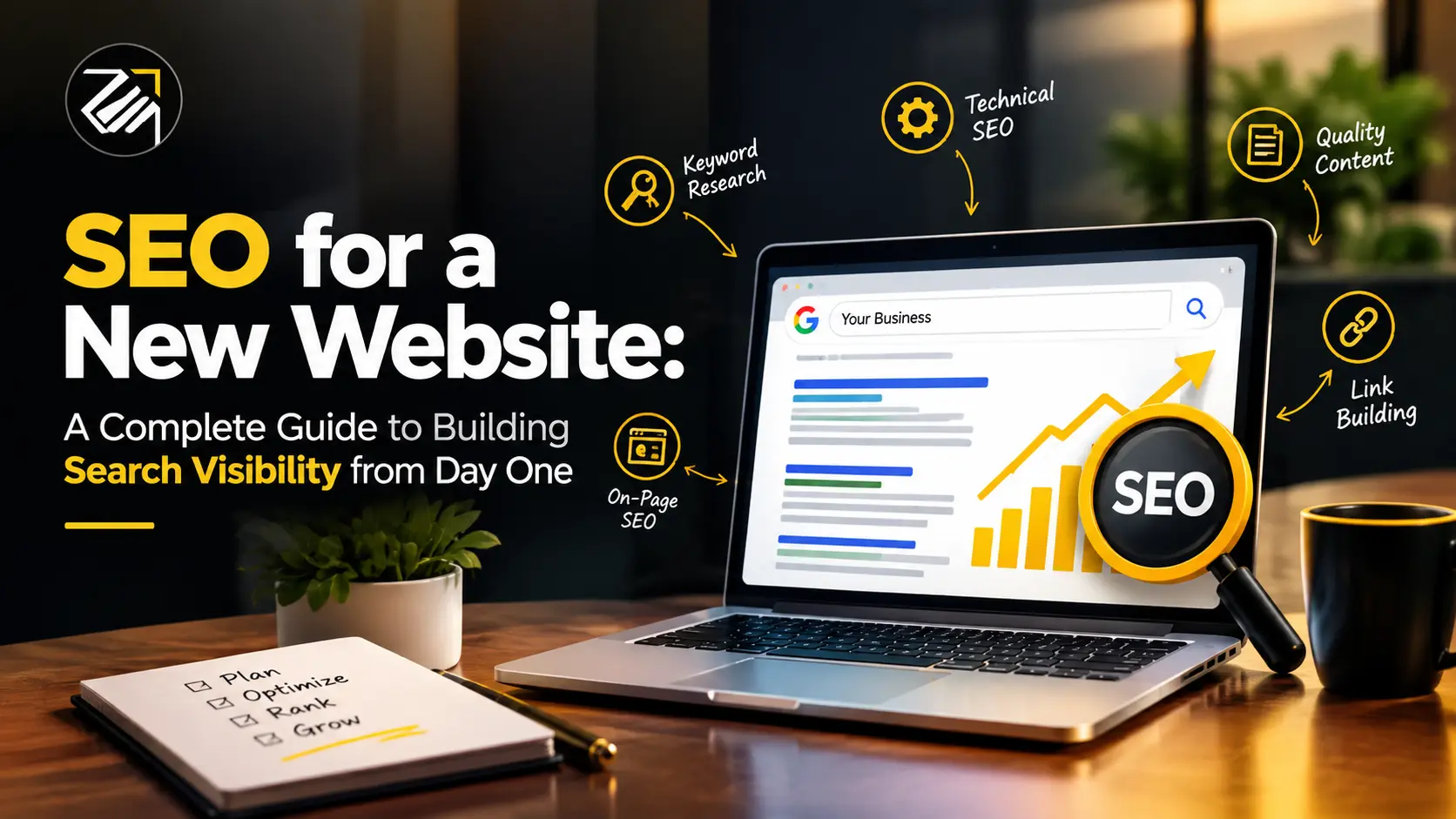
  • SEO for a New Website: A Complete Guide to Building Search Visibility from Day One

    SEO for a New Website: A Complete Guide to Building Search Visibility from Day One

    Summary

    Launching a new website is an important step for any business, but simply putting a website online does not guarantee visitors from Google. Search engines need to understand what your website is about, which topics you cover, and whether your pages provide useful information to people. This is where SEO for a New Website becomes important.

    For someone who is just starting SEO, the process can initially seem complicated. However, SEO is mainly about creating a website that is easy for search engines to understand and useful for visitors. You need to start with the right keywords, create helpful pages, make your website technically accessible, and gradually build its authority.

    SEO for a new website in 2026 also requires attention to how people search for information across traditional search results and newer AI-powered search experiences. Instead of trying to do everything at once, beginners should focus on building a strong foundation and improving the website consistently.

    Why SEO Matters for a New Website

    A new website usually has very little search visibility. Even if the website offers excellent products or services, people may not find it unless search engines can discover and understand its pages.

    SEO helps connect your website with people who are already searching for information, products, or services related to your business. For example, a new fitness business may create pages around fitness classes, personal training, and related local searches. Over time, these pages can start attracting relevant visitors.

    The important thing to understand is that SEO is not simply about adding keywords to a page. Modern SEO involves website structure, useful content, page experience, search intent, technical accessibility, internal links, and credibility.

    For a new website, starting SEO early is useful because you can build the website correctly instead of fixing major problems later.

    How to Start SEO for a New Website

    If you are completely new to SEO, start with the basics. You do not need to learn every advanced SEO technique before working on your website.

    Understand What Your Website Offers

    Before researching keywords, clearly define what your website provides. Ask yourself:

    • What products or services do I offer?
    • Who are my potential customers?
    • What problems do they want to solve?
    • What information are they likely to search for?
    • Which locations do I serve?

    These answers help you understand what topics your website should cover.

    For example, if you run a digital marketing business in Mumbai, your website could target searches related to SEO, social media marketing, Google Ads, content marketing, and other relevant services.

    Create Important Website Pages

    A new website should have clear and useful core pages. Depending on the business, these may include the homepage, service pages, product pages, about page, contact page, and relevant location pages.

    Each important page should have a clear purpose. Avoid creating multiple pages that provide almost the same information simply to target slightly different keywords.

    A simple website structure is usually easier for both visitors and search engines to understand.

    Keyword Research for a New Website

    Keyword research is one of the most important parts of SEO for a New Website. Keywords are the words and phrases people use when searching for something online.

    For beginners, the easiest approach is to start with topics directly connected to your business.

    For example, a digital marketing company could research terms such as “SEO services,” “digital marketing services,” or location-specific searches such as “SEO Company in Mumbai.”

    Focus on Search Intent

    Finding a keyword is not enough. You should understand why someone is searching for it.

    A person searching for “what is SEO” is probably looking for basic information. Someone searching for “SEO services for small business” may be researching a service. A person searching for a specific company may already know what they want.

    Your content should match the purpose behind the search.

    Build a Keyword List

    Create a simple spreadsheet containing your main keywords, related topics, target pages, and content ideas.

    Do not try to rank every page for dozens of unrelated keywords. Give each page a primary topic and use related terms naturally throughout the content.

    This approach makes your website easier to organize and helps prevent keyword stuffing.

    Build a Strong Website Structure

    A clear website structure helps visitors move between related pages and helps search engines discover important content.

    Your main services should be accessible from the navigation menu. Related blog articles can then link to relevant service pages.

    For example, a blog about SEO for a new website could naturally link to a page explaining professional SEO services. Another article about keyword research could link back to a broader SEO guide.

    Use Internal Links

    Internal linking means linking one page on your website to another page on the same website.

    These links can help users discover related information without having to return to Google. They can also help search engines understand how different pages on your website are connected.

    Use descriptive anchor text that tells users what they will find after clicking the link. Avoid adding internal links where they do not provide value.

    Technical SEO for a New Website

    Technical SEO  may sound complicated, but beginners can start with a few fundamental areas.

    First, make sure search engines can access your website. Your important pages should not accidentally be blocked from crawling.

    Your website should also have a logical URL structure, mobile-friendly design, secure HTTPS connection, and reasonable loading performance.

    Set Up Google Search Console

    Google Search Console is an important tool for a new website. It can provide information about how Google discovers and displays your pages.

    After setting up your website, verify your property and submit your sitemap where appropriate. You can also use the URL inspection functionality to understand whether individual pages have been discovered and indexed.

    Remember that submitting a page does not guarantee immediate ranking. Indexing and ranking are different processes.

    Create and Check Your Sitemap

    An XML sitemap provides search engines with information about important URLs on your website.

    For a new website, make sure the sitemap contains the URLs you actually want search engines to discover. Remove unnecessary or duplicate URLs where appropriate.

    Your sitemap should support your website structure rather than becoming a collection of every possible URL.

    On-Page SEO for a New Website

    On-page SEO focuses on elements you can improve directly on your website.

    Start by giving every important page a clear title that accurately describes its content. Write useful meta descriptions that encourage relevant users to understand what the page offers.

    Use headings to organize your content. Your H1 should clearly communicate the main topic, while H2 and H3 headings can break the subject into understandable sections.

    Write for People First

    Good SEO content should answer the user’s question clearly. Do not write paragraphs only because you want to include a keyword.

    For example, if your target term is SEO checklist for a new website, the page should actually provide a useful checklist rather than repeatedly mentioning the phrase.

    Use related terminology naturally. New website SEO, SEO strategy for a new website, and SEO tips for a new website can appear where they genuinely fit the discussion.

    This makes the content easier to read and gives search engines additional context about the topic.

    Create Useful Content Consistently

    A new website needs content that supports its main subject areas. You do not have to publish an article every day.

    Instead, create content that answers real questions your potential customers may have.

    For example, a business website could publish articles explaining common problems, comparing solutions, answering beginner questions, and providing practical guidance.

    Your content strategy should connect back to the products or services you actually offer. This creates opportunities for readers to move from informational content to relevant service or product pages.

    Off-Page SEO and Website Authority

    Once your website has useful content and a solid technical foundation, you can start thinking about off-page SEO.

    Off-page SEO involves activities that happen outside your website and can contribute to its reputation and visibility.

    One important area is earning relevant links from other websites. However, beginners should focus on quality and relevance rather than trying to collect as many backlinks as possible.

    You can also build visibility through legitimate business listings, industry communities, partnerships, digital PR, and useful resources that other websites may want to reference.

    Avoid shortcuts that promise hundreds of backlinks quickly. Artificial link-building methods can create long-term problems instead of building genuine authority.

    SEO for a New Website in 2026


    SEO for a new website in 2026 is not simply about achieving a position on a traditional search results page. Search behavior continues to evolve, and users may interact with search features, AI-generated answers, maps, videos, images, and other types of results.

    This makes helpful, well-organized content increasingly important.

    A new website should clearly demonstrate what it does, who it serves, and why its content is useful. Information should be accurate, easy to understand, and supported by genuine experience where appropriate.

    Rather than creating content only to satisfy search engines, think about the questions your customers would ask if they were speaking directly with your business.

    Common SEO Mistakes on New Websites

    Beginners often make a few avoidable mistakes when starting SEO.

    Publishing Too Many Pages Too Quickly

    Creating dozens of low-value pages does not automatically improve visibility. Focus on useful pages that serve a clear purpose.

    Repeating Keywords

    Using the same keyword in every sentence can make content difficult to read. Search engines can understand topics through context, so write naturally.

    Ignoring Technical Problems

    A beautiful website can still have SEO problems if important pages cannot be crawled, mobile users have a poor experience, or technical settings prevent indexing.

    Expecting Immediate Results

    SEO normally requires patience. A new domain has to establish visibility and authority over time. Monitor progress and improve the website rather than expecting instant results.

    When Should You Work With an SEO Company in Mumbai?

    If you are comfortable learning SEO yourself, you can start with basic optimization and gradually expand your knowledge. However, businesses with competitive markets or limited time may choose professional support.

    An SEO Company in Mumbai can help businesses with areas such as keyword research, technical audits, content planning, on-page optimization, local SEO, link-building strategies, and performance monitoring.

    Before working with any SEO provider, understand what work will actually be performed. A good SEO process should focus on your business objectives, target audience, website condition, and competitive environment rather than making unrealistic ranking promises.

    Professional support can be particularly useful when a website has technical problems, many pages, multiple locations, or a competitive market.

    How Long Does SEO Take for a New Website?

    There is no fixed timeline for SEO results. Several factors can affect progress, including competition, website quality, content depth, technical health, search demand, backlinks, industry, and the age and authority of the domain.

    A new website should therefore focus on measurable improvements instead of expecting a specific ranking within a certain number of days.

    You can monitor organic impressions, clicks, indexed pages, keyword visibility, conversions, and relevant traffic to understand whether your SEO efforts are moving in the right direction.

    A Simple SEO Checklist for a New Website

    If you are just starting, use this basic new website SEO checklist:

    1. Define your target audience and services.
    2. Research relevant keywords.
    3. Create a logical website structure.
    4. Optimize important page titles and headings.
    5. Write useful, original content.
    6. Make the website mobile-friendly.
    7. Check website speed and usability.
    8. Set up Google Search Console.
    9. Create and submit an XML sitemap.
    10. Check important pages for indexing issues.
    11. Add useful internal links.
    12. Start building relevant website authority.
    13. Monitor organic performance regularly.
    14. Improve pages based on user behavior and search data.

    You do not need to complete every advanced SEO activity on your first day. Build the foundation first and improve the website step by step.

    Conclusion

    Starting SEO can feel difficult when you are seeing terms such as technical SEO, keyword research, indexing, backlinks, and search intent for the first time. The good news is that you do not need to master everything immediately.

    Effective SEO for a New Website begins with simple fundamentals: understand your audience, choose relevant keywords, create useful pages, make the website accessible to search engines, organize your content properly, and continue improving based on data.

    As your website grows, your SEO strategy can become more advanced. Whether you manage SEO yourself or work with an SEO Company in Mumbai, the goal should remain the same: create a website that is easy to understand, useful to visitors, and capable of building sustainable search visibility.

    The earlier you establish these fundamentals, the stronger the foundation you create for long-term organic growth.

    Frequently Asked Questions

    1. Should SEO start before a new website is launched?

    Yes. Starting SEO before launch can help you plan the website structure, URLs, page topics, keywords, and content properly from the beginning. This can reduce the need for major SEO changes after the website goes live.

    2. Can a new website rank on Google without backlinks?

    Yes, a new website can appear in Google without having many backlinks, particularly for less competitive searches. However, building relevant authority over time can help the website compete for more competitive topics and keywords.

    3. How many pages should a new website have for SEO?

    There is no fixed number of pages required for SEO. A new website should have enough useful pages to clearly explain its products, services, and important topics. Quality and relevance are more important than creating a large number of pages.

    4. Should I focus on local SEO if my new business serves one city?

    If your business mainly serves customers in one city or local area, local SEO can be an important part of your strategy. Optimizing relevant service pages, location information, business details, and locally relevant content can help people discover your business through local searches.

    5. What should I track after starting SEO on a new website?

    Start by monitoring organic impressions, clicks, indexed pages, keyword visibility, organic traffic, and conversions. These metrics can help you understand whether your website is being discovered and whether your SEO efforts are attracting relevant visitors.


Copyright © ElevateDigi. All Rights Reserved.