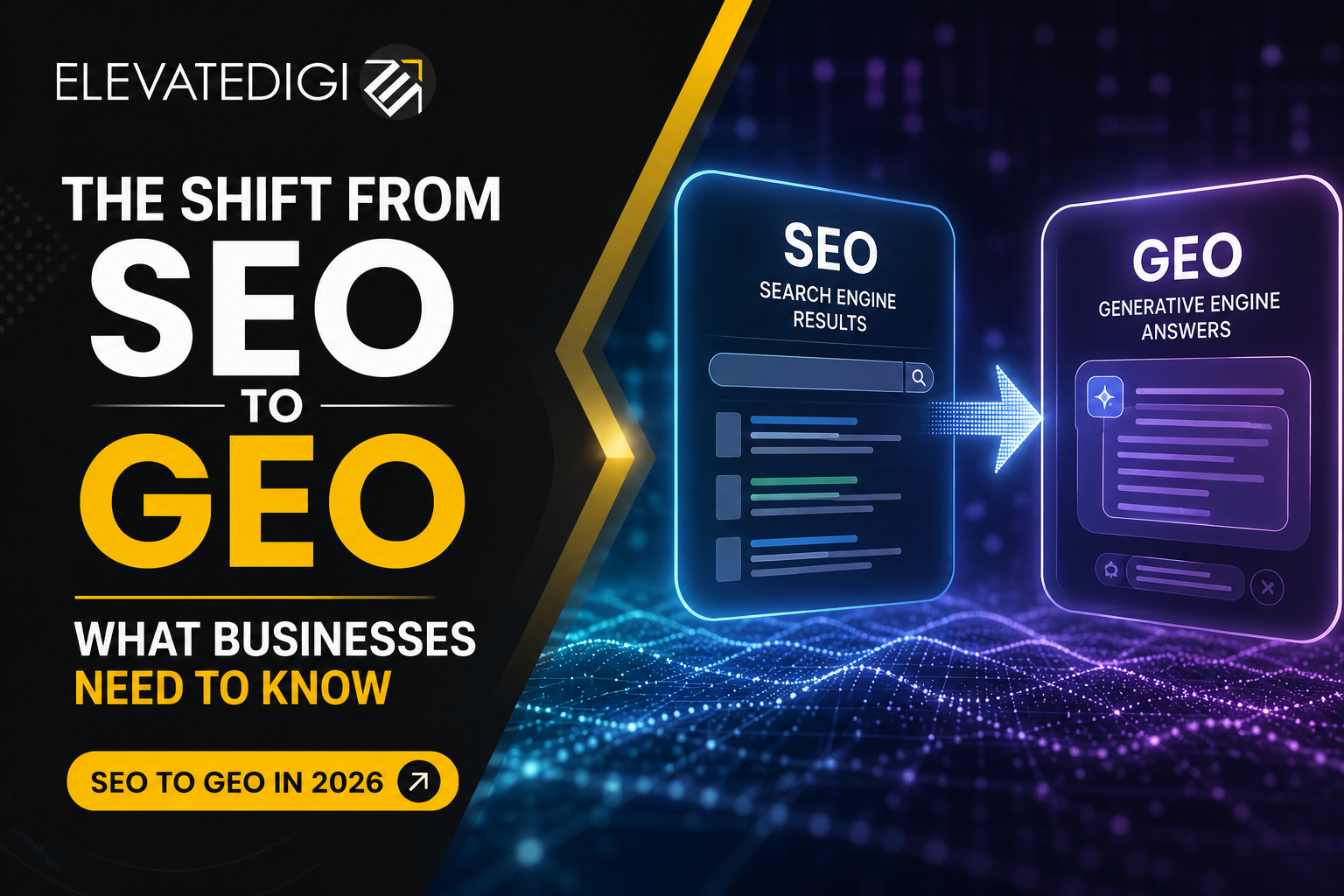
The digital marketing landscape has always evolved alongside changes in how people search for information online. Over the last two decades, Search Engine Optimization (SEO) has been the foundation of online visibility, helping businesses attract potential customers through search engines like Google. However, the rise of artificial intelligence is transforming the search experience, giving birth to a new concept known as Generative Engine Optimization (GEO).
As AI-powered platforms such as ChatGPT, Gemini, Perplexity, and Google’s AI Overviews become increasingly popular, businesses are beginning to realize that traditional SEO alone may no longer be enough. This is why understanding the transition from SEO to GEO in 2026 has become essential for brands that want to maintain visibility and stay competitive in the digital space.
Understanding the Evolution from SEO to GEO
Traditional SEO focuses on improving a website’s ranking in search engine results pages. The goal is to optimize content, keywords, technical elements, and backlinks so that users can find your website when they search for relevant topics.
GEO, on the other hand, focuses on optimizing content so that AI-powered search engines and generative AI platforms can discover, understand, trust, and reference your content when generating answers for users.
When someone asks an AI assistant a question, they may receive a direct answer without ever clicking on a traditional search result. This shift means businesses need to think beyond rankings and focus on becoming trusted sources of information that AI systems can cite and recommend.
Why GEO Matters More Than Ever in 2026
The way people consume information is changing rapidly. Instead of typing short keywords into search engines, users are increasingly asking detailed questions and expecting conversational answers. AI platforms are designed to provide these responses instantly.
As a result, businesses that adapt from SEO to GEO in 2026 will have a significant advantage. Rather than simply competing for search rankings, they will be positioning themselves as authoritative sources that AI systems rely upon when generating responses.
This change doesn’t mean SEO is disappearing. Instead, GEO builds upon SEO principles while adding a new layer of optimization focused on AI-driven search experiences.
How AI Search Is Changing Business Visibility
In the past, businesses measured success through website rankings and organic traffic. Today, visibility can also come from being mentioned in AI-generated answers.
For example, if a potential customer asks an AI assistant for recommendations about digital marketing services, the AI may mention companies that demonstrate strong expertise, authority, and credibility across the web. Businesses that have optimized for GEO are more likely to appear in these responses.
This means companies need to create content that answers real user questions, demonstrates expertise, and provides accurate information that AI systems can confidently reference.
The Role of Content in GEO
Content remains the foundation of online visibility, but the expectations are changing.
AI systems prefer content that is informative, trustworthy, well-structured, and focused on solving user problems. Businesses should prioritize creating in-depth articles, case studies, industry insights, and expert opinions rather than producing content solely for keyword rankings.
When content genuinely helps users understand a topic, it becomes more valuable for both traditional search engines and AI-driven platforms.
The businesses that successfully transition from SEO to GEO in 2026 are those that focus on quality, authority, and user intent rather than chasing algorithms.
Why Expertise and Trust Are Critical
Generative AI platforms are designed to identify reliable sources. They often evaluate the credibility of content based on factors such as expertise, brand reputation, citations, and overall authority.
Businesses that consistently publish valuable information and establish themselves as industry experts are more likely to gain visibility within AI-generated responses.
This is especially important for competitive industries where consumers rely heavily on online research before making purchasing decisions.
How SEO Agencies Are Adapting to GEO
Leading agencies are already evolving their strategies to address the growing influence of AI search.
A professional SEO Company in Kolkata understands that modern optimization requires more than keyword targeting. Businesses now need content strategies that address conversational search queries, establish topical authority, and increase brand credibility across multiple digital channels.
Similarly, a reputable SEO Company in Mumbai is helping businesses prepare for the future by combining traditional SEO techniques with GEO-focused content strategies. This approach ensures brands remain visible regardless of how users choose to search for information.
What Businesses Should Focus on Moving Forward
The future belongs to businesses that can provide accurate, helpful, and authoritative information. While technical SEO remains important, organizations must also invest in thought leadership, content quality, and brand trust.
Companies should think about how their content can answer real-world questions and contribute meaningful insights to their industry. The more valuable the information, the more likely it is to be referenced by both search engines and AI systems.
The transition from SEO to GEO in 2026 is not simply a trend; it represents a fundamental shift in how online visibility is earned. Businesses that embrace this change early will be better positioned to capture attention, build authority, and remain competitive in an increasingly AI-driven digital environment.
Conclusion
Search is evolving faster than ever before. While traditional SEO continues to play an important role, GEO is emerging as the next stage of digital visibility. Businesses that understand this shift and adapt their strategies accordingly will be better prepared for the future of search.
The move from SEO to GEO in 2026 is about more than rankings. It is about becoming a trusted source of information that AI platforms can confidently recommend. As generative search continues to grow, businesses that focus on expertise, credibility, and high-quality content will be the ones that thrive.
Frequently Asked Questions
1. What does SEO to GEO mean?
The transition from SEO to GEO in 2026 refers to the shift from optimizing websites solely for traditional search engines to optimizing content for AI-powered generative search platforms that provide direct answers to users.
2. Is GEO replacing SEO completely?
No. GEO is not replacing SEO. Instead, it builds upon traditional SEO principles while helping businesses gain visibility in AI-generated search experiences.
3. Why is GEO important for businesses?
GEO helps businesses become visible in AI-generated responses, increasing brand awareness and authority as more users rely on conversational AI tools for information.
4. How can businesses prepare for GEO?
Businesses should focus on creating authoritative content, answering user questions, building trust, and establishing expertise within their industry.
5. Should I hire an SEO agency for GEO optimization?
Yes. An experienced SEO Company in Kolkata or SEO Company in Mumbai can help businesses develop strategies that combine traditional SEO practices with modern GEO-focused approaches.
Leave a Reply