Summary
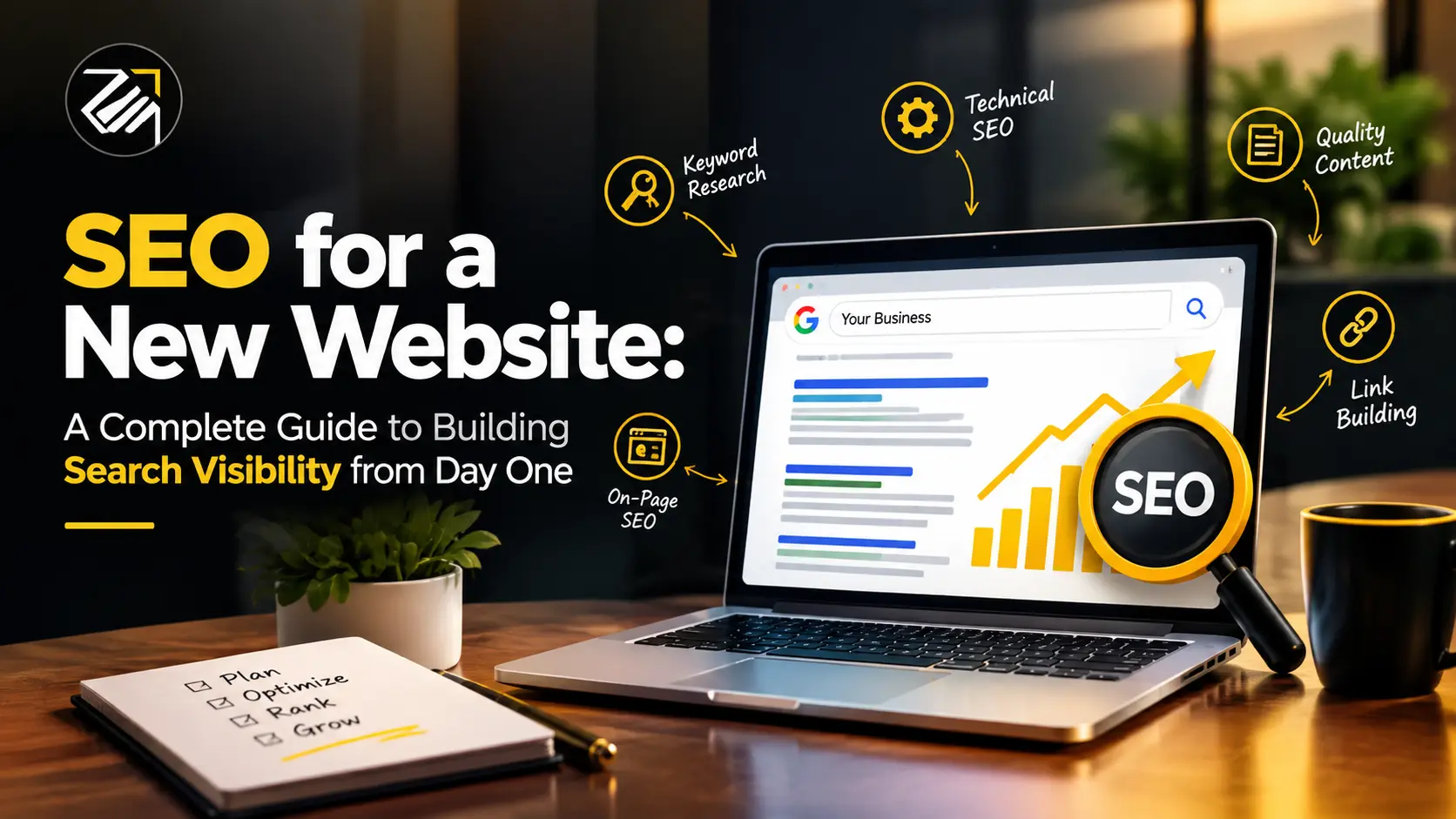
Launching a new website is an important step for any business, but simply putting a website online does not guarantee visitors from Google. Search engines need to understand what your website is about, which topics you cover, and whether your pages provide useful information to people. This is where SEO for a New Website becomes important.
For someone who is just starting SEO, the process can initially seem complicated. However, SEO is mainly about creating a website that is easy for search engines to understand and useful for visitors. You need to start with the right keywords, create helpful pages, make your website technically accessible, and gradually build its authority.
SEO for a new website in 2026 also requires attention to how people search for information across traditional search results and newer AI-powered search experiences. Instead of trying to do everything at once, beginners should focus on building a strong foundation and improving the website consistently.
Why SEO Matters for a New Website
A new website usually has very little search visibility. Even if the website offers excellent products or services, people may not find it unless search engines can discover and understand its pages.
SEO helps connect your website with people who are already searching for information, products, or services related to your business. For example, a new fitness business may create pages around fitness classes, personal training, and related local searches. Over time, these pages can start attracting relevant visitors.
The important thing to understand is that SEO is not simply about adding keywords to a page. Modern SEO involves website structure, useful content, page experience, search intent, technical accessibility, internal links, and credibility.
For a new website, starting SEO early is useful because you can build the website correctly instead of fixing major problems later.
How to Start SEO for a New Website
If you are completely new to SEO, start with the basics. You do not need to learn every advanced SEO technique before working on your website.
Understand What Your Website Offers
Before researching keywords, clearly define what your website provides. Ask yourself:
- What products or services do I offer?
- Who are my potential customers?
- What problems do they want to solve?
- What information are they likely to search for?
- Which locations do I serve?
These answers help you understand what topics your website should cover.
For example, if you run a digital marketing business in Mumbai, your website could target searches related to SEO, social media marketing, Google Ads, content marketing, and other relevant services.
Create Important Website Pages
A new website should have clear and useful core pages. Depending on the business, these may include the homepage, service pages, product pages, about page, contact page, and relevant location pages.
Each important page should have a clear purpose. Avoid creating multiple pages that provide almost the same information simply to target slightly different keywords.
A simple website structure is usually easier for both visitors and search engines to understand.
Keyword Research for a New Website
Keyword research is one of the most important parts of SEO for a New Website. Keywords are the words and phrases people use when searching for something online.
For beginners, the easiest approach is to start with topics directly connected to your business.
For example, a digital marketing company could research terms such as “SEO services,” “digital marketing services,” or location-specific searches such as “SEO Company in Mumbai.”
Focus on Search Intent
Finding a keyword is not enough. You should understand why someone is searching for it.
A person searching for “what is SEO” is probably looking for basic information. Someone searching for “SEO services for small business” may be researching a service. A person searching for a specific company may already know what they want.
Your content should match the purpose behind the search.
Build a Keyword List
Create a simple spreadsheet containing your main keywords, related topics, target pages, and content ideas.
Do not try to rank every page for dozens of unrelated keywords. Give each page a primary topic and use related terms naturally throughout the content.
This approach makes your website easier to organize and helps prevent keyword stuffing.
Build a Strong Website Structure
A clear website structure helps visitors move between related pages and helps search engines discover important content.
Your main services should be accessible from the navigation menu. Related blog articles can then link to relevant service pages.
For example, a blog about SEO for a new website could naturally link to a page explaining professional SEO services. Another article about keyword research could link back to a broader SEO guide.
Use Internal Links
Internal linking means linking one page on your website to another page on the same website.
These links can help users discover related information without having to return to Google. They can also help search engines understand how different pages on your website are connected.
Use descriptive anchor text that tells users what they will find after clicking the link. Avoid adding internal links where they do not provide value.
Technical SEO for a New Website
Technical SEO may sound complicated, but beginners can start with a few fundamental areas.
First, make sure search engines can access your website. Your important pages should not accidentally be blocked from crawling.
Your website should also have a logical URL structure, mobile-friendly design, secure HTTPS connection, and reasonable loading performance.
Set Up Google Search Console
Google Search Console is an important tool for a new website. It can provide information about how Google discovers and displays your pages.
After setting up your website, verify your property and submit your sitemap where appropriate. You can also use the URL inspection functionality to understand whether individual pages have been discovered and indexed.
Remember that submitting a page does not guarantee immediate ranking. Indexing and ranking are different processes.
Create and Check Your Sitemap
An XML sitemap provides search engines with information about important URLs on your website.
For a new website, make sure the sitemap contains the URLs you actually want search engines to discover. Remove unnecessary or duplicate URLs where appropriate.
Your sitemap should support your website structure rather than becoming a collection of every possible URL.
On-Page SEO for a New Website
On-page SEO focuses on elements you can improve directly on your website.
Start by giving every important page a clear title that accurately describes its content. Write useful meta descriptions that encourage relevant users to understand what the page offers.
Use headings to organize your content. Your H1 should clearly communicate the main topic, while H2 and H3 headings can break the subject into understandable sections.
Write for People First
Good SEO content should answer the user’s question clearly. Do not write paragraphs only because you want to include a keyword.
For example, if your target term is SEO checklist for a new website, the page should actually provide a useful checklist rather than repeatedly mentioning the phrase.
Use related terminology naturally. New website SEO, SEO strategy for a new website, and SEO tips for a new website can appear where they genuinely fit the discussion.
This makes the content easier to read and gives search engines additional context about the topic.
Create Useful Content Consistently
A new website needs content that supports its main subject areas. You do not have to publish an article every day.
Instead, create content that answers real questions your potential customers may have.
For example, a business website could publish articles explaining common problems, comparing solutions, answering beginner questions, and providing practical guidance.
Your content strategy should connect back to the products or services you actually offer. This creates opportunities for readers to move from informational content to relevant service or product pages.
Off-Page SEO and Website Authority
Once your website has useful content and a solid technical foundation, you can start thinking about off-page SEO.
Off-page SEO involves activities that happen outside your website and can contribute to its reputation and visibility.
One important area is earning relevant links from other websites. However, beginners should focus on quality and relevance rather than trying to collect as many backlinks as possible.
You can also build visibility through legitimate business listings, industry communities, partnerships, digital PR, and useful resources that other websites may want to reference.
Avoid shortcuts that promise hundreds of backlinks quickly. Artificial link-building methods can create long-term problems instead of building genuine authority.
SEO for a New Website in 2026
SEO for a new website in 2026 is not simply about achieving a position on a traditional search results page. Search behavior continues to evolve, and users may interact with search features, AI-generated answers, maps, videos, images, and other types of results.
This makes helpful, well-organized content increasingly important.
A new website should clearly demonstrate what it does, who it serves, and why its content is useful. Information should be accurate, easy to understand, and supported by genuine experience where appropriate.
Rather than creating content only to satisfy search engines, think about the questions your customers would ask if they were speaking directly with your business.
Common SEO Mistakes on New Websites
Beginners often make a few avoidable mistakes when starting SEO.
Publishing Too Many Pages Too Quickly
Creating dozens of low-value pages does not automatically improve visibility. Focus on useful pages that serve a clear purpose.
Repeating Keywords
Using the same keyword in every sentence can make content difficult to read. Search engines can understand topics through context, so write naturally.
Ignoring Technical Problems
A beautiful website can still have SEO problems if important pages cannot be crawled, mobile users have a poor experience, or technical settings prevent indexing.
Expecting Immediate Results
SEO normally requires patience. A new domain has to establish visibility and authority over time. Monitor progress and improve the website rather than expecting instant results.
When Should You Work With an SEO Company in Mumbai?
If you are comfortable learning SEO yourself, you can start with basic optimization and gradually expand your knowledge. However, businesses with competitive markets or limited time may choose professional support.
An SEO Company in Mumbai can help businesses with areas such as keyword research, technical audits, content planning, on-page optimization, local SEO, link-building strategies, and performance monitoring.
Before working with any SEO provider, understand what work will actually be performed. A good SEO process should focus on your business objectives, target audience, website condition, and competitive environment rather than making unrealistic ranking promises.
Professional support can be particularly useful when a website has technical problems, many pages, multiple locations, or a competitive market.
How Long Does SEO Take for a New Website?
There is no fixed timeline for SEO results. Several factors can affect progress, including competition, website quality, content depth, technical health, search demand, backlinks, industry, and the age and authority of the domain.
A new website should therefore focus on measurable improvements instead of expecting a specific ranking within a certain number of days.
You can monitor organic impressions, clicks, indexed pages, keyword visibility, conversions, and relevant traffic to understand whether your SEO efforts are moving in the right direction.
A Simple SEO Checklist for a New Website
If you are just starting, use this basic new website SEO checklist:
- Define your target audience and services.
- Research relevant keywords.
- Create a logical website structure.
- Optimize important page titles and headings.
- Write useful, original content.
- Make the website mobile-friendly.
- Check website speed and usability.
- Set up Google Search Console.
- Create and submit an XML sitemap.
- Check important pages for indexing issues.
- Add useful internal links.
- Start building relevant website authority.
- Monitor organic performance regularly.
- Improve pages based on user behavior and search data.
You do not need to complete every advanced SEO activity on your first day. Build the foundation first and improve the website step by step.
Conclusion
Starting SEO can feel difficult when you are seeing terms such as technical SEO, keyword research, indexing, backlinks, and search intent for the first time. The good news is that you do not need to master everything immediately.
Effective SEO for a New Website begins with simple fundamentals: understand your audience, choose relevant keywords, create useful pages, make the website accessible to search engines, organize your content properly, and continue improving based on data.
As your website grows, your SEO strategy can become more advanced. Whether you manage SEO yourself or work with an SEO Company in Mumbai, the goal should remain the same: create a website that is easy to understand, useful to visitors, and capable of building sustainable search visibility.
The earlier you establish these fundamentals, the stronger the foundation you create for long-term organic growth.
Frequently Asked Questions
1. Should SEO start before a new website is launched?
Yes. Starting SEO before launch can help you plan the website structure, URLs, page topics, keywords, and content properly from the beginning. This can reduce the need for major SEO changes after the website goes live.
2. Can a new website rank on Google without backlinks?
Yes, a new website can appear in Google without having many backlinks, particularly for less competitive searches. However, building relevant authority over time can help the website compete for more competitive topics and keywords.
3. How many pages should a new website have for SEO?
There is no fixed number of pages required for SEO. A new website should have enough useful pages to clearly explain its products, services, and important topics. Quality and relevance are more important than creating a large number of pages.
4. Should I focus on local SEO if my new business serves one city?
If your business mainly serves customers in one city or local area, local SEO can be an important part of your strategy. Optimizing relevant service pages, location information, business details, and locally relevant content can help people discover your business through local searches.
5. What should I track after starting SEO on a new website?
Start by monitoring organic impressions, clicks, indexed pages, keyword visibility, organic traffic, and conversions. These metrics can help you understand whether your website is being discovered and whether your SEO efforts are attracting relevant visitors.
Leave a Reply