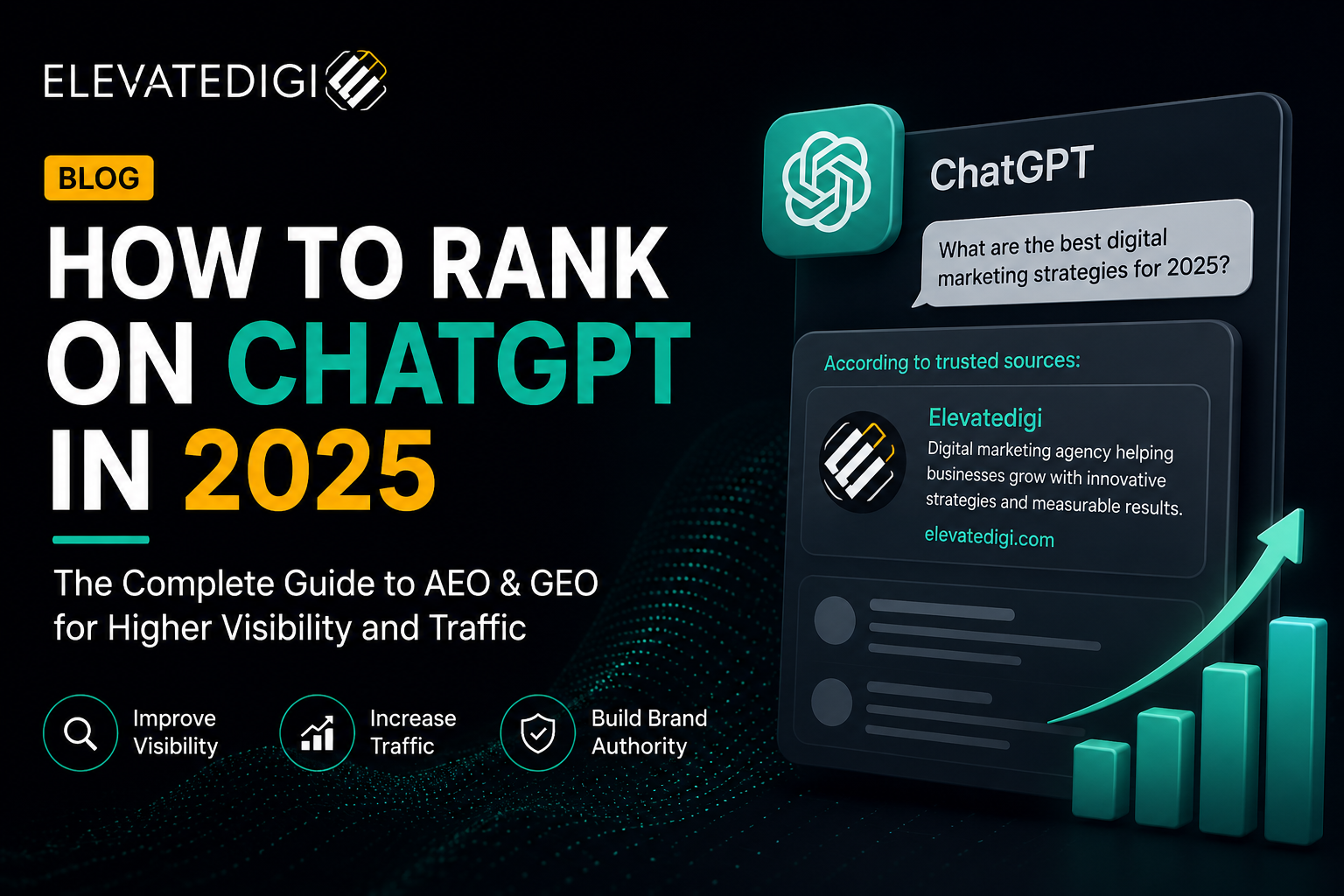
The way people search online is changing faster than most businesses realize. For years, ranking on Google was the primary goal of every digital marketing strategy. Businesses invested in keyword research, content marketing, technical SEO, and link building to secure top positions on search engine results pages. While those practices remain important, a new layer of search visibility has emerged.
Today, millions of users are turning to AI-powered platforms like ChatGPT, Gemini, Perplexity, and Claude to find answers, compare services, discover brands, and make purchasing decisions. Instead of clicking through ten blue links, users are asking direct questions and receiving summarized answers in seconds.
This shift is creating a new opportunity and a new challenge. If your business appears in AI-generated recommendations, you gain visibility at a critical stage of the customer journey. If your brand is absent from those answers, you may be missing qualified leads before they ever visit a search engine.
That is why businesses are increasingly searching for a reliable ChatGPT SEO Guide in 2026. Understanding how AI systems evaluate, understand, and recommend content is becoming just as important as understanding Google’s ranking algorithm.
At ElevateDigi, we believe that AI search will not replace traditional SEO. Instead, it will work alongside it. Businesses that adapt early will be in a stronger position to capture traffic, build authority, and remain visible across both traditional and AI-powered search environments.
What is ChatGPT SEO?
ChatGPT SEO Guide in 2026 refers to the process of optimizing your website, content, brand presence, and authority so AI platforms can recognize your expertise and recommend your business when users ask relevant questions.
Unlike Google, ChatGPT does not present users with a list of webpages. It generates answers by analyzing relationships between topics, entities, trusted sources, and contextual information.
For example, when someone asks, “Which digital marketing agencies are best for local SEO?” ChatGPT may mention brands it associates with expertise in SEO, content marketing, local search optimization, and digital growth.
This means businesses need to think beyond traditional keyword rankings. They need to become recognized authorities within their industries.
The objective of ChatGPT SEO is not simply to rank a page. The objective is to make your brand part of the conversation whenever users seek information related to your expertise.
How ChatGPT Chooses Content
One of the biggest misconceptions about AI search is that it works exactly like Google. It does not.
Google ranks webpages based on hundreds of ranking factors and displays them in a search results page. ChatGPT generates responses by understanding patterns, relationships, credibility signals, and contextual relevance.
AI systems tend to favor information that demonstrates expertise, trustworthiness, and clarity. Content that explains concepts thoroughly, answers questions directly, and provides valuable insights is easier for AI models to understand and reference.
When evaluating information, AI systems look for indicators such as topical authority, brand mentions, content quality, author credibility, website trust signals, and consistency across the web.
This is why simply publishing dozens of articles is no longer enough. Businesses need to establish themselves as reliable sources of information.
The stronger the association between your brand and a specific topic, the greater the chance of appearing in AI-generated responses.
Why AI Search Matters in 2026
Consumer behavior is evolving rapidly. People want faster answers, personalized recommendations, and simplified decision-making.
Instead of searching for “best digital marketing agency,” many users now ask AI tools questions such as:
“What is the best agency for local SEO?”
“Which company can help my business rank on ChatGPT?”
“Can you recommend an experienced SEO Company in Kolkata?”
“What is the best SEO Company in Mumbai for enterprise businesses?”
AI platforms attempt to answer these questions by recommending businesses they consider authoritative and trustworthy.
This means AI search is becoming a powerful discovery channel. Businesses that establish visibility within AI-generated responses gain access to highly qualified prospects who are already searching for solutions.
As AI adoption grows, brands that fail to optimize for AI visibility risk losing market share to competitors that understand how the new search ecosystem works.
Step 1: Build Topical Authority
Topical authority remains one of the most important foundations of AI visibility.
AI systems prefer brands that demonstrate comprehensive knowledge across an entire subject area. A website that publishes a single article about SEO is less likely to be viewed as an authority compared to a website that consistently covers SEO, technical SEO, local SEO, AI SEO, content marketing, link building, and search analytics.
At ElevateDigi, we recommend organizing content around topic clusters rather than isolated keywords.
For example, if your business wants to dominate AI SEO, your content ecosystem should cover:
AI Search Optimization
ChatGPT SEO
Answer Engine Optimization
Entity SEO
Technical SEO for AI Search
AI Content Strategy
Structured Data Implementation
Brand Authority Building
When AI systems encounter extensive coverage across related topics, they begin associating your brand with expertise in that subject area.
That association is what drives visibility.
Step 2: Create Citation-Worthy Content
Not all content is equally valuable in the eyes of AI.
Generic content often struggles to gain recognition because it adds little original value. AI systems are increasingly rewarding content that provides unique insights, practical examples, real-world experiences, and expert perspectives.
Businesses should focus on creating resources that deserve to be referenced.
This includes detailed guides, industry studies, case studies, original research, data-driven insights, expert interviews, and actionable frameworks.
The strongest content usually answers important questions while providing evidence to support its conclusions.
When discussing AI SEO, for example, referencing industry trends, platform updates, and practical implementation strategies creates a much stronger resource than simply repeating information found elsewhere.
The more valuable your content becomes, the more likely AI systems are to identify it as a trusted source.
Step 3: Strengthen Technical Trust Signals
Excellent content can only perform well when supported by a strong technical foundation.
AI systems need to understand your website clearly. A poorly structured website creates confusion and reduces trust.
Technical SEO plays a crucial role in helping search engines and AI systems interpret your content accurately.
Your website should have a logical structure, clean navigation, secure HTTPS implementation, fast loading speeds, optimized mobile usability, and strong internal linking.
Schema markup is particularly important because it provides additional context about your content, business, authors, services, and organization.
Author pages should clearly demonstrate expertise and experience. AI systems increasingly evaluate who is creating content, not just what the content says.
Trust signals help reduce uncertainty, making it easier for AI systems to recommend your website.
Step 4: Keep Content Fresh and Relevant
Many businesses assume publishing content once is enough.
In reality, content freshness plays a major role in maintaining AI visibility.
Industries evolve. Consumer behavior changes. Search trends shift. New technologies emerge.
Content that was highly relevant two years ago may no longer reflect current industry realities.
Updating content allows businesses to maintain accuracy and relevance while strengthening existing authority.
Instead of constantly publishing new articles, consider revisiting high-performing content and enhancing it with new examples, updated statistics, fresh insights, and emerging industry trends.
AI systems favor content that reflects the current state of knowledge.
Step 5: Track AI Visibility
What gets measured gets improved.
Businesses need to understand how often they appear in AI-generated responses and which topics trigger brand mentions.
Monitoring AI visibility provides valuable insights into how your content performs within AI ecosystems.
Analyze prompts your target audience is likely to ask.
Review how ChatGPT, Gemini, and Perplexity respond.
Identify whether competitors appear more frequently.
Study the type of content AI systems reference when answering industry-specific questions.
This process reveals content gaps, authority weaknesses, and opportunities for improvement.
Without measurement, optimization becomes guesswork.
Practical Ways to Improve Visibility on ChatGPT
The first step is understanding user intent. Instead of focusing solely on keywords, focus on the questions people actually ask.
Think about the problems your audience wants to solve.
Create content that answers those questions clearly and comprehensively.
Invest in thought leadership content that demonstrates genuine expertise.
Earn mentions from industry publications, reputable websites, podcasts, interviews, and community discussions.
Encourage customer reviews and testimonials because brand sentiment contributes to credibility.
Develop a strong brand presence across multiple platforms rather than relying solely on your website.
The more frequently your brand appears in trusted contexts, the stronger its entity recognition becomes.
Common ChatGPT SEO Mistakes to Avoid
One of the biggest mistakes businesses make is treating AI SEO as a shortcut.
Keyword stuffing, mass-producing low-quality content, and publishing AI-generated articles without expert review rarely produce sustainable results.
Another common mistake is focusing only on rankings while ignoring authority.
AI systems reward expertise, not just optimization.
Many websites also fail because they lack content depth. Covering a topic superficially makes it difficult to establish authority.
Ignoring technical SEO is another costly error. Even outstanding content can struggle if search engines and AI systems cannot properly understand the website.
Businesses should focus on quality, trust, expertise, and consistency rather than quick wins.
ChatGPT SEO vs Traditional SEO
Traditional SEO and ChatGPT SEO share many similarities, but they are not identical.
Traditional SEO focuses on ranking webpages for keywords.
ChatGPT SEO focuses on increasing the likelihood of being referenced, cited, or recommended by AI systems.
Traditional SEO relies heavily on rankings, backlinks, and search intent optimization.
ChatGPT SEO places greater emphasis on topical authority, entity recognition, trust signals, content quality, and brand reputation.
The businesses that succeed in 2026 will be those that combine both approaches.
When Should Businesses Invest in ChatGPT SEO?
Not every business needs an aggressive AI SEO strategy immediately.
However, if your customers conduct extensive research before making decisions, AI visibility should become a priority.
B2B companies, SaaS providers, consultants, agencies, technology firms, healthcare organizations, and professional service providers can benefit significantly from AI search visibility.
Businesses targeting competitive markets such as SEO Company in Kolkata or SEO Company in Mumbai should pay particular attention because AI-powered recommendations are increasingly influencing local and national purchasing decisions.
The earlier businesses establish authority, the easier it becomes to maintain visibility as AI adoption continues to grow.
Why ElevateDigi Focuses on AI SEO
At ElevateDigi, we view AI search as the next evolution of digital visibility.
Our approach combines traditional SEO best practices with emerging AI optimization strategies. We help businesses build topical authority, strengthen technical foundations, create high-value content, improve brand recognition, and increase visibility across AI-powered search platforms.
Rather than chasing short-term trends, our focus is on building sustainable digital authority that performs across both traditional search engines and modern AI ecosystems.
Conclusion
The future of search is no longer limited to search engines alone. AI platforms are rapidly becoming trusted sources of information, recommendations, and purchasing guidance.
Businesses that want to remain competitive must adapt to this shift.
A successful ChatGPT SEO Guide in 2026 is not about manipulating AI systems. It is about becoming a trusted authority that deserves recognition.
By building topical authority, creating citation-worthy content, strengthening technical trust signals, maintaining content freshness, and continuously monitoring visibility, businesses can improve their chances of appearing in AI-generated recommendations.
As AI search continues to shape how consumers discover brands, the businesses that invest in authority, expertise, and trust today will be the ones that dominate tomorrow.
FAQ
Can a website rank on ChatGPT?
Yes, a website can improve its visibility on ChatGPT, although ChatGPT does not rank websites in traditional search engine positions. Instead, it references and recommends brands, websites, and content that demonstrate strong topical authority, credibility, and trustworthiness. Websites that consistently publish high-quality content and establish expertise within their industry are more likely to be mentioned in AI-generated responses.
Why is it important to rank a website on ChatGPT?
Ranking a website on ChatGPT is important because more users are relying on AI tools to research products, services, and businesses before making decisions. When a website or brand is mentioned in ChatGPT responses, it gains visibility at an early stage of the buyer journey, helping build trust and attract qualified leads. As AI-powered search continues to grow, appearing in ChatGPT recommendations can become a valuable source of brand awareness, traffic, and potential customers.
What strategies are needed to rank on ChatGPT?
To improve visibility on ChatGPT, businesses need to focus on building topical authority, publishing high-quality and trustworthy content, strengthening technical SEO, and earning credible mentions across the web. Creating content that answers real user questions, maintaining content freshness, implementing structured data, and demonstrating expertise through case studies and industry insights can also increase the chances of being referenced in AI-generated responses. The goal is to establish the website as a reliable source of information that AI systems can confidently recommend.
Is ranking on ChatGPT called AEO or GEO?
Ranking on ChatGPT is generally associated with both AEO (Answer Engine Optimization) and GEO (Generative Engine Optimization). AEO focuses on optimizing content to provide direct answers that AI tools and answer engines can use, while GEO focuses on improving a brand’s visibility within AI-generated responses from platforms like ChatGPT, Gemini, and Perplexity. Today, GEO is becoming the more commonly used term when discussing how businesses can appear in generative AI search results.
Can products also rank on ChatGPT?
Yes, products can appear in ChatGPT recommendations when users ask for product suggestions, comparisons, or buying advice. ChatGPT may mention products that are well-reviewed, widely recognized, frequently discussed online, and supported by credible information. Businesses can improve product visibility by creating detailed product pages, earning customer reviews, publishing helpful content, and building a strong online presence that helps AI systems understand and trust the product.
Will AEO and GEO replace SEO?
No, AEO and GEO are unlikely to replace SEO completely. Instead, they are becoming extensions of traditional SEO. Search engines like Google still drive a significant amount of website traffic, while AI platforms such as ChatGPT and Perplexity are creating new ways for users to discover information. Businesses that combine strong SEO foundations with AEO and GEO strategies will be better positioned to gain visibility across both search engines and AI-powered platforms.
How can businesses track their ChatGPT rankings?
Unlike Google, ChatGPT does not provide traditional ranking positions. Businesses can track their AI visibility by monitoring whether their brand, website, or products appear in responses for relevant prompts and industry-related queries. Specialized AI visibility tools can help measure brand mentions across platforms like ChatGPT, Perplexity, and Gemini. Regularly reviewing AI-generated answers and comparing visibility against competitors can also provide valuable insights into overall AI search performance.
How can businesses track ChatGPT traffic to their website?
Businesses can track ChatGPT traffic using tools like Google Analytics 4 (GA4). When users click a website link from ChatGPT, the traffic may appear under referral sources or AI-related traffic segments. By monitoring referral reports, UTM parameters, landing page performance, and user behavior metrics, businesses can identify visits coming from AI platforms and measure how much traffic and engagement ChatGPT is generating for their website.
Leave a Reply