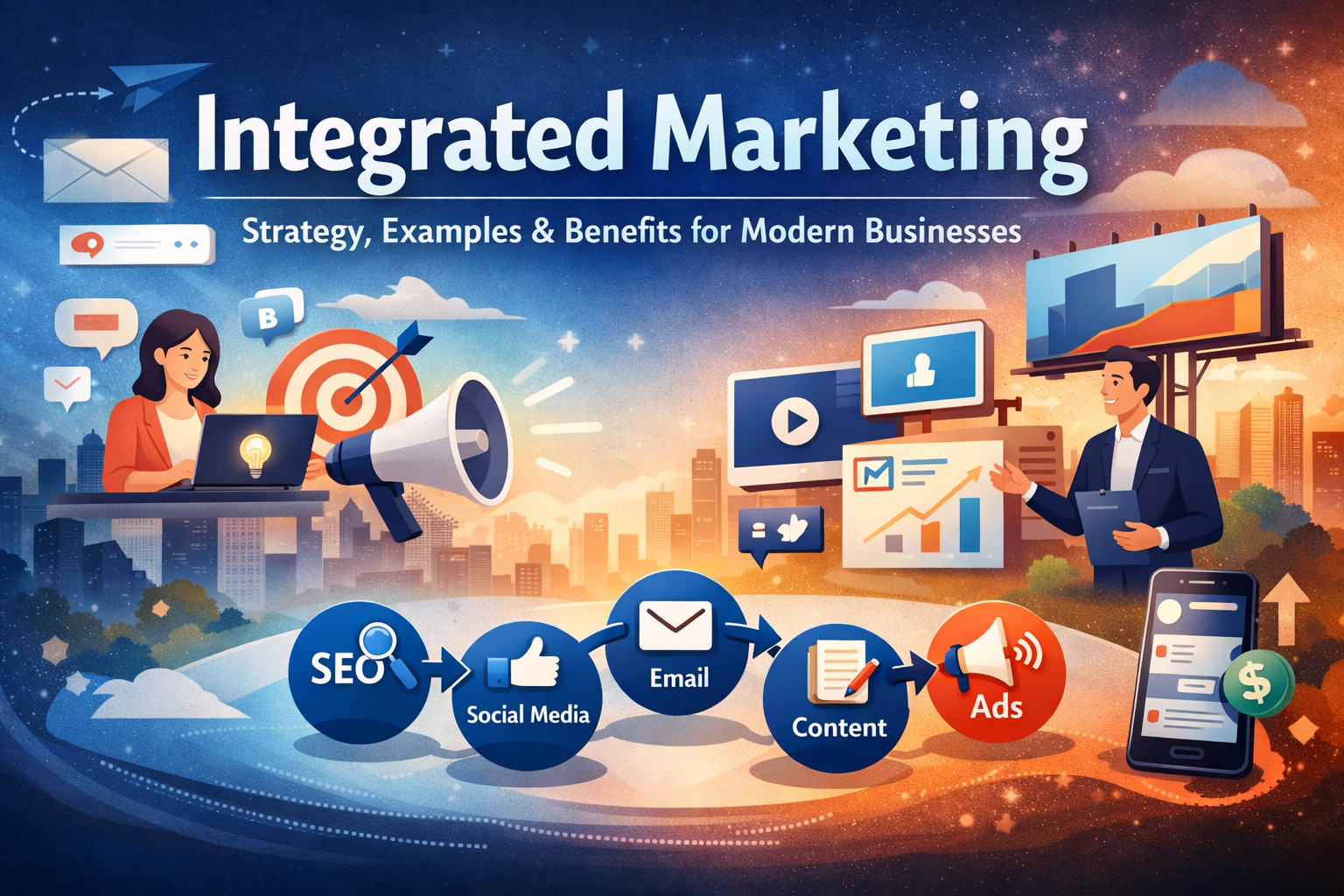
Marketing has changed dramatically over the last decade. Customers no longer interact with brands through just one channel. A potential customer might first discover a brand through a Google search, later see an Instagram post, receive an email promotion, and eventually visit the website before making a decision. Because of this multi-touch journey, businesses need a more connected approach to marketing. This is where Integrated Marketing plays a critical role.
Instead of treating each marketing channel as a separate activity, integrated marketing connects all marketing efforts into a unified system. Every campaign, message, and platform works together to create a consistent brand experience. When done correctly, it not only improves visibility but also builds stronger relationships with customers and drives sustainable business growth.
What is Integrated Marketing?
At its core, integrated marketing is about consistency and coordination. It is the process of aligning different marketing channels—such as social media, search engines, content marketing, advertising, and public relations—so that they communicate the same brand message.
Imagine a company launching a new product. If the website, social media posts, email campaigns, and advertisements all present different messages or visual styles, the audience becomes confused. However, when these channels are coordinated and communicate the same story, customers receive a clear and memorable brand experience.
This unified approach is what makes integrated marketing powerful. It ensures that every interaction a customer has with a brand reinforces the same values, messaging, and identity.
Integrated Marketing Strategy: Building a Unified Marketing Approach
A strong Integrated Marketing Strategy does not happen by accident. It requires thoughtful planning and a clear understanding of how different marketing channels work together.
Successful businesses begin by defining their core message and brand positioning. Once that foundation is established, they design campaigns that connect multiple channels rather than treating them separately. For example, a blog article might support search engine visibility, while social media posts amplify the content and email marketing helps distribute it to loyal customers.
The key idea behind an integrated marketing strategy is alignment. Every marketing effort should support the same objective, whether that goal is brand awareness, lead generation, or product sales. When all channels work together, the impact of each campaign becomes significantly stronger.
Integrated Marketing Communications (IMC): The Power of Consistent Messaging
A major part of integrated marketing is Integrated Marketing Communications (IMC). IMC focuses on ensuring that every message a brand communicates—whether online or offline—remains consistent.
In today’s digital environment, customers encounter brands across many touchpoints. They might see a social media advertisement in the morning, read a blog article during lunch, and receive a promotional email later in the evening. If the tone, visuals, and messaging are consistent across these interactions, the brand becomes more recognizable and trustworthy.
Consistency is not just about aesthetics; it is also about credibility. When businesses communicate a clear and unified message, customers begin to view them as more reliable and professional. Over time, this consistency builds long-term trust and strengthens brand authority.
Benefits of Integrated Marketing for Businesses
One of the main reasons businesses adopt integrated marketing is the wide range of advantages it offers. The Benefits of Integrated Marketing extend beyond marketing performance and often influence the overall perception of a brand.
Perhaps the most noticeable benefit is stronger brand recognition. When customers repeatedly encounter the same message across different platforms, the brand becomes easier to remember. This repetition reinforces familiarity and increases the chances of conversion.
Another significant benefit is improved marketing efficiency. Instead of running disconnected campaigns, businesses can coordinate their efforts and use their resources more effectively. A single idea or campaign can be expanded across multiple channels, increasing its reach without dramatically increasing costs.
Integrated marketing also enhances the overall customer experience. Modern consumers appreciate brands that communicate clearly and consistently. When every touchpoint feels connected, customers experience a smoother journey from discovery to purchase.
Integrated Marketing Examples from Real Campaigns
Looking at real Integrated Marketing Examples helps illustrate how this strategy works in practice.
Consider a brand launching a new service. The company might publish educational blog content optimized for search engines, ensuring that people researching the topic can discover the brand organically. At the same time, the marketing team may promote the same message through social media posts and short videos.
To reinforce the campaign further, the brand might run targeted advertisements and send personalized emails to existing customers. Each channel supports the same core message, but the format and delivery are adapted to suit the platform.
Another common example appears in seasonal marketing campaigns. Retail brands often promote festive offers through a combination of website banners, email newsletters, social media promotions, and paid search advertisements. When all these channels communicate the same promotion, customers are far more likely to notice and respond.
Integrated Marketing Campaign: Turning Strategy into Action
While strategy defines the overall direction, an Integrated Marketing Campaign is where the strategy comes to life. A campaign typically revolves around a central message or objective and uses multiple channels to amplify that message.
For instance, a company aiming to increase brand awareness might launch a campaign centered around educational content. The campaign could begin with a detailed blog article, which is then promoted through social media and supported by targeted advertising. Influencers or industry experts may also share the message, expanding its reach even further.
Throughout the campaign, consistency remains essential. The same visual identity, tone of voice, and core message must be maintained across every platform. When this happens successfully, each channel reinforces the others, creating a powerful and cohesive marketing effort.
Why Integrated Marketing Is the Future of Brand Growth
As technology continues to evolve, the number of marketing channels available to businesses will only increase. Customers are already interacting with brands across websites, apps, social media platforms, and search engines. In such a fragmented landscape, disconnected marketing efforts simply cannot deliver the same impact.
Integrated marketing provides a solution by bringing all these channels together under a unified strategy. Instead of competing for attention independently, each channel contributes to a larger and more meaningful brand story.
Businesses that invest in integrated marketing today are better equipped to build stronger customer relationships, improve marketing efficiency, and maintain a clear brand identity in a crowded marketplace.
Conclusion
In a world where customers engage with brands across multiple platforms, a disconnected marketing approach is no longer effective. Integrated Marketing allows businesses to align their campaigns, messaging, and channels into one cohesive system.
By developing a well-planned Integrated Marketing Strategy, maintaining consistent Integrated Marketing Communications (IMC), and executing thoughtful Integrated Marketing Campaigns, companies can significantly enhance their visibility and credibility.
The long-term Benefits of Integrated Marketing—including stronger brand recognition, improved customer trust, and better marketing performance—make it an essential strategy for modern businesses looking to grow in an increasingly competitive digital landscape.
Frequently Asked Questions (FAQs)
1. What is Integrated Marketing in simple terms?
Integrated marketing is a strategy where businesses combine multiple marketing channels—such as social media, SEO, email marketing, advertising, and content marketing—to deliver a consistent brand message. The goal is to ensure that customers receive the same experience and messaging across every platform they interact with.
2. Why is Integrated Marketing important for businesses?
Integrated marketing is important because modern customers interact with brands through multiple channels before making a purchase. By aligning marketing efforts across platforms, businesses can create consistent messaging, improve brand recognition, build trust, and increase the effectiveness of their marketing campaigns.
3. What are some examples of Integrated Marketing?
Common integrated marketing examples include product launch campaigns where brands promote the same message through social media, blog content, paid advertisements, email marketing, and influencer partnerships. Seasonal campaigns, promotional events, and multi-channel brand awareness campaigns are also typical examples of integrated marketing.
4. What is the difference between Integrated Marketing and Digital Marketing?
Digital marketing focuses specifically on online channels such as search engines, websites, and social media platforms. Integrated marketing, on the other hand, combines both digital and traditional marketing channels—like advertising, public relations, and offline promotions—to create a unified marketing strategy.
5. How can businesses create an effective Integrated Marketing strategy?
Businesses can build an effective integrated marketing strategy by defining clear marketing goals, understanding their target audience, selecting the right marketing channels, maintaining consistent messaging across platforms, and continuously analyzing campaign performance to optimize results.