Category: ElevateDigi-Blogs

  • Best Way to Improve Search Engine Ranking with MCQ

    Best Way to Improve Search Engine Ranking with MCQ

    Why MCQs Are a Smarter Way to Learn and Apply SEO

    1. SEO Foundations Check: Core Concepts You Must Know

    2. Behind the Scenes of SEO: Technical Factors That Impact Rankings

    3. Building Authority: How Off-Page SEO Strengthens Rankings

    4. From Knowledge to Action: Applying SEO to Build Real Brand Visibility

    5. Next-Level SEO: Advanced Techniques for Competitive Rankings

    Introduction

    Search engine optimisation (SEO) is no longer just about adding keywords to a page or building a few backlinks. Search engines today evaluate websites based on relevance, technical performance, content quality, authority, and user experience — all working together to determine rankings. For anyone trying to improve their website’s visibility, understanding how SEO really works has become essential, not optional.

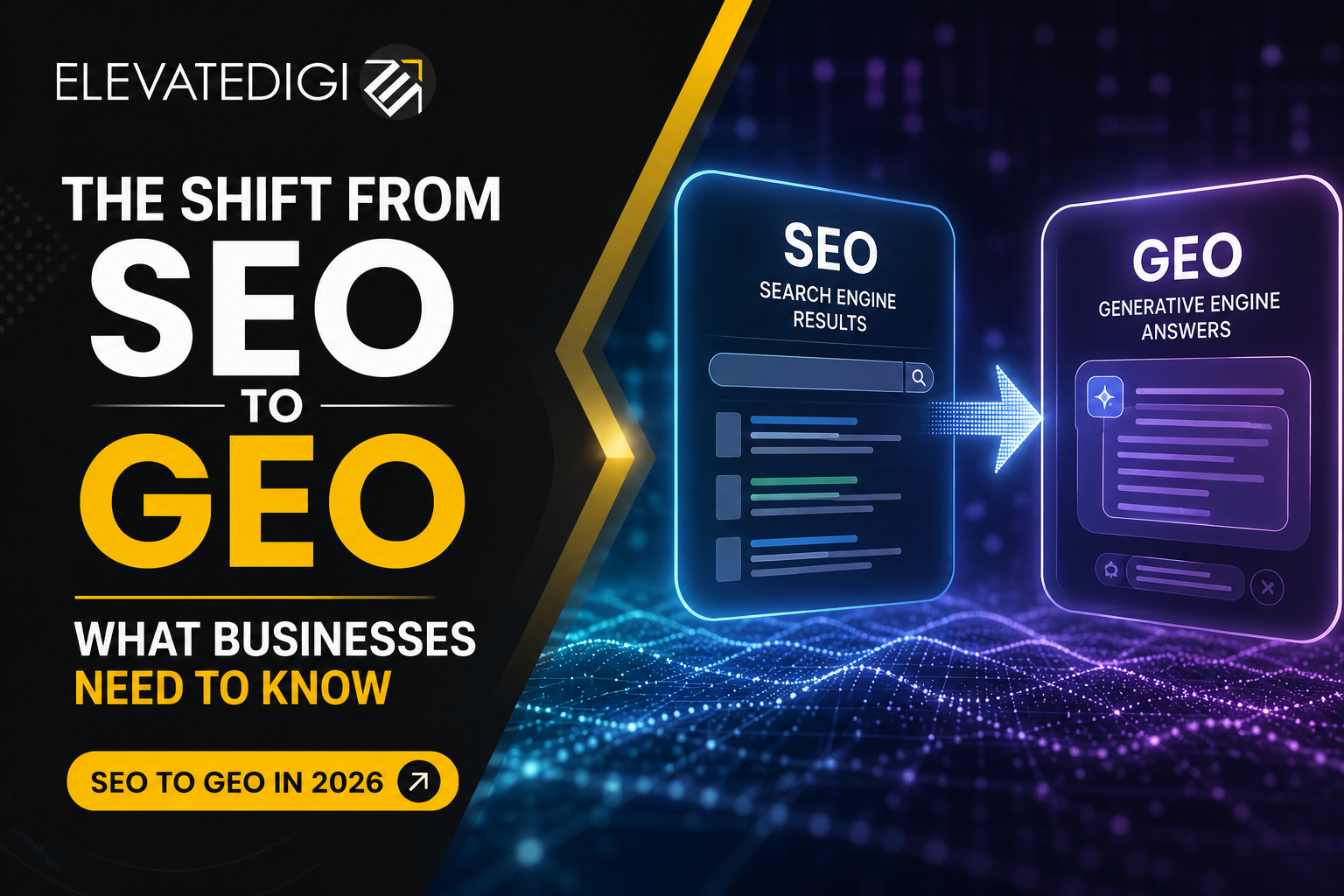
    However, SEO can feel complex and overwhelming, especially because it now overlaps with emerging areas like AEO vs SEO in 2026, along with multiple disciplines such as content strategy, technical optimisation, analytics, and digital PR. Reading long guides or watching tutorials often explains concepts, but it doesn’t always help you check whether you truly understand them or can apply them correctly. That’s where a structured, question-based learning format becomes useful.

    This blog uses Multiple Choice Questions (MCQs) as a practical way to help you learn, revise, and test your SEO knowledge. Instead of passively reading theory, you actively engage with each concept, think through real SEO scenarios, and validate your understanding immediately. This approach not only improves retention but also highlights gaps in knowledge that may otherwise go unnoticed.

    The MCQs in this guide are organised into key SEO areas — foundational concepts, technical SEO, off-page optimisation, and advanced strategies. Each section focuses on the topics that directly influence how search engines crawl, understand, evaluate, and rank websites. Whether you are a beginner trying to understand SEO fundamentals or a marketer looking to strengthen your strategic and technical expertise, this structure allows you to learn in a clear, progressive way.

    More importantly, the purpose of this blog is not just to help you “answer questions correctly” but to help you build a stronger mental model of how SEO works as a system. When you understand how technical performance supports content, how backlinks support trust, and how search intent guides optimisation, you can make better decisions that improve long-term ranking performance.

    By the end of this MCQ-based guide, you should not only feel more confident about SEO concepts but also be better equipped to apply them to real websites, campaigns, and business goals — helping you move from guessing what might work to understanding what actually does.

    Improve Search Engine Ranking

    SEO Foundations Check: Core Concepts You Must Know

    1. What is the primary goal of SEO?

    A. Increase website design quality
    B. Improve website loading speed only
    C. Increase organic visibility in search engines
    D. Increase social media followers

    Answer: C. Increase organic visibility in search engines

    2. What does SERP stand for?

    A. Search Engine Result Placement
    B. Search Engine Results Page
    C. Search Engine Ranking Position
    D. Search Engine Reach Platform

    Answer: B. Search Engine Results Page

    3. Which factor is most important for ranking a webpage?

    A. Keyword relevance and content quality
    B. Website colour scheme
    C. Number of images on a page
    D. Server location

    Answer: A. Keyword relevance and content quality

    4. What is a keyword in SEO?

    A. A word used in domain registration
    B. A phrase users search for in search engines
    C. A code used by search engines
    D. A social media hashtag

    Answer: B. A phrase users search for in search engines

    5. What is on-page SEO?

    A. Optimisation done outside the website
    B. Optimisation done within the website pages
    C. Optimisation done on the server only
    D. Optimisation done on social media

    Answer: B. Optimisation done within the website pages

    6. What does “search intent” refer to?

    A. The language used in a search
    B. The reason behind a user’s search query
    C. The location of the user
    D. The browser used

    Answer: B. The reason behind a user’s search query

    7. Which tag is most important for defining a page’s topic?

    A. <meta name="keywords">
    B. <title>
    C. <footer>
    D. <style>

    Answer: B. <title>

    8. What is organic traffic?

    A. Traffic from paid ads
    B. Traffic from email campaigns
    C. Traffic from unpaid search results
    D. Traffic from social media

    Answer: C. Traffic from unpaid search results

    9. What is a meta description?

    A. A ranking factor used by Google directly
    B. A brief summary of the webpage shown in SERPs
    C. A keyword list for indexing
    D. A sitemap file

    Answer: B. A brief summary of the webpage shown in SERPs

    10. What is crawling in SEO?

    A. Users browsing websites
    B. Search engines discovering web pages
    C. Ranking websites
    D. Removing duplicate content

    Answer: B. Search engines discovering web pages

    11. What is indexing?

    A. Creating backlinks
    B. Storing web pages in a search engine database
    C. Designing a website layout
    D. Updating keywords

    Answer: B. Storing web pages in a search engine database

    12. Which of these is a white-hat SEO practice?

    A. Keyword stuffing
    B. Cloaking
    C. Creating high-quality, helpful content
    D. Buying spammy backlinks

    Answer: C. Creating high-quality, helpful content

    13. What is a long-tail keyword?

    A. A very popular one-word keyword
    B. A long sentence in blog content
    C. A specific, multi-word search phrase
    D. A keyword used in ads only

    Answer: C. A specific, multi-word search phrase

    14. What does CTR stand for?

    A. Click Through Rate
    B. Conversion Tracking Ratio
    C. Content Trust Rank
    D. Click Traffic Result

    Answer: A. Click Through Rate

    15. What is a backlink?

    A. A link from your site to another site
    B. A link from another site pointing to your site
    C. An internal navigation link
    D. A broken link

    Answer: B. A link from another site pointing to your site

    16. What is domain authority?

    A. A Google-owned ranking factor
    B. A metric predicting a site’s ranking potential
    C. The number of pages on a website
    D. The hosting provider quality

    Answer: B. A metric predicting a site’s ranking potential

    17. What is duplicate content?

    A. Content copied from social media
    B. Identical or very similar content on multiple URLs
    C. Content with too many keywords
    D. Content without images

    Answer: B. Identical or very similar content on multiple URLs

    18. Which metric measures how long users stay on a page?

    A. Bounce rate
    B. Dwell time
    C. Crawl rate
    D. Page depth

    Answer: B. Dwell time

    19. What is internal linking?

    A. Linking from other websites to yours
    B. Linking between pages within the same website
    C. Linking from ads to landing pages
    D. Linking from emails

    Answer: B. Linking between pages within the same website

    20. What does XML sitemap help with?

    A. Designing the website
    B. Helping search engines discover pages
    C. Improving image quality
    D. Increasing social shares

    Answer: B. Helping search engines discover pages

    21. What is keyword cannibalisation?

    A. Using too many keywords on one page
    B. Multiple pages targeting the same keyword
    C. Copying competitor keywords
    D. Using irrelevant keywords

    Answer: B. Multiple pages targeting the same keyword

    22. What is bounce rate?

    A. The number of backlinks lost
    B. The percentage of users leaving after viewing one page
    C. The number of pages indexed
    D. The number of ad clicks

    Answer: B. The percentage of users leaving after viewing one page

    23. What is a featured snippet?

    A. A paid ad placement
    B. A highlighted answer box in SERPs
    C. A video result
    D. A social media preview

    Answer: B. A highlighted answer box in SERPs

    24. What does E-E-A-T stand for?

    A. Experience, Expertise, Authoritativeness, Trustworthiness
    B. Engagement, Exposure, Authority, Traffic
    C. Efficiency, Expertise, Accuracy, Timing
    D. Experience, Engagement, Authority, Technology

    Answer: A. Experience, Expertise, Authoritativeness, Trustworthiness

    25. What is conversion in digital marketing?

    A. A website visit
    B. A user completing a desired action
    C. A keyword ranking
    D. A page view

    Answer: B. A user completing a desired action

    Improve Search Engine Ranking

    Behind the Scenes of SEO: Technical Factors That Impact Rankings

    1. What is technical SEO mainly focused on?

    A. Content writing only
    B. Improving website infrastructure for search engines
    C. Social media engagement
    D. Email marketing

    Answer: B. Improving website infrastructure for search engines

    2. What does a robots.txt file control?

    A. Website speed
    B. Which pages search engines can crawl
    C. Keyword placement
    D. Image optimisation

    Answer: B. Which pages search engines can crawl

    3. What is page speed primarily important for?

    A. User experience and rankings
    B. Increasing backlinks
    C. Improving keyword density
    D. Increasing social shares

    Answer: A. User experience and rankings

    4. What does mobile-first indexing mean?

    A. Google ranks mobile apps only
    B. Google uses mobile version of content for ranking
    C. Websites should remove desktop versions
    D. Mobile traffic is ignored

    Answer: B. Google uses mobile version of content for ranking

    5. What is Core Web Vitals?

    A. A keyword research tool
    B. A set of metrics measuring user experience
    C. A backlink quality score
    D. A CMS plugin

    Answer: B. A set of metrics measuring user experience

    6. What does HTTPS indicate?

    A. A website is paid
    B. A website is secure and encrypted
    C. A website loads faster
    D. A website is indexed faster

    Answer: B. A website is secure and encrypted

    7. What is a canonical tag used for?

    A. To increase backlinks
    B. To indicate preferred version of a page
    C. To block crawling
    D. To track analytics

    Answer: B. To indicate preferred version of a page

    8. What does a 404 error indicate?

    A. Page is loading slowly
    B. Page is not found
    C. Page is duplicated
    D. Page is redirected

    Answer: B. Page is not found

    9. What is schema markup?

    A. A programming language
    B. Structured data to help search engines understand content
    C. A ranking penalty
    D. A sitemap format

    Answer: B. Structured data to help search engines understand content

    10. What is an XML sitemap?

    A. A website layout design
    B. A list of URLs for search engines
    C. A backlink profile
    D. A server configuration

    Answer: B. A list of URLs for search engines

    11. What is crawl budget?

    A. Number of keywords allowed
    B. Number of pages Google crawls on a site
    C. Cost of crawling
    D. Speed of crawling only

    Answer: B. Number of pages Google crawls on a site

    12. What is a redirect?

    A. A broken link
    B. A way to send users and bots from one URL to another
    C. A spam signal
    D. A tracking method

    Answer: B. A way to send users and bots from one URL to another

    13. Which redirect is SEO-friendly for permanent moves?

    A. 302
    B. 404
    C. 301
    D. 500

    Answer: C. 301

    14. What is a noindex tag used for?

    A. To improve ranking
    B. To block a page from appearing in search results
    C. To improve crawl speed
    D. To show ads

    Answer: B. To block a page from appearing in search results

    15. What is server response time?

    A. Time taken by browser to load images
    B. Time server takes to respond to a request
    C. Time users spend on a page
    D. Time between clicks

    Answer: B. Time server takes to respond to a request

    16. What does lazy loading do?

    A. Delays loading of non-visible content
    B. Speeds up indexing
    C. Increases crawl budget
    D. Removes images

    Answer: A. Delays loading of non-visible content

    17. What is JavaScript SEO?

    A. Writing content in JavaScript
    B. Optimising JS-heavy sites for crawlability
    C. Blocking scripts
    D. Removing JS

    Answer: B. Optimising JS-heavy sites for crawlability

    18. What is hreflang used for?

    A. Blocking content
    B. Indicating language and regional targeting
    C. Increasing backlinks
    D. Tracking users

    Answer: B. Indicating language and regional targeting

    19. What does a 500 error indicate?

    A. Server error
    B. Page not found
    C. Redirect loop
    D. Blocked resource

    Answer: A. Server error

    20. What is image alt text?

    A. A file format
    B. Text describing an image for accessibility and SEO
    C. A ranking penalty
    D. A watermark

    Answer: B. Text describing an image for accessibility and SEO

    21. What is pagination?

    A. Splitting content across multiple pages
    B. Blocking pages
    C. Duplicating content
    D. Removing links

    Answer: A. Splitting content across multiple pages

    22. What does “rendering” mean in SEO?

    A. Loading page visually for users
    B. Search engine processing a page with scripts and styles
    C. Indexing keywords
    D. Creating backlinks

    Answer: B. Search engine processing a page with scripts and styles

    23. What is a log file used for in SEO?

    A. Tracking user conversions
    B. Analysing search engine crawl behaviour
    C. Measuring CTR
    D. Writing metadata

    Answer: B. Analysing search engine crawl behaviour

    24. What does GSC stand for?

    A. Google Search Console
    B. Global Search Crawler
    C. Google Site Checker
    D. Growth Search Centre

    Answer: A. Google Search Console

    25. What is AMP?

    A. A backlink tool
    B. A framework for fast-loading mobile pages
    C. A penalty type
    D. A content format

    Answer: B. A framework for fast-loading mobile pages

    Improve Search Engine Ranking

    Building Authority: How Off-Page SEO Strengthens Rankings

    1. What is off-page SEO mainly focused on?

    A. Optimising website code
    B. Actions taken outside your website to improve rankings
    C. Writing website content
    D. Improving page speed

    Answer: B. Actions taken outside your website to improve rankings

    2. What is the most important element of off-page SEO?

    A. Page titles
    B. Backlinks
    C. Images
    D. Keywords

    Answer: B. Backlinks

    3. What is a high-quality backlink?

    A. A link from any website
    B. A link from a relevant and authoritative website
    C. A paid advertisement
    D. A nofollow link only

    Answer: B. A link from a relevant and authoritative website

    4. What does anchor text refer to?

    A. The image inside a link
    B. The clickable text of a hyperlink
    C. The page title
    D. The URL structure

    Answer: B. The clickable text of a hyperlink

    5. What is a nofollow link?

    A. A link that blocks users
    B. A link that does not pass ranking authority
    C. A link that redirects traffic
    D. A broken link

    Answer: B. A link that does not pass ranking authority

    6. What is link diversity?

    A. Getting links only from blogs
    B. Getting links from different types of sources
    C. Getting links from one website repeatedly
    D. Getting links only from forums

    Answer: B. Getting links from different types of sources

    7. What is a brand mention?

    A. A social media ad
    B. A mention of your brand name on other websites
    C. A keyword in metadata
    D. A paid backlink

    Answer: B. A mention of your brand name on other websites

    8. What is digital PR in SEO?

    A. Paid advertising
    B. Earning media coverage and editorial links
    C. Social media posting
    D. Guest posting only

    Answer: B. Earning media coverage and editorial links

    9. What is toxic backlink?

    A. A link from a low-quality or spammy website
    B. A link from a popular website
    C. A social media link
    D. A paid Google ad

    Answer: A. A link from a low-quality or spammy website

    10. What is link velocity?

    A. Speed of website loading
    B. Rate at which a site gains backlinks
    C. Number of internal links
    D. Keyword ranking speed

    Answer: B. Rate at which a site gains backlinks

    11. What is a guest post?

    A. Posting on your own blog
    B. Writing content for another website in exchange for exposure or links
    C. Posting on social media
    D. Running ads

    Answer: B. Writing content for another website in exchange for exposure or links

    12. What does disavowing links mean?

    A. Buying backlinks
    B. Asking Google to ignore harmful backlinks
    C. Deleting your website
    D. Removing internal links

    Answer: B. Asking Google to ignore harmful backlinks

    13. What is domain relevance?

    A. Website speed score
    B. How closely a linking site matches your niche
    C. Number of keywords on a page
    D. Location of server

    Answer: B. How closely a linking site matches your niche

    14. What is referral traffic?

    A. Traffic from paid ads
    B. Traffic coming from other websites via links
    C. Traffic from search engines
    D. Traffic from email

    Answer: B. Traffic coming from other websites via links

    15. What is social signal in SEO?

    A. Direct ranking factor from social likes
    B. Engagement signals that indirectly support visibility
    C. Only Instagram followers
    D. Spam traffic

    Answer: B. Engagement signals that indirectly support visibility

    16. What is editorial backlink?

    A. A paid link
    B. A naturally earned link within content
    C. A footer link
    D. A comment link

    Answer: B. A naturally earned link within content

    17. What is citation in local SEO?

    A. A legal document
    B. A mention of business name, address, and phone online
    C. A backlink from a blog
    D. A Google ad

    Answer: B. A mention of business name, address, and phone online

    18. What is influencer outreach?

    A. Buying ads from influencers
    B. Collaborating with influencers for visibility and links
    C. Posting on forums
    D. Sending spam emails

    Answer: B. Collaborating with influencers for visibility and links

    19. What does “link equity” mean?

    A. Number of paid links
    B. Ranking power passed through a link
    C. Website speed
    D. Keyword density

    Answer: B. Ranking power passed through a link

    20. What is forum posting in SEO?

    A. Posting ads only
    B. Participating in discussions to gain visibility and links
    C. Buying backlinks
    D. Writing blog posts

    Answer: B. Participating in discussions to gain visibility and links

    21. What is a PBN?

    A. Public Blog Network
    B. Private Blog Network used to manipulate rankings
    C. Paid Backlink Network
    D. Personal Brand Network

    Answer: B. Private Blog Network used to manipulate rankings

    22. What is natural link profile?

    A. Links from only one source
    B. A balanced mix of links built organically over time
    C. Only dofollow links
    D. Only high DA links

    Answer: B. A balanced mix of links built organically over time

    23. What is link placement importance?

    A. Footer links are strongest
    B. Contextual in-content links are more valuable
    C. Sidebar links are best
    D. All placements are equal

    Answer: B. Contextual in-content links are more valuable

    24. What is review management in SEO?

    A. Writing fake reviews
    B. Managing and responding to customer reviews online
    C. Removing all negative reviews
    D. Buying reviews

    Answer: B. Managing and responding to customer reviews online

    25. What is co-citation?

    A. Linking your site repeatedly
    B. When two brands are mentioned together without links
    C. Buying sponsored links
    D. Duplicate backlinks

    Answer: B. When two brands are mentioned together without links

    Improve Search Engine Ranking

    From Knowledge to Action: Applying SEO to Build Real Brand Visibility

    1. What should be the first step in any SEO strategy?

    A. Building backlinks
    B. Conducting a website and market audit
    C. Publishing blogs
    D. Running ads

    Answer: B. Conducting a website and market audit

    2. Why is keyword intent more important than keyword volume?

    A. It reduces competition
    B. It aligns content with what users actually want
    C. It improves website speed
    D. It increases social shares

    Answer: B. It aligns content with what users actually want

    3. What should you prioritise when a page has high impressions but low CTR?

    A. Increase backlinks
    B. Improve title and meta description
    C. Add more images
    D. Increase keyword density

    Answer: B. Improve title and meta description

    4. What is the best way to build topical authority?

    A. Publish random trending content
    B. Create comprehensive content around a niche topic
    C. Buy backlinks
    D. Focus only on homepage SEO

    Answer: B. Create comprehensive content around a niche topic

    5. What indicates strong SEO-business alignment?

    A. Ranking for many keywords
    B. Ranking for keywords that drive conversions
    C. Getting traffic from all countries
    D. High bounce rate

    Answer: B. Ranking for keywords that drive conversions

    6. What should you do before scaling content production?

    A. Increase publishing frequency immediately
    B. Ensure existing content is optimised and performing
    C. Build more backlinks
    D. Remove old blogs

    Answer: B. Ensure existing content is optimised and performing

    7. What does a content gap analysis help identify?

    A. Broken links
    B. Topics competitors rank for but you don’t
    C. Page speed issues
    D. Duplicate content

    Answer: B. Topics competitors rank for but you don’t

    8. What is the best KPI to measure SEO success for a business?

    A. Keyword count
    B. Organic conversions and revenue
    C. Total impressions
    D. Social media followers

    Answer: B. Organic conversions and revenue

    9. Why should SEO be integrated with branding?

    A. To increase logo visibility
    B. To build trust and recognition over time
    C. To reduce ad costs only
    D. To improve website design

    Answer: B. To build trust and recognition over time

    10. What is the purpose of internal linking in strategy?

    A. To improve website design
    B. To guide users and search engines through important content
    C. To increase backlinks
    D. To block crawling

    Answer: B. To guide users and search engines through important content

    11. What is the biggest risk of chasing only high-volume keywords?

    A. Lower rankings
    B. Irrelevant traffic with low conversion intent
    C. Slow indexing
    D. More competition only

    Answer: B. Irrelevant traffic with low conversion intent

    12. When should you update existing content?

    A. Only when rankings drop
    B. Regularly to maintain relevance and accuracy
    C. Never update old content
    D. Only when competitors change theirs

    Answer: B. Regularly to maintain relevance and accuracy

    13. What is the value of user experience in SEO?

    A. It only affects design
    B. It indirectly influences rankings through engagement
    C. It reduces crawl budget
    D. It replaces content quality

    Answer: B. It indirectly influences rankings through engagement

    14. What should you do if a page ranks but doesn’t convert?

    A. Delete it
    B. Optimise for better intent matching and CTAs
    C. Add more keywords
    D. Remove internal links

    Answer: B. Optimise for better intent matching and CTAs

    15. What does “SEO maturity” mean?

    A. Number of backlinks
    B. How well SEO processes are integrated into business operations
    C. Website age
    D. Domain authority

    Answer: B. How well SEO processes are integrated into business operations

    16. What is a pillar page?

    A. A homepage banner
    B. A comprehensive main page supported by related content
    C. A product listing
    D. A category filter

    Answer: B. A comprehensive main page supported by related content

    17. What is the role of analytics in SEO?

    A. To track ads only
    B. To measure performance and guide optimisation decisions
    C. To increase traffic automatically
    D. To manage social media

    Answer: B. To measure performance and guide optimisation decisions

    18. What should be the main goal of SEO reporting?

    A. Show number of tasks completed
    B. Show business impact and actionable insights
    C. Show keyword rankings only
    D. Show impressions only

    Answer: B. Show business impact and actionable insights

    19. Why is consistency important in SEO?

    A. It improves website design
    B. It builds authority and trust over time
    C. It reduces competition
    D. It speeds up crawling

    Answer: B. It builds authority and trust over time

    20. What is the smartest way to scale link building?

    A. Buy more links
    B. Build repeatable outreach and content processes
    C. Use automated tools only
    D. Focus on quantity only

    Answer: B. Build repeatable outreach and content processes

    21. What should guide content prioritisation?

    A. What competitors post
    B. Business goals and search demand
    C. Social trends
    D. Random ideas

    Answer: B. Business goals and search demand

    22. What is the benefit of aligning SEO with sales and marketing teams?

    A. Faster approvals
    B. Unified messaging and better conversion outcomes
    C. More meetings
    D. More content

    Answer: B. Unified messaging and better conversion outcomes

    23. What is the purpose of CTAs in SEO content?

    A. Improve rankings
    B. Guide users toward desired actions
    C. Increase word count
    D. Reduce bounce rate only

    Answer: B. Guide users toward desired actions

    24. What is the risk of ignoring SEO hygiene?

    A. No impact
    B. Technical debt and performance decline over time
    C. Faster rankings
    D. More backlinks

    Answer: B. Technical debt and performance decline over time

    25. What does sustainable SEO focus on?

    A. Short-term ranking boosts
    B. Long-term growth through quality, relevance, and trust
    C. Quick hacks
    D. Only traffic growth

    Answer: B. Long-term growth through quality, relevance, and trust

    Improve Search Engine Ranking

    Next-Level SEO: Advanced Techniques for Competitive Rankings

    1. What is topical authority?

    A. Domain age
    B. Being recognised as a trusted source on a topic
    C. Number of backlinks
    D. Social media followers

    Answer: B. Being recognised as a trusted source on a topic

    2. What is semantic SEO?

    A. Keyword repetition
    B. Optimising content based on meaning and context
    C. Optimising only for voice search
    D. Using exact-match keywords only

    Answer: B. Optimising content based on meaning and context

    3. What is entity-based SEO?

    A. Optimising images
    B. Optimising around people, brands, and concepts as entities
    C. Optimising URLs
    D. Optimising internal links only

    Answer: B. Optimising around people, brands, and concepts as entities

    4. What is programmatic SEO?

    A. Writing content manually
    B. Automatically generating scalable SEO pages using data
    C. Building backlinks
    D. Running ads

    Answer: B. Automatically generating scalable SEO pages using data

    5. What is AEO (Answer Engine Optimisation)?

    A. Optimising for ads
    B. Optimising content for AI and voice-based answers
    C. Optimising email campaigns
    D. Optimising social posts

    Answer: B. Optimising content for AI and voice-based answers

    6. What is the primary benefit of structured data?

    A. Faster loading
    B. Enhanced search appearance and understanding
    C. More backlinks
    D. Higher keyword density

    Answer: B. Enhanced search appearance and understanding

    7. What is content pruning?

    A. Deleting high-performing pages
    B. Removing or improving low-value content
    C. Removing backlinks
    D. Blocking crawling

    Answer: B. Removing or improving low-value content

    8. What is information gain in SEO?

    A. Rewriting competitor content
    B. Adding unique value beyond existing search results
    C. Increasing keyword density
    D. Increasing backlinks

    Answer: B. Adding unique value beyond existing search results

    9. What is zero-click search?

    A. A failed click
    B. Searches where users get answers without clicking results
    C. Paid ads only
    D. Image searches

    Answer: B. Searches where users get answers without clicking results

    10. What is content decay?

    A. Content improving over time
    B. Content losing rankings and relevance over time
    C. Duplicate content
    D. Thin content

    Answer: B. Content losing rankings and relevance over time

    11. What is a knowledge graph?

    A. A backlink map
    B. A database of entities and relationships used by search engines
    C. A keyword planner
    D. A sitemap

    Answer: B. A database of entities and relationships used by search engines

    12. What is multi-search?

    A. Searching on multiple browsers
    B. Combining text and image queries
    C. Searching with only images
    D. Searching only on mobile

    Answer: B. Combining text and image queries

    13. What is predictive search optimisation?

    A. Optimising past data
    B. Optimising content for emerging search trends
    C. Optimising for low competition keywords only
    D. Optimising ads

    Answer: B. Optimising content for emerging search trends

    14. What is a content hub?

    A. A homepage banner
    B. A structured group of related content around a topic
    C. A single blog post
    D. A product listing

    Answer: B. A structured group of related content around a topic

    15. What is crawl efficiency?

    A. Number of pages indexed
    B. How effectively search engines crawl important pages
    C. Crawl speed only
    D. Server uptime

    Answer: B. How effectively search engines crawl important pages

    16. What is first-party data in SEO?

    A. Data from Google only
    B. Data collected directly from your users
    C. Purchased data
    D. Public data

    Answer: B. Data collected directly from your users

    17. What is content velocity?

    A. Speed of publishing content strategically
    B. Number of backlinks gained per month
    C. Website speed
    D. Keyword ranking speed

    Answer: A. Speed of publishing content strategically

    18. What is experience optimisation?

    A. Optimising design only
    B. Optimising content and UX for user satisfaction
    C. Optimising ads
    D. Optimising keywords only

    Answer: B. Optimising content and UX for user satisfaction

    19. What is brand-led SEO?

    A. Optimising logo
    B. Building brand trust to support organic growth
    C. Only PR campaigns
    D. Social media strategy

    Answer: B. Building brand trust to support organic growth

    20. What is long-term keyword moat?

    A. Ranking for easy keywords only
    B. Defensible keyword positions competitors struggle to displace
    C. High volume keywords only
    D. Paid ads strategy

    Answer: B. Defensible keyword positions competitors struggle to displace

    21. What is retrieval optimisation?

    A. Optimising ads
    B. Making content easier for AI and search systems to fetch and use
    C. Optimising images
    D. Optimising email campaigns

    Answer: B. Making content easier for AI and search systems to fetch and use

    22. What is content modularity?

    A. Writing long blogs
    B. Structuring content into reusable, scalable blocks
    C. Removing internal links
    D. Writing short content

    Answer: B. Structuring content into reusable, scalable blocks

    23. What is AI-assisted SEO?

    A. Fully automated ranking
    B. Using AI tools to support research, content, and optimisation
    C. AI replacing SEO teams
    D. AI buying backlinks

    Answer: B. Using AI tools to support research, content, and optimisation

    24. What is competitive gap analysis?

    A. Analysing website speed
    B. Finding opportunities competitors have but you don’t
    C. Measuring CTR
    D. Tracking conversions

    Answer: B. Finding opportunities competitors have but you don’t

    25. What defines a future-proof SEO strategy?

    A. Chasing algorithms
    B. Focusing on user value, adaptability, and brand trust
    C. Keyword stuffing
    D. Automation only

    Answer: B. Focusing on user value, adaptability, and brand trust

    Conclusion

    Improving search engine rankings is no longer about applying a few isolated tactics — it’s about understanding how content, technology, authority, and user experience work together as a system. Through this MCQ-based guide created by an experienced SEO Company in Kolkata, we’ve broken down SEO into its core components and helped you test not just what you know, but how well you understand the logic behind ranking performance.

    From foundational concepts and technical optimisation to off-page authority building, strategic execution, and advanced techniques, each section reflects a different layer of how search engines evaluate and prioritise websites. More importantly, these questions are designed to move you beyond surface-level learning and towards informed decision-making — so you can identify issues, spot opportunities, and apply improvements with clarity and confidence.

    The real value of SEO lies in consistency, relevance, and trust. When you combine technically sound websites with helpful, intent-driven content and genuine authority signals, you build visibility that compounds over time. Rankings improve, but so does brand credibility, user engagement, and long-term business impact.

    Use this guide not just as a one-time test, but as a reference point. Revisit the questions as your strategy evolves, your website grows, and search behaviour changes. The better you understand how SEO actually works, the less you rely on guesswork — and the more control you gain over your digital growth.

    In a search landscape that continues to evolve with AI, voice, and multi-modal discovery, the strongest advantage will always be understanding. From the perspective of a leading SEO Agency in Kolkata, keep learning, keep testing, and keep optimising — and your rankings will follow.

    FAQS

    1. What is the best way to improve search engine ranking?

    The best way to improve search engine ranking is to combine high-quality, intent-focused content with strong technical SEO, fast page speed, mobile optimisation, and authoritative backlinks. Consistent optimisation across content, site performance, and trust signals leads to sustainable ranking growth.

    2. How long does it take to improve search engine ranking?

    It typically takes 3 to 6 months to see noticeable improvements in search engine ranking, depending on competition, website health, content quality, and backlink profile. New websites may take longer, while established sites with optimisation gaps can see faster gains.

    3. Can I improve search engine ranking without backlinks?

    You can improve search engine ranking with strong content, technical optimisation, and user engagement, but backlinks remain an important trust signal. For competitive keywords, a balanced link-building strategy is usually necessary to achieve top positions.

    4. Does updating old content help improve search engine ranking?

    Yes, refreshing and optimising existing content is one of the most effective ways to improve search engine ranking. Updating outdated information, improving search intent alignment, adding internal links, and enhancing structure can significantly boost performance.

    5. What are the most common mistakes that prevent improving search engine ranking?

    Common mistakes include targeting the wrong keywords, ignoring technical issues, publishing thin or duplicate content, neglecting user experience, and relying on short-term SEO tactics instead of building long-term authority and relevance.

  • SEO Trends 2026: What’s Changing in Search

    SEO Trends 2026: What’s Changing in Search

    If you’re searching for SEO Trends 2026, you’re probably wondering one thing — what should I actually do differently next year?

    With AI answers, changing search behavior, and growing competition, many businesses are asking:

    • Is SEO still worth investing in?
    • Is SEO dead in 2026?
    • How do SEO, AEO, and branding now connect?

    This SEO Guide 2026 explains the biggest shifts clearly, without jargon, so you can build a smarter SEO strategy in 2026 that actually delivers results.

    1. Relevance Will Matter More Than Rankings

    One of the most important SEO Trends 2026 is that relevance matters more than ranking position.

    Search engines now evaluate:

    • Whether your content truly answers the query
    • Whether users stay, engage, and return
    • Whether your brand is trusted elsewhere online

    This means your SEO strategy in 2026 must prioritize usefulness and intent — not just keywords.

    2. Clarity Will Outperform Complexity

    Another key shift in SEO Trends 2026 is that clear content beats clever content.

    Pages that are:

    • Easy to read
    • Well-structured
    • Written in simple language

    will outperform pages that are long, complex, or over-optimized.

    This is especially important when competing for AI answers in AEO vs SEO in 2026 — AI systems choose sources that are easy to interpret and reliable.

    3. Search Results Are No Longer Just Links

    Modern search results include:

    • AI summaries
    • Videos
    • Maps
    • Reviews
    • Shopping suggestions

    A modern SEO company in India must optimize for visibility across all these layers, not just traditional rankings.

    This is now a core part of any serious SEO strategy in 2026.

    4. Low-Value Pages Will Lose Visibility

    A major part of SEO Trends 2026 is that thin, repetitive, or outdated pages will stop performing.

    Search engines will:

    • Crawl them less
    • Index them less
    • Show them less

    Quality is no longer optional — it is the baseline.

    5. AEO vs SEO in 2026 Will Define Content Strategy

    SEO Trends 2026

    SEO brings traffic.
    AEO brings authority.

    In AEO vs SEO in 2026, brands need both:

    • SEO to rank and attract users
    • AEO to become the trusted source AI uses

    Your content should be structured, factual, and clear enough to be used in AI answers.

    5. SEO Is Becoming Influence Optimization

    Another shift in SEO Trends 2026 is that off-site signals matter more than ever.

    Mentions, PR, reviews, backlinks, and social discussions all influence how visible your brand becomes.

    This is why digital PR is now essential for every SEO agency in Kolkata and every SEO company in India that wants to deliver real results.

    6. SEO Is Becoming Influence Optimization

    Another shift in SEO Trends 2026 is that off-site signals matter more than ever.

    Mentions, PR, reviews, backlinks, and social discussions all influence how visible your brand becomes.

    This is why digital PR is now essential for every SEO agency in Kolkata and every SEO company in India that wants to deliver real results.

    7. SEO Is Not Dead — It Has Evolved

    SEO tremds 2026

    Let’s be clear: SEO is not dead in 2026.
    But outdated SEO is.

    Keyword stuffing, mass content, and manipulative tactics no longer work.

    Modern SEO is about:

    • Trust
    • Experience
    • Relevance
    • Authority

    That’s the new definition of success.

    8. User Experience Is Now a Ranking Factor

    Search engines increasingly track:

    • Time on site
    • Scroll depth
    • Click behavior
    • Return visits

    This means SEO now overlaps heavily with UX and branding — another core part of SEO Trends 2026.

    9. SEO Will Merge With Brand and Omnichannel Marketing

    SEO Trends 2026

    SEO no longer works alone.

    It connects with:

    • Social media
    • Influencers
    • Video platforms
    • PR and communities

    That’s why modern SEO services in Kolkata and across India now include content, branding, and digital PR — not just technical SEO.

    10. AI Will Influence Buying Decisions

    AI assistants will help users compare, evaluate, and choose products.

    If your brand is not trusted, structured, and visible, you won’t be recommended.

    That makes AEO and authority essential parts of your SEO strategy in 2026.

    SEO Trends 2026

    Key Takeaways

    The biggest takeaway from SEO Trends 2026 is this:

    SEO is no longer about gaming algorithms.
    It’s about earning trust, delivering value, and building a visible brand.

    So no — SEO is not dead in 2026.
    But it does require smarter thinking, clearer content, and stronger authority than ever before.

    FAQs

    What are the most important SEO Trends 2026?

    The most important SEO Trends 2026 include a stronger focus on relevance, user experience, AI-powered search results, AEO (Answer Engine Optimization), brand authority, and influence across the web rather than just rankings.

    Is SEO dead in 2026?

    No, SEO is not dead in 2026 — but traditional SEO tactics are no longer enough. SEO has evolved into a combination of relevance, content quality, authority, user experience, and brand trust.

    What is the difference between SEO and AEO in 2026?

    SEO focuses on ranking in search engine results, while AEO (Answer Engine Optimization) focuses on becoming the trusted source AI uses to generate answers. In AEO vs SEO in 2026, brands need both for full visibility.

    How should businesses update their SEO strategy in 2026?

    A successful SEO strategy in 2026 should focus on search intent, high-quality content, strong fundamentals (technical SEO and site structure), brand authority, digital PR, and optimizing for AI-driven search experiences.

    Why is user experience important for SEO Trends 2026?

    User experience affects how long users stay on your site, how they interact with content, and whether they return. These session signals help search engines determine which content is genuinely valuable.

  • SEO Strategy in 2026 Explained: How to Build What Really Works

    SEO Strategy in 2026 Explained: How to Build What Really Works

    Why SEO in 2026 Is No Longer About Rankings Alone

    SEO in 2026 has moved far beyond the traditional obsession with keyword rankings and blue links. Search is no longer confined to a single platform or engine. Users now discover brands through AI-powered answers, voice assistants, community platforms, marketplaces, social feeds, and recommendation systems. As a result, SEO Strategy in 2026 is less about “gaming algorithms” and more about earning trust, visibility, and influence across ecosystems.

    Modern search engines—especially AI-driven systems—prioritize understanding over matching. They evaluate brand authority, real-world credibility, content usefulness, and how often a brand is referenced across trusted sources. This shift means businesses can no longer rely on publishing high volumes of content or chasing isolated keywords. Instead, SEO has become a business-wide strategy, tightly integrated with product, brand, UX, and revenue goals.

    Another critical evolution is how content is consumed. Users increasingly expect instant, summarized, and contextual answers. This is where concepts like AEO vs SEO in 2026 become important—optimizing not just for rankings, but for AI retrieval, citations, and conversational discovery. Brands that fail to adapt risk becoming invisible, even if their websites are technically optimized.

    For businesses competing in saturated markets—especially those looking for SEO Services in Kolkata or working with an experienced Top SEO Agency in Kolkata—the focus must shift toward sustainable authority building rather than short-term traffic spikes. The winners in 2026 will be brands that align SEO with user intent, product value, and measurable business impact.

    This guide breaks down what truly works in 2026—moving from tactical SEO to a strategic, future-proof system designed to earn visibility wherever your audience searches.

    How to Maintain Visibility Online in 2026

    1 Earn Mentions Where Credibility Is Built

    In 2026, visibility starts with where your brand is talked about, not just where it ranks. AI systems increasingly rely on external validation signals—brand mentions, citations, and references across trusted platforms. Forums, expert blogs, podcasts, industry reports, and authoritative media all feed into how search systems assess credibility.

    Instead of chasing backlinks at scale, businesses must focus on contextual mentions from relevant, authoritative sources. A single mention from a trusted industry publication often carries more weight than dozens of low-quality links. This is especially important for local brands competing for AI SEO Providers in Kolkata, where authority and relevance matter more than volume.

    SEO teams now need to collaborate with PR, content marketing, and partnerships to ensure brand visibility extends beyond owned channels. When your brand is consistently referenced in meaningful contexts, AI systems learn to associate you with expertise and trust.

    2. Move Beyond Optimizing Only for Google

    While Google remains important, SEO Strategy in 2026 cannot be Google-exclusive. Users search across multiple platforms—YouTube, Reddit, LinkedIn, Amazon, app stores, and AI chat interfaces. Optimizing for one engine limits reach and resilience.

    Modern SEO requires a platform-agnostic mindset. Content should be structured so it performs well in traditional SERPs, AI summaries, voice search, and community discovery. This is where insights from an advanced SEO Guide 2026 become crucial—helping brands adapt content formats, schema, and distribution strategies.

    Brands that diversify their search presence are better insulated against algorithm volatility and gain broader audience exposure.

    3. Design Content for Systems That Think Like Machines

    SEO Strategy in 2026

    Search systems in 2026 “read” content differently than humans. They parse entities, relationships, structure, and intent. This means clarity, hierarchy, and semantic depth are no longer optional—they are foundational.

    Content must be well-organized with logical headings, internal links, and clear topical focus. Pages that explain concepts thoroughly, reference credible sources, and demonstrate subject mastery are more likely to be retrieved and cited by AI systems.

    This evolution explains why debates like SEO Dead in 2026 miss the point. SEO isn’t dead—it’s becoming more intelligent, structured, and intent-driven.

    4. Make Your Brand Retrievable Wherever Users Ask Questions

    Agentic systems—AI tools that act on behalf of users—are reshaping search behavior. These agents compare options, evaluate credibility, and recommend solutions without manual browsing.

    SEO Strategy in 2026 must account for this by ensuring brand data is accurate, consistent, and easy for machines to process. Structured data, product clarity, and transparent value propositions help AI agents “choose” your brand.

    5. Prepare for Agent-Driven Search Experiences

    SEO Strategy in 2026

    One of the most overlooked shifts in SEO Strategy in 2026 is the rise of agentic systems—AI tools that act on behalf of users. These systems don’t just surface information; they analyze, compare, and recommend options without users manually browsing multiple websites. If your brand is not “agent-ready,” you risk being excluded before a user even sees a search result.

    Agent-driven search evaluates brands based on clarity, consistency, and credibility. This means your product pages, service descriptions, pricing signals, reviews, and policies must be structured, up-to-date, and easy for machines to interpret. Ambiguity creates friction—and AI agents avoid friction.

    To stay visible, brands must standardize information across their website, third-party platforms, and business listings. Clear positioning, transparent value propositions, and structured content help agents quickly assess whether your offering matches user intent. This is where modern SEO overlaps with product strategy, CRO, and brand messaging.

    For businesses investing in SEO Services in Kolkata, agentic readiness will increasingly separate leaders from laggards. SEO in 2026 is not just about ranking—it’s about being selected. Brands that design their digital presence to support AI-driven decision-making will gain early and sustained advantage.

    6. Align Search Visibility With the Real Product Experience

    Search and product experience are now inseparable. In SEO Strategy in 2026, visibility is no longer sustained by traffic alone—it is reinforced or weakened by how users experience your product or service after discovery.

    Search systems increasingly track engagement signals such as dwell time, satisfaction, repeat visits, and brand searches. If users land on your site and feel misled, confused, or disappointed, visibility erodes over time. This makes SEO deeply connected to UX, onboarding, messaging, and performance.

    Brands must ensure that what search promises aligns perfectly with what the product delivers. Over-optimized headlines that exaggerate value may drive clicks but harm long-term authority. Clear explanations, honest positioning, and intuitive navigation build trust with both users and search systems.

    This shift favors businesses that treat SEO as a cross-functional discipline rather than a siloed marketing activity. Product teams, designers, and SEO specialists must collaborate to create experiences that genuinely solve user problems.

    In competitive markets—especially for brands working with a Top SEO Agency in Kolkata—this alignment is a major differentiator. SEO Strategy in 2026 rewards brands that deliver on expectations, not just attract attention.

    7. Compete on Depth, Credibility, and Real Expertise

    The era of average content is over. In SEO Strategy in 2026, only brands that demonstrate genuine expertise will earn lasting visibility. Search systems are now highly effective at filtering out shallow, repetitive, and generic content—especially content created purely for rankings.

    Authority is built through depth, not volume. Brands must publish content that reflects first-hand experience, industry knowledge, and original insight. This includes real examples, expert opinions, case studies, and nuanced explanations that go beyond surface-level summaries.

    E-E-A-T plays a central role here. Content must clearly show who created it, why they are qualified, and how the information can be trusted. Anonymous, templated, or over-automated content struggles to perform in 2026.

    This is why conversations around SEO Dead in 2026 are misleading. SEO is not dying—it is demanding higher standards. Brands willing to invest in subject-matter expertise and thoughtful content creation will outperform those chasing shortcuts.

    For businesses aiming to lead rather than follow, expertise-driven content is no longer optional—it is foundational to sustainable SEO growth.

    8. Shift From Publishing More to Converting Better

    In 2026, success is not measured by how much content you publish, but by how effectively that content drives meaningful outcomes. SEO Strategy in 2026 prioritizes conversion, engagement, and business impact over sheer content volume.

    Publishing dozens of blogs with overlapping topics often dilutes authority instead of strengthening it. Search systems favor focused, high-performing pages that clearly address user intent. A small set of optimized, conversion-oriented pages can outperform large content libraries with low engagement.

    Modern SEO requires brands to audit content ruthlessly. Pages that don’t drive traffic, engagement, or conversions must be improved, consolidated, or removed. This improves topical authority and makes it easier for search systems to identify your most valuable assets.

    This approach is particularly important for brands investing in AI SEO Providers in Kolkata, where ROI expectations are high. SEO in 2026 must justify its value through leads, sales, and pipeline contribution—not vanity metrics.

    Quality content that converts builds trust, strengthens brand authority, and delivers measurable growth.

    9. Strengthen Your Retrieval and Discovery Foundations

    SEO Strategy in 2026

    SEO in 2026 is as much about retrieval as it is about rankings. Search systems must be able to find, understand, and surface your content accurately across multiple environments—traditional SERPs, AI interfaces, voice search, and internal search tools.

    This requires a strong technical and structural foundation. Clean site architecture, logical URL structures, consistent internal linking, and clear topical clusters make it easier for machines to retrieve the right content at the right time.

    Content should be grouped by intent and theme, not scattered across unrelated pages. Strategic interlinking helps search systems understand relationships between topics and identify authority hubs within your site.

    For businesses following a modern SEO Guide 2026, retrieval optimization is a critical differentiator. Without it, even high-quality content may remain invisible.

    SEO Strategy in 2026 rewards brands that treat discovery as a system—not a set of isolated tactics.

    10. Measure What Actually Drives Business Impact

    Vanity metrics are losing relevance. In SEO Strategy in 2026, traffic alone is not a success indicator unless it leads to meaningful outcomes. Brands must shift focus toward metrics that reflect real business impact.

    This includes qualified leads, conversion rates, assisted revenue, customer lifetime value, and brand demand growth. SEO teams must connect performance data with sales and marketing outcomes to demonstrate value.

    Search visibility is no longer the end goal—it is the entry point. What happens after the click matters more than ever. Pages that attract the wrong audience or fail to guide users toward action weaken overall performance signals.

    This data-driven mindset strengthens internal trust and ensures SEO remains a strategic investment rather than a cost center. For organizations scaling SEO efforts, impact-focused measurement aligns teams and prioritizes the right initiatives.

    In 2026, the most effective SEO strategies are accountable, outcome-driven, and tied directly to growth.

    11. Rebuild How Content Is Organized and Connected

    How content is structured and linked has a direct impact on visibility in SEO Strategy in 2026. Disorganized websites confuse both users and search systems, making it harder to surface the right information.

    Content must follow a clear hierarchy—pillar pages supported by related subtopics. Internal links should guide users naturally while signaling importance and relevance to search systems. Random or excessive linking weakens clarity.

    This structured approach improves crawl efficiency, authority flow, and user experience simultaneously. It also increases the likelihood of content being retrieved and cited in AI-driven search responses.

    Brands that invest in content architecture create long-term advantages. Instead of chasing rankings page by page, they build ecosystems of related knowledge.

    SEO in 2026 favors clarity over complexity and strategy over accumulation.

    12. Connect SEO Efforts Directly to Revenue Outcomes

    SEO Strategy in 2026

    Revenue alignment is non-negotiable in SEO Strategy in 2026. Stakeholders expect SEO to contribute directly to growth—not just awareness.

    This requires mapping keywords and content to buyer intent stages and tracking how organic traffic supports conversions. SEO teams must understand which pages influence sales decisions and optimize accordingly.

    When SEO insights inform pricing pages, product positioning, and messaging, organic traffic becomes a revenue driver—not just a channel.

    Brands that treat SEO as a growth engine gain stronger executive buy-in and long-term investment.

    13. Operate Your Website Like a Scalable Business Platform

    Websites are no longer static assets. In SEO Strategy in 2026, they function as enterprise systems that require governance, consistency, and scalability.

    Clear content standards, publishing workflows, and update processes ensure quality as websites grow. Without structure, even strong SEO efforts degrade over time.

    Scalable systems support long-term authority and adaptability—key traits in a rapidly evolving search landscape.

    14. Create Multiple Search-Led Revenue Streams

    Relying on a single source of organic traffic is risky. SEO Strategy in 2026 encourages diversification—multiple keywords, platforms, and discovery paths.

    Brands should leverage informational content, commercial pages, comparison guides, and AI-driven discovery to create resilient growth.

    Distributed visibility reduces dependency and strengthens overall performance.

    15. Put Audience Needs Ahead of Algorithms

    The most effective SEO strategies start with the audience. Understanding pain points, motivations, and decision triggers ensures relevance.

    Search systems reward content that genuinely helps users—not content written to manipulate rankings.

    Audience-first SEO builds trust, loyalty, and long-term visibility.

    16. Turn SEO Metrics Into Strategic Decisions

    The most effective SEO strategies start with the audience. Understanding pain points, motivations, and decision triggers ensures relevance.

    Search systems reward content that genuinely helps users—not content written to manipulate rankings.

    Audience-first SEO builds trust, loyalty, and long-term visibility.

    17. Guard Against Misinformation and Low-Trust Signals

    AI-generated misinformation is expected to increase significantly in 2026, making trust one of the most valuable currencies in search. As automated content floods the internet, search engines and AI retrieval systems are becoming far more selective about which sources they surface. For brands, this means that credibility is no longer optional—it is a competitive advantage.

    To guard against low-trust signals, content must be accurate, verifiable, and consistently updated. Outdated statistics, vague claims, or unverified advice weaken authority and can cause content to be ignored by search systems. Clear sourcing, factual clarity, and transparent updates help reinforce trust. Even the way information is written matters—overly sensational language or exaggerated promises can trigger skepticism.

    Author credibility also plays a crucial role. Content tied to identifiable experts, real experience, and demonstrated subject knowledge performs better under E-E-A-T standards. In contrast, anonymous or mass-produced content struggles to maintain visibility.

    In SEO Strategy in 2026, brands must actively monitor how their topics are represented online and correct misinformation through authoritative content. Trust must be continuously earned and reinforced. Those who invest in accuracy and reliability will stand out as dependable sources in an increasingly noisy digital environment.

    18. Map Real User Decision Journeys

    User journeys in 2026 are complex, fragmented, and rarely linear. People do not move directly from a single search query to a purchase decision. Instead, they research, compare, validate, pause, and return—often across multiple devices and platforms. SEO Strategy in 2026 must reflect this reality.

    Effective SEO supports every stage of the decision journey. Early-stage users seek understanding and context, mid-stage users look for comparisons and proof, and late-stage users want reassurance and validation. Content that addresses only one stage risks losing users before conversion.

    Search engines increasingly measure whether content satisfies user intent over time. If users repeatedly return to search results or seek alternative sources, it signals unresolved intent. Pages that clearly answer questions, reduce uncertainty, and guide users forward perform better in this environment.

    Mapping real decision journeys requires studying user behavior, not assumptions. Analytics, search query patterns, and engagement data reveal where users hesitate or drop off. SEO teams that understand these signals can design content pathways that feel natural and helpful.

    In 2026, relevance is not about ranking for a keyword—it’s about supporting how users actually think, evaluate, and decide.

    19. Differentiate Through Perspective, Not Noise

    The internet in 2026 is saturated with content, but very little of it is memorable. Generic articles that repeat existing information without insight are increasingly filtered out by search and AI systems. Standing out now requires perspective, not volume.

    Differentiation comes from original thinking—clear viewpoints, informed opinions, and real-world experience. Content that explains why something matters, not just what it is, signals expertise and authority. Search systems favor sources that contribute meaningfully to a topic rather than echoing what already exists.

    Clear positioning also helps users. When your content reflects a consistent voice and point of view, audiences understand what you stand for. This builds familiarity and trust, which strengthens long-term visibility. Attempting to appeal to everyone often results in diluted messaging and weak engagement.

    Distinct voices rise because they offer clarity in a crowded space. This does not mean being controversial for attention—it means being intentional, thoughtful, and confident in your expertise.

    In SEO Strategy in 2026, differentiation is not a branding luxury; it is a visibility requirement. Brands that develop a recognizable perspective will outperform those lost in the noise.

    20. Build Influence Where Your Audience Already Engages

    SEO Strategy in 2026

    SEO in 2026 extends far beyond websites and traditional search results. Visibility increasingly depends on influence across communities, platforms, and trusted digital ecosystems. People discover brands through conversations, recommendations, and shared expertise long before they visit a website.

    Search engines and AI systems observe these external signals. Mentions, discussions, and engagement across forums, social platforms, industry groups, and professional networks reinforce authority. When a brand is visible and respected where its audience already engages, discoverability naturally increases.

    This requires a shift in mindset. SEO is no longer isolated from brand building, community participation, or thought leadership. Brands must contribute value where discussions happen—answering questions, sharing insights, and building relationships rather than promoting aggressively.

    Influence compounds over time. A brand that consistently shows up with helpful, credible input becomes familiar and trusted. That trust carries over into search environments, improving retrieval, citations, and visibility.

    In SEO Strategy in 2026, influence fuels discoverability. Brands that invest in presence beyond their own platforms will earn visibility wherever users search, ask, and decide.

    FAQs

    What are the 4 pillars of SEO?

    The four pillars of SEO are Technical SEO, On-page SEO, Content & Authority, and User Experience. In 2026, all four must work together to support discoverability, trust, and conversions across AI-driven search environments.

    What are the top 5 SEO strategies in 2026?

    The top SEO strategies in 2026 include:

    1. Optimizing for AI and answer-driven search (AEO)
    2. Building topical authority and credibility
    3. Strengthening content structure and retrieval
    4. Expanding visibility beyond Google
    5. Aligning SEO with real business and revenue outcomes

    Is SEO an IT skill?

    SEO is not purely an IT skill. While technical knowledge is important, modern SEO also requires expertise in content strategy, user behavior, data analysis, UX, and business alignment—making it a cross-functional discipline.

    What are SEO examples in 2026?

    SEO examples in 2026 include optimizing content for AI summaries, improving internal linking for better retrieval, earning brand mentions on trusted platforms, optimizing for voice and conversational queries, and creating content that supports user decision journeys.


Copyright © ElevateDigi. All Rights Reserved.