Tag: SEO 2026

  • How to Rank a New Website on Google

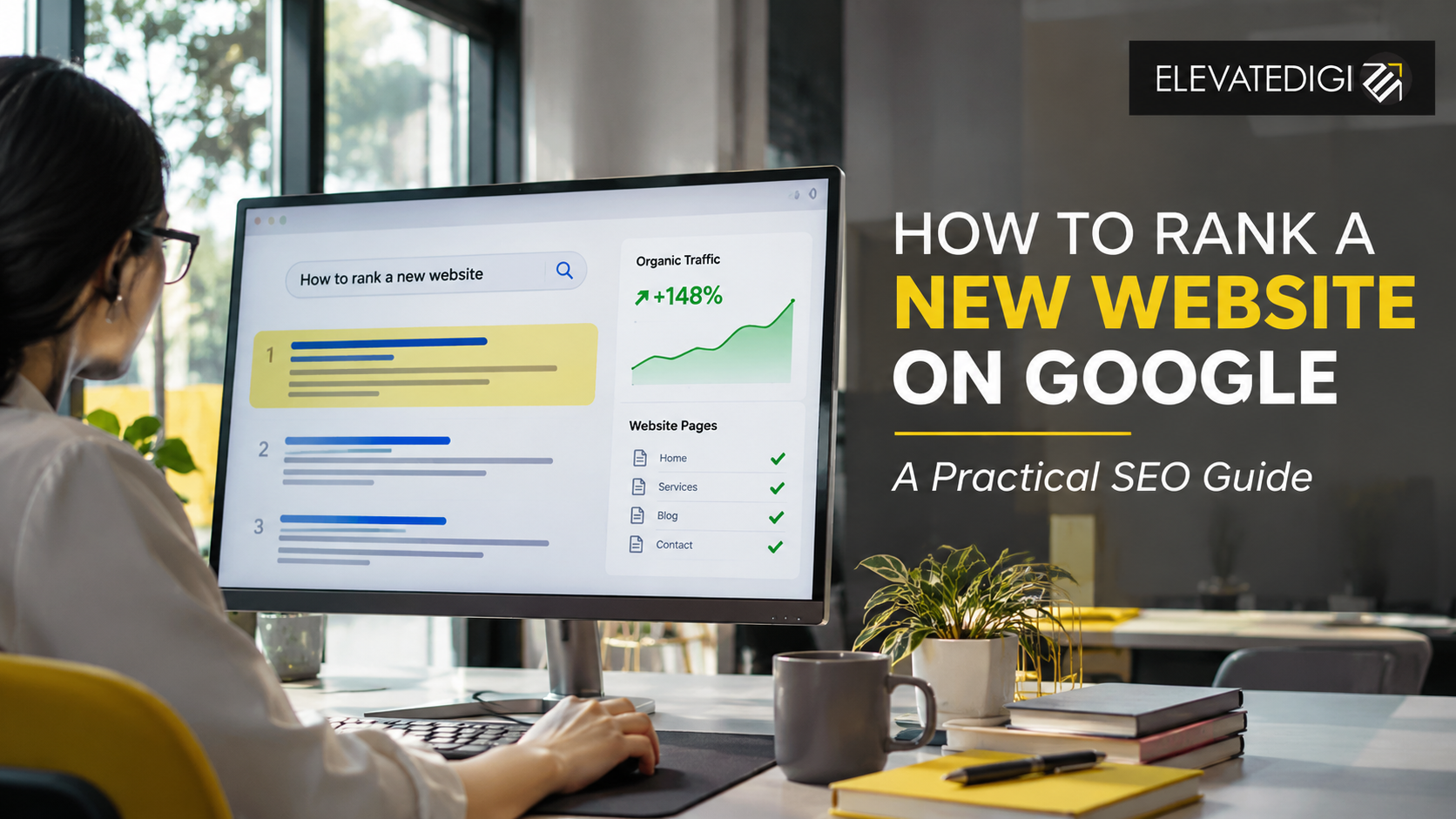
    How to Rank a New Website on Google

    Launching a new website is an exciting step for any business. However, getting it noticed on Google is a different challenge altogether. You may have a professionally designed website, quality products or services, and useful content, but none of these automatically guarantee visibility in search results.

    For a new website, building search engine visibility takes time, consistency and a well-planned SEO strategy. Google needs to discover your pages, understand what your website offers and determine whether your content is relevant enough to appear for specific search queries.

    This is where SEO (Search Engine Optimisation) becomes important. A properly planned SEO strategy helps new websites build credibility, attract relevant visitors and gradually improve their organic search rankings.

    Whether you are launching a business website, an e-commerce store or a professional service website, understanding how to rank a new website on Google can help you establish a strong online presence without depending entirely on paid advertising.

    In this guide, we will explore the practical steps involved in improving a new website’s Google visibility and building a sustainable SEO foundation.

    Why Is It Difficult to Rank a New Website on Google?

    A newly launched website does not have an established search presence. Unlike older websites that may already have backlinks, indexed pages and brand recognition, a new domain needs to build these signals over time.

    Google uses automated systems to discover, crawl, index and rank web pages. Simply publishing a website does not mean every page will immediately appear in search results.

    Another challenge is competition. If you are targeting a keyword such as digital marketing services, hundreds of established websites may already be competing for the same search query.

    For example, a newly launched digital marketing agency cannot expect to rank immediately for highly competitive keywords. It needs to establish topical relevance, publish useful content, improve technical performance and earn credibility.

    The key is to approach SEO as a long-term investment rather than expecting instant results.

    How to Rank a New Website on Google

    1. Start with Proper Keyword Research

    Before creating website pages or publishing blogs, understand what your potential customers are searching for.

    Keyword research helps identify the search terms people use when looking for products, services or information related to your business.

    For example, a business offering digital marketing services in Kolkata may target keywords such as SEO Company in Kolkata, digital marketing services in Kolkata or social media marketing agency in Kolkata.

    However, targeting only broad and highly competitive keywords may not be the best strategy for a new website.

    Instead, focus on specific search queries that reflect clear user intent. Long-tail keywords can help new websites reach more relevant audiences and compete for less broad search terms.

    Tools such as Google Keyword Planner, Google Trends and Google Search Console can help you understand keyword opportunities and search behaviour.

    2. Create High-Quality Content That Answers Search Queries

    Content plays an important role in helping Google understand your website.

    A new website should have useful, original and informative content that addresses the actual questions of its target audience. Avoid publishing articles simply to increase the number of pages on your website.

    For example, if you offer SEO services, creating blogs around topics such as website ranking problems, keyword research, technical SEO and local search optimisation can help establish topical relevance.

    Each page should have a clear purpose. Your content should answer the reader’s question, provide practical information and demonstrate a genuine understanding of the subject.

    At ElevateDigi, we believe that effective SEO content should serve two purposes: helping search engines understand a website and giving visitors a reason to trust the business.

    3. Optimise Your Website’s On-Page SEO

    Publishing good content is only one part of the process. Your website pages also need proper on-page optimisation.

    Start with unique and descriptive title tags and meta descriptions for important pages. Include your primary keyword naturally in the page title, main heading and relevant sections without unnecessarily repeating it.

    Your heading structure should also be organised logically. Use one clear H1 heading to introduce the page, followed by relevant H2 and H3 headings.

    For example, a page targeting Rank a New Website on Google should clearly explain the subject rather than repeatedly inserting the same phrase into every paragraph.

    Internal linking is another important part of on-page SEO. Link relevant pages together so visitors can explore related information and search engines can discover how different sections of your website are connected.

    4. Make Sure Google Can Crawl and Index Your Website

    One of the most important steps for a new website is ensuring that Google can access and understand its pages.

    A website may look perfectly functional to visitors but still have technical problems that prevent search engines from discovering important content.

    Start by setting up Google Search Console. Verify your domain, submit your XML sitemap and monitor indexing reports to understand which pages Google has discovered and indexed.

    Check your robots.txt file to ensure that important sections of the website are not accidentally blocked. Also, review pages for incorrect noindex directives and broken internal links.

    Google’s URL Inspection Tool can help you check the indexing status of individual URLs and request indexing when appropriate.

    Remember that requesting indexing does not guarantee inclusion in Google Search. Your pages still need to meet Google’s technical and quality requirements.

    5. Improve Website Speed and Mobile Experience

    Website performance affects how visitors experience your business online.

    Imagine someone searching for your services on their mobile phone. They click your website, but the page takes several seconds to load. In many cases, they may simply return to Google and visit another website.

    A slow or poorly designed website can create a negative user experience.

    Pay attention to Google’s Core Web Vitals, particularly Largest Contentful Paint (LCP), Interaction to Next Paint (INP) and Cumulative Layout Shift (CLS).

    Optimise large images, reduce unnecessary scripts, use efficient hosting and ensure that your website layout works properly across different screen sizes.

    Google also uses the mobile version of website content for indexing and ranking, making mobile-friendly design particularly important.

    6. Build Quality Backlinks to Establish Website Authority

    Backlinks are links from other websites pointing towards your website. They can help Google discover your content and provide useful signals about your website’s reputation.

    However, getting hundreds of random backlinks is not a reliable SEO strategy.

    A new website should focus on earning relevant and trustworthy links. This could include genuine business directories, industry publications, relevant guest contributions, business partnerships and useful resources that other websites naturally want to reference.

    For example, a Kolkata-based business can build relevant local visibility through legitimate business listings and industry-specific publications.

    The quality and relevance of backlinks matter more than simply increasing their number. Avoid buying spammy backlinks or participating in link schemes, as these practices can create long-term SEO risks.

    7. Focus on Local SEO If You Serve a Specific Location

    If your business serves customers in a particular city, local SEO can be a valuable opportunity.

    For example, a company operating in Kolkata should optimise its website for relevant location-based searches rather than targeting only broad national keywords.

    Create useful service pages that explain what your business offers and where you operate. Maintain accurate business information, including your name, address and phone number.

    Setting up and maintaining a Google Business Profile can also help eligible businesses improve their local search presence.

    For instance, someone searching for an SEO Company in Kolkata may be looking for an agency that understands the local business environment and can provide relevant digital marketing services.

    A well-optimised local presence can help a new business connect with potential customers who are actively searching for its services.

    8. Publish Consistently and Update Existing Content

    SEO is not a one-time activity. Search behaviour changes, competitors publish new content and information can become outdated.

    A new website should follow a realistic content publishing schedule. Instead of publishing several low-quality articles at once, focus on creating genuinely useful pages that cover important topics within your industry.

    Review existing content periodically. Update outdated information, improve explanations, add relevant internal links and remove unnecessary sections.

    For example, an article discussing SEO strategies should be reviewed when Google’s documentation or search features change significantly.

    Consistency helps build a stronger content foundation and gives search engines more useful pages to discover over time.

    How Long Does It Take for a New Website to Rank on Google?

    There is no fixed timeline for ranking a new website on Google.

    Some pages may get indexed within days, while others may take considerably longer. Ranking improvements depend on factors such as competition, website quality, technical SEO, content relevance, backlinks and the search queries being targeted.

    A new website targeting a specific long-tail keyword may start gaining visibility earlier than one competing for a highly competitive industry keyword.

    Google itself explains that SEO changes can take anywhere from a few hours to several months to reflect in search results. This is why businesses should measure progress through organic impressions, clicks, keyword visibility and relevant conversions rather than expecting immediate first-page rankings.

    Common SEO Mistakes That New Websites Should Avoid

    Many new businesses make the mistake of focusing entirely on keywords while ignoring the overall quality of their website.

    Keyword stuffing, duplicate content, buying low-quality backlinks and publishing AI-generated articles without proper review can weaken an SEO strategy.

    Another common problem is neglecting technical SEO. Missing XML sitemaps, broken pages, incorrect canonical tags and indexing restrictions can prevent important content from performing as expected.

    It is equally important not to create multiple pages targeting nearly identical keywords without a clear purpose. This can create unnecessary duplication and make it difficult for search engines to understand which page should rank.

    A successful SEO strategy requires a balance between technical performance, useful content, website structure and genuine authority.

    Why Should You Work with an SEO Agency for a New Website?

    Building an SEO strategy requires more than adding keywords to website content. It involves technical audits, competitor research, content planning, on-page optimisation, link-building strategies and continuous performance monitoring.

    For businesses that do not have an in-house SEO team, working with an experienced agency can make this process more organised.

    An experienced SEO Agency in Kolkata can help identify relevant keyword opportunities, resolve technical issues, improve website structure and develop a content strategy based on your business objectives.

    At ElevateDigi, we focus on creating SEO strategies that combine technical optimisation, relevant content and search intent. Our approach is centred on helping businesses build a sustainable online presence rather than chasing short-term ranking improvements.

    Whether you are launching a new business website or trying to improve an existing one, having a clear SEO roadmap can make a significant difference to your long-term digital growth.

    Conclusion

    Ranking a new website on Google requires patience, planning and consistent execution. From keyword research and content creation to technical SEO and backlink development, every part of the process contributes to building a stronger search presence.

    Instead of trying to achieve quick rankings through shortcuts, focus on creating a website that genuinely helps its visitors. Make your pages accessible to search engines, publish useful information, maintain a good mobile experience and regularly monitor your SEO performance.

    A strong SEO foundation built today can help your website attract relevant organic traffic and generate business opportunities over time.

    If you are planning to launch a new website or improve its search visibility, ElevateDigi can help you develop a structured SEO strategy designed around your business goals.

    Frequently Asked Questions (FAQs)

    1. How can I rank a new website on Google?

    Start with keyword research, create useful and original content, optimise your website’s on-page SEO, improve technical performance and build relevant backlinks. Set up Google Search Console to monitor indexing and organic search performance.

    2. How long does it take for a new website to rank on Google?

    There is no guaranteed timeline. Some pages may get indexed within days, but achieving meaningful search rankings can take several months or longer, depending on competition, content quality, technical SEO and website authority.

    3. Can a new website rank on Google without backlinks?

    Yes. A new website can rank for certain search queries without having backlinks, particularly less competitive and specific keywords. However, earning relevant, high-quality backlinks can help strengthen its authority and competitiveness.

    4. How many blogs should a new website publish every month?

    There is no fixed number of blogs required by Google. A new website should prioritise content quality, relevance and consistency. Publishing four to eight well-researched articles per month can be a reasonable starting target for businesses with sufficient resources.

    5. Is hiring an SEO agency necessary for a new website?

    Hiring an SEO agency is not compulsory, but professional guidance can help businesses identify technical problems, target the right keywords and develop an effective content strategy. An experienced SEO Agency in Kolkata can also help businesses monitor progress and improve their organic search performance.
  • Why Are My Website Pages Discovered but Not Indexed by Google?

    Why Are My Website Pages Discovered but Not Indexed by Google?

    You publish a new blog, update your website content, and wait for Google to show your pages in search results. But when you check Google Search Console, you find a status that says “Discovered – currently not indexed.” Days pass, and the page still does not appear on Google.

    If this sounds familiar, you are not alone. Website owners often encounter this issue, particularly when they publish content regularly or manage websites with hundreds of URLs.

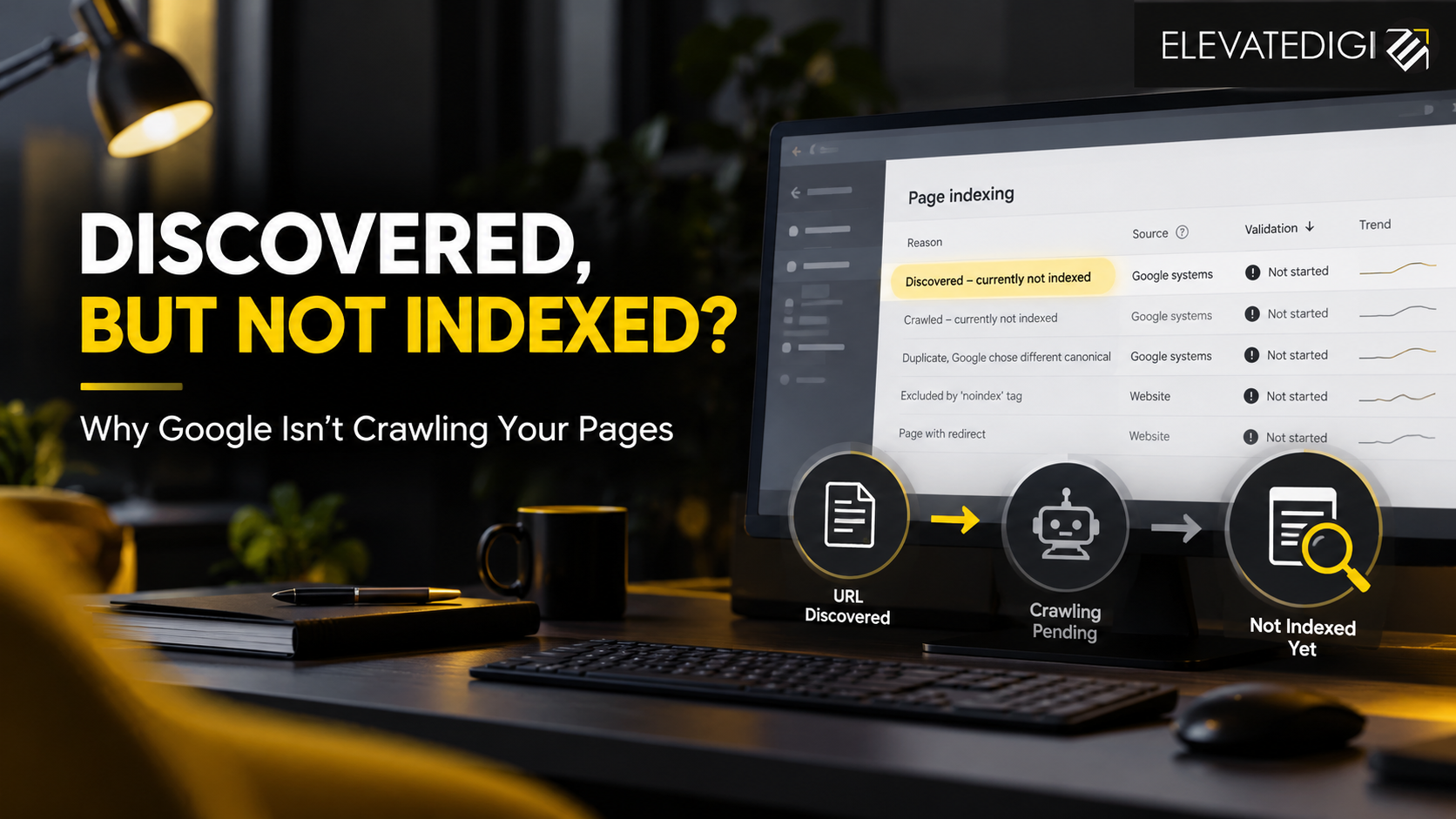
    The discovered currently not indexed status means Google knows that your URL exists but has not yet crawled it. This is different from a page that Google has crawled but decided not to include in its index.

    Although this status does not necessarily indicate a technical error, it can affect your website’s organic visibility if important pages remain unindexed for an extended period. Understanding why this happens is the first step towards resolving the issue.

    In this guide, ElevateDigi explains the common causes of this indexing problem, how to diagnose it using Google Search Console, and what you can do to help Google discover and index your website pages more efficiently.

    What Does “Discovered – Currently Not Indexed” Mean?

    Google uses automated systems to discover URLs, crawl their content, evaluate their quality, and decide whether they should be included in its search index. These processes do not always happen immediately.

    When a page receives the discovered currently not indexed status in Google Search Console, it means Google has discovered the URL but has not crawled it yet. Google may postpone crawling because of factors such as crawl capacity, website performance, or the number of URLs waiting to be processed. If these issues persist, consulting an experienced SEO Company in Kolkata can help identify technical SEO problems and improve your website’s crawling efficiency.

    For example, suppose you publish a new service page on your website. Google discovers the URL through your XML sitemap or an internal link, but the page remains unvisited by Google’s crawler. The URL may appear under this status in the Page Indexing report.

    This does not automatically mean your content is poor or that your website has received a penalty. Google may simply not have crawled the page yet.

    It is also important to distinguish this status from “Crawled – currently not indexed.” In that case, Google has already visited the page but has not included it in its index. The reasons and troubleshooting steps can be different.

    Why Are Your Website Pages Discovered but Not Indexed by Google?

    There is rarely one explanation that applies to every website. The underlying cause may relate to your site’s technical health, content structure, internal linking, or the way Google allocates its crawling resources.

    1. Your Website Has Too Many URLs for Google to Crawl Efficiently

    Large websites can generate thousands of URLs through product filters, search parameters, pagination, category variations, and other features. Even a relatively small website can create unnecessary URLs if its CMS or plugins generate multiple versions of the same page.

    When Google discovers a large number of URLs, it must determine which pages to crawl and when. If your website generates many low-value or duplicate URLs, important pages may take longer to be crawled.

    For example, an e-commerce website might generate separate URLs for every combination of colour, size, sorting option, and filter. If these variations do not provide meaningful additional content, they can complicate crawling.

    Review your URL structure and identify unnecessary URL variations. Make sure your XML sitemap contains the canonical URLs you actually want Google to index. Understanding SEO vs AI Search can also help you develop a more effective visibility strategy, ensuring your website’s important pages are accessible to search engines and structured to support discovery across traditional search results and AI-powered search platforms.

    2. Your Website Has Weak Internal Linking

    Internal links help Google discover the relationship between pages on your website. They also help search engines understand which pages are important within your overall site structure.

    If a newly published blog or service page has no internal links pointing to it, Google may discover it through a sitemap but have fewer signals about its importance.

    Imagine publishing an important service page that is not linked from your homepage, service menu, related blogs, or category pages. Although the URL exists, it remains poorly connected to the rest of your website.

    You can improve this situation by linking relevant pages naturally. For instance, a blog about technical SEO could link to a related website audit service page, while the service page could link back to useful educational content.

    A logical internal linking structure makes it easier for visitors and search engines to navigate your website.

    3. Your Website Is Slow or Frequently Experiences Server Errors

    Website performance can influence how efficiently Google crawls your pages. If your server responds slowly, frequently returns errors, or struggles with large numbers of requests, Google may reduce its crawling activity.

    This is particularly relevant for websites hosted on unreliable servers or websites that experience sudden traffic spikes.

    Check your server logs, hosting performance, and response codes to determine whether Googlebot encounters delays or errors. Google Search Console’s crawl statistics can also help identify problems with server availability and response times.

    Improving server reliability, reducing unnecessary redirects, and resolving recurring 5xx errors can help create a more accessible website.

    However, a slow page does not automatically cause the discovered status. The status means the page has not yet been crawled, so investigate the broader crawling process rather than focusing only on page speed.

    4. Your XML Sitemap Contains URLs That Should Not Be Indexed

    An XML sitemap helps Google discover important URLs, but submitting a URL does not guarantee that Google will crawl or index it.

    Problems arise when a sitemap includes outdated URLs, redirected pages, URLs returning errors, duplicate pages, or pages marked with a noindex directive.

    For example, if your sitemap contains an old service URL that redirects to a new page, Google must process the redirect before it can understand the destination URL’s status. A sitemap filled with unnecessary URLs can also make it harder to maintain a clean indexing strategy.

    Review your XML sitemap and include the preferred, canonical URLs of pages you want indexed. Remove URLs that redirect, return errors, or are intentionally excluded from search results.

    For WordPress websites, check whether your SEO plugin automatically generates the sitemap and whether its settings reflect your current website structure.

    5. Your Website Has Recently Published or Updated Many Pages

    New websites and recently expanded websites may need time for Google to discover and crawl their pages. The same can happen after a redesign, migration, major URL restructuring, or a large content publication campaign.

    If you publish dozens or hundreds of URLs in a short period, Google may not crawl every page immediately.

    For example, a business launching a new set of location pages might find that some URLs are indexed quickly while others remain in the discovered status. This is also why SEO Blogging: Why Daily Posts Don’t Improve Rankings is an important topic for businesses to understand, as publishing content frequently does not guarantee faster indexing or better rankings without quality content, proper internal linking, and a well-structured website.

    In this situation, check whether the pages are accessible, internally linked, and included in the correct sitemap. Monitor their status over time instead of repeatedly submitting the same URLs.

    If the pages remain unindexed for an extended period, investigate the site’s crawling patterns and technical configuration.

    6. Google Has Limited Signals About Which Pages Matter Most

    Google does not necessarily crawl every URL it discovers at the same speed. A website’s overall structure, the number of URLs it generates, server responsiveness, and the importance of individual pages can all influence crawling decisions.

    If your most valuable service pages are buried deep within the website, they may receive less internal linking support than pages that are accessible through prominent navigation.

    Consider a digital marketing agency website with separate pages for SEO, social media marketing, performance marketing, and AEO. If these pages are disconnected from the main services section, Google may have fewer opportunities to discover them through normal site navigation.

    Organise your website so that important pages are easy to reach from relevant category pages, navigation menus, and supporting content. A clear hierarchy helps both users and search engines understand the purpose of each page.

    7. Your Website Has Technical Issues That Interfere With Crawling

    Technical SEO problems can prevent Google from accessing URLs as expected. Incorrect redirects, inconsistent canonical tags, blocked resources, authentication requirements, and server configuration issues may complicate the crawling process.

    For example, a website migration may leave behind redirect chains or outdated internal links. Google might discover an old URL while the preferred destination remains difficult to find.

    Start by checking the URL Inspection tool in Google Search Console. Confirm the page’s HTTP response, crawl accessibility, indexing directives, and canonical configuration.

    Also review your robots.txt file. Although a robots.txt restriction does not always explain the discovered status, it can prevent Googlebot from crawling URLs that you intend to make available for indexing.

    If the issue began after a website redesign or migration, compare the old and new URL structures to identify any configuration mistakes.

    How to Fix “Discovered – Currently Not Indexed” in Google Search Console

    Finding the status is only the beginning. The next step is to establish why Google has not crawled the affected URLs and address the actual cause.

    Step 1: Inspect the Affected URL

    Open Google Search Console and use the URL Inspection tool to check one of the affected pages.

    Review the indexing information and confirm whether Google has discovered the URL, whether it has been crawled, and whether any accessibility or indexing issues are reported.

    If the page has not been crawled, focus first on crawl accessibility, internal linking, server behaviour, and URL discovery. Do not assume that the page needs to be rewritten simply because it has not yet been indexed.

    Step 2: Check Whether Google Can Access the Page

    Open the page in a browser and confirm that it loads correctly without requiring a login or special permissions.

    Check the HTTP response, robots.txt rules, meta robots directives, and any server-side restrictions that might prevent Googlebot from crawling the page.

    A page intended for search visibility should generally return a successful response and should not be unintentionally blocked from crawling.

    Step 3: Strengthen Internal Links

    Add contextual links from relevant, already accessible pages to the affected URL. Prioritise important service pages, category pages, and useful supporting articles.

    Avoid adding unrelated links merely to increase their number. Internal links should help readers navigate naturally and understand how the content connects. Understanding SEO Fundamentals in 2026 can help businesses build a stronger internal linking strategy, improve website structure, and make important pages easier for search engines and users to discover.

    Step 4: Clean Up Your XML Sitemap

    Make sure your sitemap contains the correct URLs and that those URLs are accessible, canonical, and intended for indexing.

    Remove outdated URLs and investigate redirects or errors. If your website uses an SEO plugin, check that the sitemap is being generated correctly after content updates.

    Step 5: Review Your Website’s Crawling Patterns

    If many pages have the same status, look beyond individual URLs. Google Search Console’s Crawl Stats report, where available, and your server logs can help identify repeated server errors, unusually high URL discovery, or crawling delays.

    A pattern affecting hundreds of pages may point to a site-wide issue rather than a problem with each page individually.

    Step 6: Request Indexing When Appropriate

    After fixing the underlying issue, use URL Inspection to test the page and request indexing where the option is available.

    Requesting indexing is not a guarantee that Google will crawl or index the page. Repeatedly submitting the same URL without making meaningful changes is unlikely to solve a broader crawling problem.

    Allow time for Google to process the changes and monitor the affected URLs in Search Console.

    How Long Does Google Take to Index Discovered Pages?

    There is no fixed timeframe for indexing. Some pages may be crawled relatively quickly, while others can remain undiscovered by the crawler for longer periods.

    The timeline depends on several factors, including website size, crawling patterns, server availability, URL structure, and the overall accessibility of the pages.

    For a new website, indexing may take longer because Google has limited history with the domain. For an established website, a sudden increase in affected URLs may justify a closer technical investigation.

    Instead of checking the same page repeatedly throughout the day, monitor changes over a reasonable period. If important pages remain in the same state, review the technical evidence and look for common patterns among affected URLs.

    The objective is not to force Google to crawl every URL immediately. It is to make sure the pages you want indexed are accessible, useful, well connected, and easy for search engines to discover.

    When Should You Seek Professional SEO Help?

    If only one or two newly published pages have this status, a short delay may not be a serious concern. However, the situation deserves closer attention when important commercial pages remain unindexed or when the number of affected URLs continues to increase.

    For example, an unindexed service page may limit its opportunity to appear in relevant organic search results. Similarly, a product category page that remains outside Google’s index may reduce the visibility of the products it supports.

    An experienced SEO professional can examine your website’s URL structure, internal linking, server logs, crawl statistics, sitemap configuration, and indexing directives to identify the underlying cause.

    Businesses looking for an SEO Company in Kolkata should prioritise agencies that explain their findings using actual website data rather than promising guaranteed rankings or instant indexing.

    At ElevateDigi, a technical SEO review can help identify indexing barriers, prioritise corrective actions, and build a more structured approach to organic search visibility. Working with an experienced SEO Agency in Kolkata can be especially useful when indexing problems affect multiple service pages, a large blog archive, or an e-commerce catalogue.

    The right solution depends on the evidence. Rewriting content, changing URLs, or modifying technical settings without identifying the cause may create additional problems rather than resolve the original issue.

    Conclusion

    The discovered currently not indexed status does not necessarily mean Google has rejected your content. It means Google has discovered the URL but has not crawled it yet.

    The most effective response is to investigate the cause systematically. Review internal linking, sitemap quality, server performance, crawling restrictions, and URL structure before making changes. Use Google Search Console to validate your findings and monitor the results after implementing a fix.

    For businesses that depend on organic search traffic, resolving indexing issues is an important part of maintaining a healthy website. With a clear technical SEO strategy, you can help Google discover your important pages more efficiently and build a stronger foundation for long-term visibility.

    ElevateDigi helps businesses approach SEO through technical analysis, structured content, and practical optimisation strategies designed to support sustainable online growth.

    Frequently Asked Questions (FAQs)

    1. What does “Discovered – currently not indexed” mean in Google Search Console?

    It means Google has discovered the URL but has not crawled it yet. Google may postpone crawling because of factors such as crawl capacity, server performance, or the number of URLs waiting to be processed. It does not automatically mean your page has been penalised.

    2. How do I fix discovered currently not indexed pages?

    Start by inspecting the affected URL in Google Search Console. Check whether Google can access the page, review your sitemap and robots.txt file, strengthen relevant internal links, and investigate server or URL-structure problems. Request indexing after addressing any identified issues.

    3. What is the difference between discovered and crawled but not indexed?

    Discovered – currently not indexed means Google knows the URL exists but has not crawled it yet. Crawled – currently not indexed means Google has visited the page but has not included it in the index. The second status requires you to investigate why the page was not indexed after crawling.

    4. Does requesting indexing guarantee that Google will index my page?

    No. Requesting indexing through Google Search Console asks Google to consider crawling the page, but it does not guarantee crawling or inclusion in search results. The page must also be accessible and meet Google’s requirements for indexing.

    5. Can an SEO agency help fix indexing issues?

    Yes. An experienced SEO agency can audit your website’s technical configuration, internal links, sitemap, server responses, and crawling patterns to identify potential causes. If your important pages remain unindexed, an SEO Agency in Kolkata such as ElevateDigi can help you investigate the issue and prioritise appropriate technical improvements.

  • Why Your Website Is Not Appearing in AI-Generated Answers

    Why Your Website Is Not Appearing in AI-Generated Answers

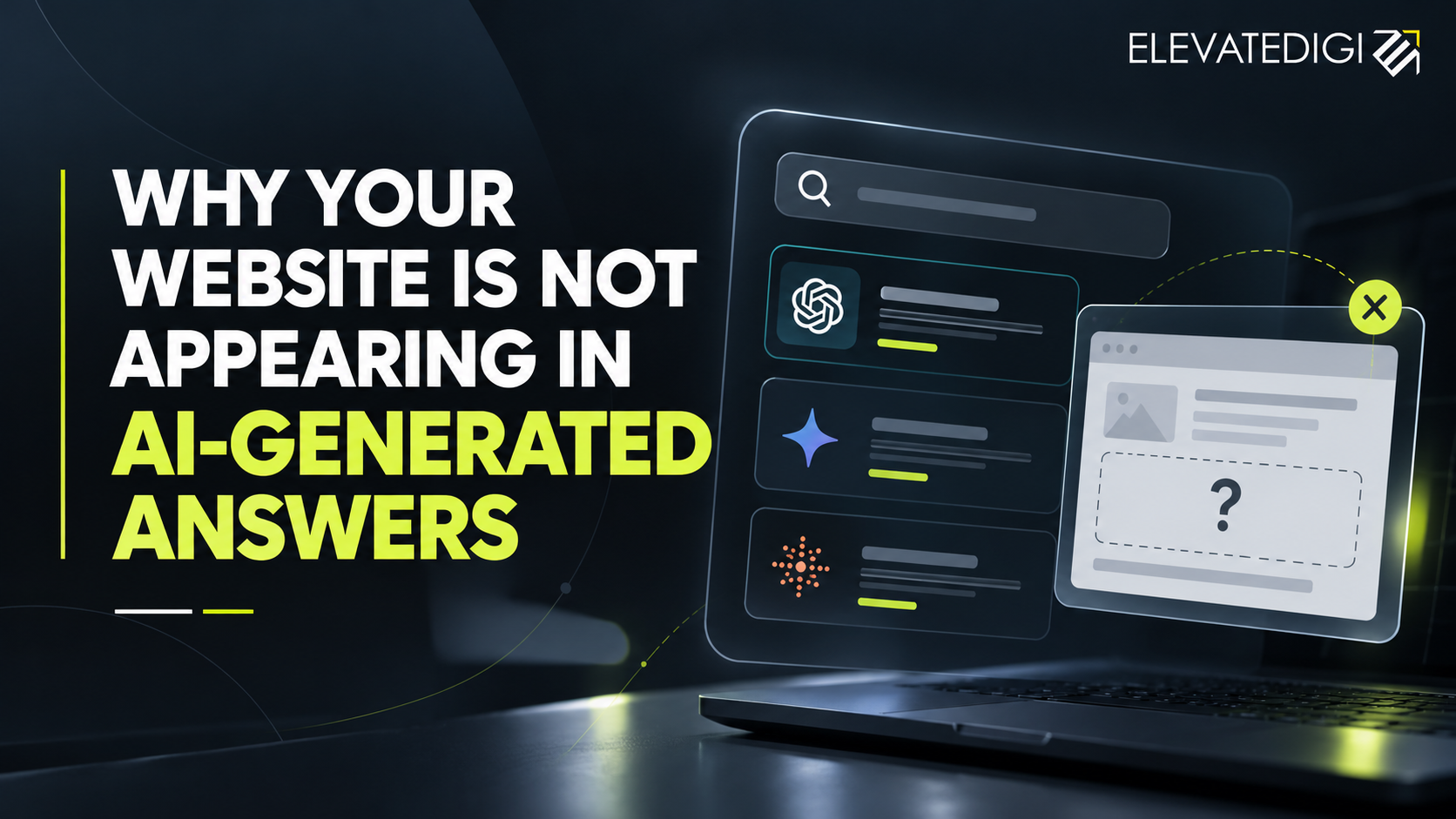
    Search behaviour is changing. People are no longer relying only on traditional search results to find information, compare services, or choose a business. They are increasingly asking AI-powered platforms such as ChatGPT, Google’s AI Overviews, and Perplexity direct questions and expecting clear, relevant answers.

    For businesses, this shift creates a new challenge. Your website may be indexed by Google, your SEO strategy may be performing reasonably well, and your content may be attracting visitors, yet your brand might not appear in AI-generated answers.

    So, why does this happen?

    The answer is not always a lack of keywords or backlinks. AI search visibility depends on several factors, including content quality, website accessibility, topical relevance, brand credibility, and how clearly your information answers a user’s question.

    This is where Answer Engine Optimization (AEO) becomes important. With the right strategy, businesses can improve how their content is understood, evaluated, and potentially referenced by AI-powered answer engines.

    In this blog, we will explore the common reasons your website may be missing from AI-generated answers and what you can do to improve its visibility.

    What Does It Mean When Your Website Does Not Appear in AI-Generated Answers?

    AI-generated answers are responses created by artificial intelligence systems using information from their training, available search results, connected data sources, or a combination of these, depending on the platform.

    When someone asks an AI tool a question, it may provide a direct answer, recommend relevant businesses, summarise information from websites, or cite selected sources.

    If your website is not appearing in these responses, it does not automatically mean that your website has a technical problem. The platform may simply be using other sources that it considers more relevant to the question.

    For example, imagine someone asks an AI search platform to recommend a reliable digital marketing agency in Kolkata. If your website clearly explains your services but provides limited evidence of your experience, expertise, or relevance to the query, the platform may reference other businesses instead.

    This is one reason businesses are exploring AEO Services in Kolkata to complement their existing SEO efforts and improve their chances of being discovered through AI-powered search experiences.

    Why Is Your Website Not Appearing in AI-Generated Answers?

    There is rarely one explanation for poor AI search visibility. In most cases, several content, technical, and authority-related factors may be involved.

    1. Your Content Does Not Directly Answer Users’ Questions

    One of the most common issues is content that focuses heavily on promoting a business without sufficiently answering the questions its audience actually asks.

    Consider a service page that repeatedly describes a company as a leading digital marketing agency but never explains how its services work, which business problems they solve, or what customers should consider before choosing a provider.

    Although the page may contain relevant keywords, it offers limited information that can help someone make a decision.

    AI answer engines are designed to provide useful responses to specific queries. Content that answers questions clearly, provides meaningful context, and explains complex topics in straightforward language can be easier for these systems to interpret.

    How to improve your content

    Review your important website pages and identify the questions your potential customers are likely to ask before contacting you. If you offer digital marketing services, these might include questions about campaign budgets, expected timelines, service suitability, reporting methods, and how results are measured.

    Address these questions naturally within your content. Use descriptive headings, provide direct explanations, and support your claims with relevant examples wherever possible.

    The goal is not to turn every paragraph into a short answer. It is to make sure the page provides genuine value rather than simply repeating promotional language.

    1. Your Website Has Weak Topical Authority

    Publishing one article about a subject does not necessarily establish your website as a reliable source of information on that topic.

    For example, a business that wants to be discovered for Answer Engine Optimization may have a single AEO blog but no supporting content explaining AI search visibility, content optimization, structured data, technical SEO, or the relationship between AEO and traditional search.

    This creates a limited picture of the website’s expertise.

    Building topical authority involves publishing useful, connected content that covers a subject from multiple relevant angles. Each page should serve a distinct purpose rather than repeat the same information using slightly different keywords.

    For a company such as ElevateDigi, a structured AEO content strategy could include practical guides, technical explanations, industry-specific use cases, and articles about measuring AI search visibility.

    Internal links between these resources can help visitors discover related information and help search engines understand the relationship between pages. However, internal linking alone does not guarantee inclusion in AI-generated answers.

    1. Your Website Is Difficult for Search Systems to Access

    Sometimes, the problem is technical rather than editorial.

    If important website pages are blocked from crawling, return errors, contain incorrect canonical tags, or are inaccessible because of rendering issues, search engines may struggle to discover or index their content.

    AI search platforms also differ in how they discover and retrieve information. Some use search indexes, while others rely on their own retrieval systems or additional sources. Therefore, appearing in one platform does not guarantee visibility in another.

    Technical issues worth checking

    Start by checking whether your important pages return successful HTTP responses and can be crawled by the relevant search engines. Review your robots.txt file, XML sitemap, canonical tags, indexing directives, and internal links.

    For platforms that use dedicated crawlers, review the platform’s official documentation to understand which crawlers or access rules may affect discovery. Do not assume that allowing one crawler automatically enables every AI search feature.

    It is also worth checking whether important page content is visible in the rendered HTML and whether mobile users can access the same essential information as desktop users.

    Technical accessibility creates the foundation for visibility, but it does not guarantee that a platform will select your website as a source.

    1. Your Website Lacks Clear and Verifiable Brand Information

    AI-generated answers may mention brands when responding to questions about products, services, or recommendations. For a business to be understood correctly, its online information should clearly establish what it does, who it serves, and what makes it relevant.

    If your website describes your company differently across multiple pages, provides little information about its team, or makes unsupported claims about its experience, it may be harder for users and automated systems to establish a consistent understanding of the brand.

    For instance, a digital marketing company should clearly explain whether it specialises in SEO, paid advertising, social media marketing, AEO, or a combination of services.

    Your website should also provide accurate company information, clear service descriptions, relevant contact details, and evidence supporting important claims.

    External sources can help reinforce this understanding. Consistent business listings, credible industry mentions, relevant partnerships, and genuine customer reviews can contribute to your overall online reputation.

    These signals should reflect real business activity. Creating artificial mentions or publishing fabricated reviews is not a sustainable way to build brand credibility.

    1. Your Content Does Not Demonstrate First-Hand Experience

    Generic content is widely available online. When several websites explain the same topic using nearly identical definitions and advice, it becomes difficult to offer readers a compelling reason to trust one source over another.

    Google’s people-first content guidance emphasises usefulness, reliability, and the value of demonstrating first-hand experience where appropriate. These principles are also valuable when developing content intended to be discovered through AI search.

    Instead of publishing another article that merely defines AEO, explain how businesses can investigate their visibility, what technical problems they should check, and how they can assess whether their content answers relevant questions.

    Where possible, include original observations, practical examples, genuine case studies, expert commentary, and transparent explanations of your methods.

    If you discuss campaign results, provide accurate figures and explain the context in which they were achieved. Never invent performance data or present hypothetical outcomes as real client results.

    For ElevateDigi, this means creating content that demonstrates practical digital marketing knowledge rather than relying entirely on broad industry statements.

    1. You Are Relying Only on Traditional SEO Tactics

    Traditional SEO remains important, but improving keyword rankings alone does not guarantee that your website will appear in AI-generated answers.

    A page can rank well for a particular query and still be absent from an AI-generated response. The answer engine may use different retrieval methods, select other sources, or respond without citing your website.

    Similarly, a page with excellent keyword placement may still offer little original value.

    This is why businesses are increasingly considering Answer Engine Optimization alongside conventional SEO.

    AEO focuses on making information easy to understand, answer, and potentially reference in conversational and AI-powered search experiences. It involves many practices that overlap with SEO, including content quality, crawlability, structured information, and authority building.

    The objective is not to abandon keyword research. It is to use it as one part of a broader strategy that considers the questions people ask, the information they need, and how their preferred search platforms deliver answers.

    1. Your Website Structure Makes Information Difficult to Understand

    Even useful information can be difficult to interpret when it is poorly organised.

    Imagine a service page that contains several long paragraphs, vague headings, unrelated topics, and no clear distinction between services, benefits, processes, or frequently asked questions. A visitor may struggle to locate the information they need.

    A clearer structure improves the reading experience and makes the relationships between different sections easier to understand.

    Why headings and structured data matter

    Use descriptive H1, H2, and H3 headings to organise content logically. Keep each section focused on a specific question or subject, and explain unfamiliar terminology when it first appears.

    Structured data, such as relevant Organization, LocalBusiness, Article, or Service schema, can also help eligible search systems interpret specific information about your website.

    However, structured data should accurately reflect visible page content and comply with the relevant platform’s guidelines. Adding schema markup does not automatically improve rankings or secure citations in AI-generated answers.

    The most effective approach combines a logical page structure with useful content, accurate information, and a technically sound website.

    1. You Have Not Built a Consistent AI Search Monitoring Process

    Another possible reason your website appears to be missing from AI-generated answers is that you have not established a reliable way to measure its visibility.

    AI responses can vary according to the wording of a query, the user’s context, the platform, and the information available at the time. A single search is not enough to establish whether a website is consistently visible.

    Start by identifying the questions your potential customers are likely to ask. These should include informational queries, service comparisons, local searches, and questions about specific business problems.

    Test these queries across relevant AI search platforms and record whether your brand appears, whether your website is cited, and which competing sources are referenced.

    Repeat the checks periodically using consistent query wording. Separate branded queries from non-branded queries so you can distinguish existing brand awareness from broader discovery.

    Where available, use website analytics, search performance reports, referral traffic, and lead data to understand whether AI-related visibility is contributing to meaningful business outcomes.

    This approach provides a more useful picture than relying on isolated screenshots or assuming that a single successful mention proves a long-term improvement.

    How Can You Improve Your Website’s Visibility in AI-Generated Answers?

    Understanding the potential problems is only the first step. The next is to develop a practical improvement plan based on your website’s current condition.

    Create Content Around Real Customer Questions

    Begin with the questions customers ask during sales conversations, support enquiries, consultations, and product research. These questions often reveal the information people need before choosing a business.

    Build useful pages around those needs instead of creating multiple articles that target nearly identical keywords. Give readers clear answers, explain relevant trade-offs, and provide enough detail to help them understand the subject.

    FAQ sections can be useful when they address genuine questions. However, adding FAQs simply to increase word count or repeating the same answer across multiple pages is unlikely to provide much additional value.

    Strengthen Your Website’s Credibility

    Make it easy for visitors to understand who is behind your content and why they should trust it.

    Provide accurate information about your company, relevant team members, service expertise, and business experience. Where appropriate, include author information, publication dates, references to reliable sources, and details about how research or analysis was conducted.

    For service businesses, specific and verifiable information is more useful than unsupported claims of being the best or most trusted provider.

    Maintain consistency across your website and legitimate external business profiles. When your business information changes, update the relevant sources rather than allowing outdated details to remain online.

    Improve Technical SEO Before Expanding Your Content

    Publishing more articles will not solve a crawling or indexing problem.

    Check the technical health of your existing website before investing heavily in new content. Prioritise pages that matter to your business, including your homepage, key service pages, location pages, and high-value articles.

    Resolve indexing issues, improve internal linking, ensure important content is accessible, and use structured data where appropriate.

    Also review mobile usability and page performance. A fast, accessible website supports a better user experience, although no individual performance metric guarantees AI search visibility.

    Build a Connected Content Strategy

    Create a central resource around your primary service and support it with relevant articles that answer different customer questions.

    For example, a website promoting AEO Services in Kolkata could publish in-depth content about AEO fundamentals, AI search visibility, technical accessibility, content strategy, brand authority, and performance measurement.

    Link these articles to relevant service pages where doing so genuinely helps the reader. Each article should contribute something distinct rather than simply repeating the main service page.

    Over time, this approach can create a more useful resource for visitors while helping search systems understand the subjects your website covers.

    Measure Results and Keep Improving

    AEO is not a one-time optimisation task. Search platforms evolve, competitors publish new content, and the information selected for AI-generated answers can change.

    Review your priority queries regularly and look for patterns. Are other websites consistently being cited? Do they offer more specific explanations, original research, clearer business information, or stronger evidence?

    Use those observations to identify genuine gaps in your content and website experience.

    Avoid making large changes based on one unusual AI response. Instead, look for repeated patterns across relevant queries and platforms before deciding which improvements to prioritise.

    Why Businesses Are Investing in AEO Services in Kolkata

    For businesses operating in a competitive market, being discoverable only through traditional search results may not be sufficient to reach every potential customer.

    Consumers increasingly use different ways to research products, compare providers, and understand complex services. AI-powered search is one part of this changing landscape, alongside conventional search engines, social platforms, recommendations, and direct website visits.

    Professional AEO Services in Kolkata can help businesses evaluate how their websites perform in this environment and identify opportunities for improvement.

    The work may involve reviewing existing content, checking technical accessibility, analysing relevant search queries, improving page structure, strengthening brand information, and monitoring visibility across selected AI search platforms.

    The appropriate strategy depends on the business, its website, its target audience, and the platforms relevant to its customers. There is no universal formula that guarantees an AI-generated mention.

    At ElevateDigi, the objective is to help businesses build a stronger digital presence through practical, evidence-informed optimisation. By combining AEO with sound SEO principles and a clear content strategy, businesses can work towards making their expertise easier to discover and understand.

    How ElevateDigi Can Help Improve Your AI Search Visibility

    At ElevateDigi, we understand that digital visibility is about more than achieving a position in traditional search results. Businesses also need clear, useful information that helps potential customers understand their services and make informed decisions.

    Our approach begins with understanding your website, your target audience, your existing search performance, and the questions your customers are likely to ask.

    From there, we can identify content gaps, review technical SEO issues, improve the organisation of important pages, and develop a content strategy aligned with your business goals.

    We also recognise the importance of measuring outcomes realistically. Rather than promising guaranteed placement in ChatGPT, Google AI Overviews, or other answer engines, the focus should be on addressing identifiable barriers and improving the quality, accessibility, and relevance of your online information.

    If your business is investing in SEO but struggling to understand its visibility in AI-powered search, exploring AEO Services in Kolkata may be a useful next step.

    A structured assessment can help you understand where your website stands today and which improvements deserve attention first.

    Frequently Asked Questions (FAQs)

    1. Why is my website not appearing in AI-generated answers?

    Your website may not appear because its content does not sufficiently answer the user’s query, its pages are difficult to discover, its topical coverage is limited, or other sources provide more relevant information. The reason can vary by platform and search query, so reviewing technical accessibility, content quality, and brand credibility is a sensible starting point.

    1. Does traditional SEO help a website appear in AI search results?

    Yes, traditional SEO can support AI search visibility by helping search engines discover, crawl, and understand your website. High-quality content, relevant internal links, sound technical foundations, and credible information remain valuable. However, strong organic rankings do not guarantee that an AI platform will cite your website.

    1. How long does it take to improve AI search visibility?

    There is no fixed timeline. Results depend on the website’s current condition, the improvements required, the platform being monitored, and how frequently relevant content is discovered or retrieved. Some technical issues may be resolved relatively quickly, while building stronger content coverage and brand credibility can take considerably longer.

    1. Can small businesses benefit from AEO Services in Kolkata?

    Yes. Small businesses can use AEO principles to explain their services clearly, answer customer questions, strengthen their online information, and improve their overall search presence. A focused strategy built around relevant customer needs can be more practical than trying to compete for every broad industry query.

    1. What is the difference between AEO and SEO?

    SEO focuses on improving a website’s visibility in search engines through content, technical optimisation, authority, and other relevant factors. AEO focuses on making information suitable for discovery and use in direct answers and AI-powered search experiences. The two overlap significantly and are generally best approached as complementary strategies rather than competing alternatives.


Copyright © ElevateDigi. All Rights Reserved.