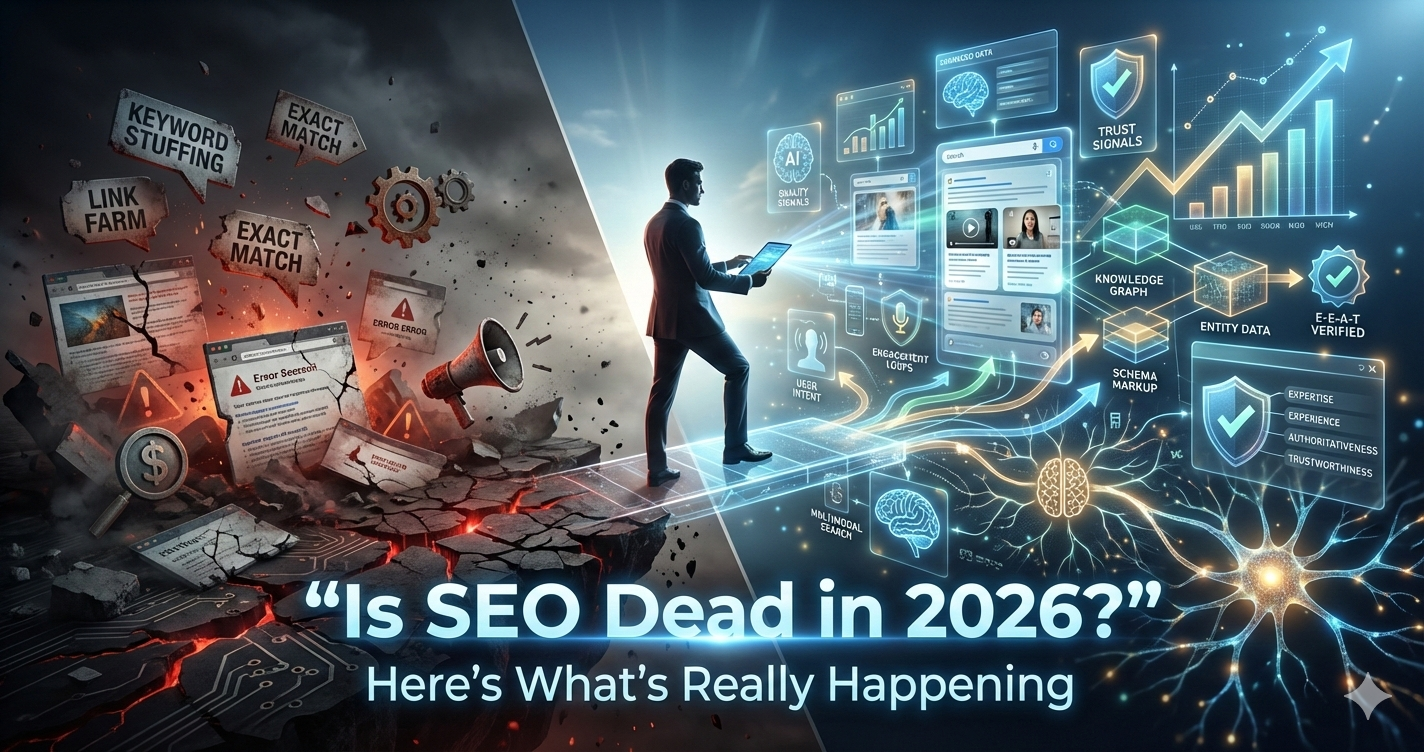
Every few years, SEO is declared “dead.” It happened with social media, with paid ads, with voice search, and now—with AI. In 2026, the rise of AI-powered search experiences, generative answers, and zero-click SERPs has reignited the debate louder than ever. Brands are seeing impressions without clicks, content summaries without attribution, and search journeys that no longer resemble the familiar ten blue links.
But here’s the truth: SEO is not dying—it’s evolving at its most critical stage yet.
What is dying is outdated SEO—keyword stuffing, thin blogs, mass AI content, and formulaic link building. What’s replacing it is a more sophisticated ecosystem where experience, expertise, authority, and trust (E-E-A-T) are the real ranking signals.
In 2026, search engines no longer just rank pages; they evaluate brands. They assess whether your content is reliable, whether users engage with it, and whether other authoritative platforms reference you. This shift is especially important for businesses working with an SEO Agency in Kolkata or investing in SEO Services in Kolkata, where competition is rising and differentiation matters more than volume.
This blog will explore whether SEO is truly dead, how AI has reshaped search, what fundamentals still matter, and how brands can future-proof visibility through SEO Trends 2026, AEO vs SEO in 2026, and LLM-first optimization strategies.
Is SEO Dead?
The short answer: No, SEO is not dead in 2026.
The long answer is more nuanced—and far more important.
SEO has shifted from a mechanical optimization exercise to a strategic authority-building discipline. Search engines now prioritise content that demonstrates real-world experience, subject-matter expertise, and brand credibility. Pages created solely to “rank” without adding value are systematically filtered out.
AI-generated answers have changed how users consume information, but they have not eliminated the need for high-quality source content. In fact, AI models rely on authoritative websites to generate accurate responses. If your brand is not part of that knowledge ecosystem, you become invisible.
Another misconception driving the “SEO is dead” narrative is declining click-through rates. While some informational queries no longer result in clicks, commercial, local, and decision-stage searches remain highly valuable. Users still search when they want to compare, validate, or purchase—making SEO essential for revenue-driven growth.
Modern SEO also goes beyond Google. Visibility now includes featured snippets, AI overviews, voice search responses, and LLM citations. This is where SEO Guide 2026 frameworks emphasise holistic optimization—technical health, brand mentions, UX, and trust signals working together.
SEO isn’t disappearing; it’s becoming harder to fake. Brands that rely on shortcuts will struggle, while those investing in strategy, originality, and authority will dominate.

How SEO Must Evolve to Win in 2026
SEO success in 2026 demands adaptation—not panic. The most effective strategies now extend far beyond traditional on-page tactics and focus on brand-first visibility.
From Backlinks to Brand Signals
Search engines increasingly treat brand mentions as trust indicators. Digital PR, thought leadership, and authoritative citations strengthen visibility even when direct links are absent.
Designing Content for How People Actually Search
Well-structured content, intuitive navigation, visual clarity, and fast-loading pages directly influence engagement—an indirect but powerful ranking signal.
Using Data to Prove Expertise, Not Just Opinions
Original data, surveys, and proprietary insights are rewarded more than generic blogs. This is where E-E-A-T is most visible.
How Communities Shape Search Trust in 2026
Search engines now observe discussions beyond websites. Brands actively contributing to trusted communities build topical credibility organically.
Optimising Content for AI-Led Search Experiences
Optimizing for large language models means clear entity definitions, factual accuracy, structured answers, and authoritative sourcing—essential for AEO vs SEO in 2026 strategies.
The SEO Foundations That Still Matter in 2026
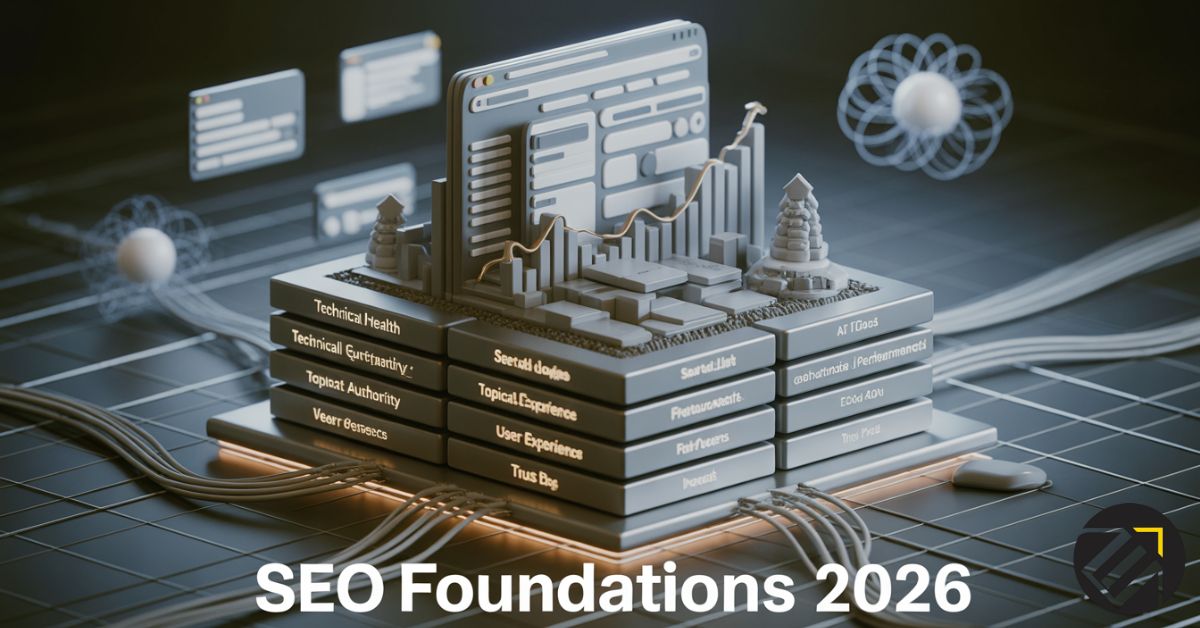
Despite all changes, fundamentals remain non-negotiable.
Building a Technically Trustworthy Website
Core Web Vitals, crawlability, structured data, and mobile performance remain foundational ranking factors.
Owning Topics Instead of Chasing Keywords
Cover topics comprehensively instead of publishing scattered content. Topic clusters outperform isolated articles.
Eliminating Content That Dilutes Authority
Remove or refresh outdated, low-performing pages. Quality now beats quantity every time.
Writing for Machines Without Losing Humans
In 2026, content is no longer written only for search engines or readers—it must also be interpretable by large language models. LLM-friendly content does not mean robotic writing; it means clarity, credibility, and contextual depth. AI systems prioritise content that is factually accurate, well-structured, and easy to reference.
To achieve this, brands must focus on clear topical alignment. Each page should address a specific subject comprehensively instead of touching multiple themes superficially. Proper heading hierarchy, concise paragraphs, and descriptive subheadings help LLMs understand context and intent more accurately. Ambiguous language, filler sentences, and over-optimised keywords dilute machine comprehension and reduce visibility.
Another critical factor is entity clarity. Clearly defining your brand, services, expertise, and industry relevance strengthens how AI models associate your website with specific knowledge areas. This is especially important for businesses offering SEO Services in Kolkata, where trust and topical authority influence both rankings and AI-generated responses.
LLMs also reward content that demonstrates real experience. Practical examples, process explanations, and expert-led insights increase the likelihood of being referenced in AI summaries. Rather than chasing trends blindly, brands should focus on consistency, factual accuracy, and long-term relevance.
In short, LLM-friendly content is not about gaming AI—it’s about communicating expertise so clearly that both humans and machines trust it.
Why Original Thinking Is the New Ranking Currency
Original content has become one of the strongest competitive advantages in SEO in 2026. With AI-generated articles flooding the internet, search engines and language models are actively filtering out repetitive, generic, and recycled information. What stands out now is original thought backed by experience and evidence.
Brands that invest in research-driven content—such as case studies, industry observations, proprietary frameworks, or expert commentary—signal genuine authority. This aligns directly with Google’s E-E-A-T principles, where experience and expertise are no longer optional but expected. Simply rewriting what already exists online no longer builds visibility or trust.
For businesses working with an SEO Agency in Kolkata, this shift is particularly important. Local and niche markets are crowded, and differentiation comes from insight, not volume. Content that reflects first-hand experience, strategic reasoning, and real-world problem-solving performs significantly better than templated blogs.
Expert insights also increase brand credibility beyond search. They encourage backlinks, mentions, and community discussions—all of which strengthen authority signals across search engines and AI platforms. When content contributes something new to the conversation, it becomes reference-worthy.
In 2026, originality is not a creative luxury—it is a ranking necessity. The more unique your perspective, the harder it is for competitors or AI-generated content to replace you.
Did AI-Powered Search Disrupt SEO or Redefine It?
AI-powered search has undeniably changed how users interact with search results, but it has not destroyed SEO. Instead, it has redefined what visibility means. AI summaries, instant answers, and zero-click experiences have reduced surface-level traffic, but they have increased the value of authority, trust, and brand recognition.
When AI generates answers, it relies on existing high-quality content. If your brand’s insights are part of that knowledge base, you gain indirect visibility—even when users don’t click immediately. This shifts SEO from a traffic-only metric to a brand influence and demand-generation channel.
Another misconception is that fewer clicks equal less value. In reality, AI-driven search filters out low-intent users while pushing high-intent users further down the funnel. When users do click in 2026, they are more informed, more decisive, and closer to conversion. This makes SEO traffic more qualified, not weaker.
AI has also exposed weak SEO practices. Thin content, mass-produced AI blogs, and manipulative tactics are being devalued faster than ever. Meanwhile, authoritative websites with depth, clarity, and credibility are being rewarded—both in traditional rankings and AI-generated responses.
From an SEO Trends 2026 perspective, AI has made SEO more strategic, not obsolete. It now intersects with brand building, content intelligence, and experience design. SEO is no longer about chasing algorithms—it’s about earning trust at scale.
AI didn’t kill SEO. It eliminated shortcuts and raised expectations.
Why SEO Remains a Growth Engine in 2026
SEO remains one of the most critical digital growth channels in 2026—not because it looks the same as before, but because it has expanded in influence. Today, SEO supports discoverability across search engines, AI platforms, voice assistants, and knowledge-based systems. It is no longer limited to rankings alone.
Modern SEO drives brand credibility. When users repeatedly encounter your brand across search results, AI summaries, forums, and authoritative content, trust compounds over time. This is especially valuable for businesses offering SEO Services in Kolkata, where local credibility and competitive differentiation directly impact lead quality.
SEO also delivers long-term ROI. Unlike paid media, which stops the moment budgets pause, SEO builds cumulative value. Optimised content, technical health, and topical authority continue generating visibility long after publication. In an era of rising ad costs, this sustainability matters more than ever.
From a strategic standpoint, SEO integrates seamlessly with AEO vs SEO in 2026 frameworks. While answer engine optimisation improves visibility in AI responses, SEO ensures the foundational authority that makes those answers possible in the first place. The two are complementary, not competitive.
In 2026, SEO is no longer optional—it is infrastructure. Brands that deprioritise it risk losing relevance, trust, and market share. Those that invest intelligently will own attention, authority, and demand in the age of AI-driven search.
FAQs
1. Is SEO really dead in 2026?
No, SEO is not dead in 2026. It has evolved significantly due to AI-powered search, AEO, and changing user behavior. Traditional tactics have declined, but modern SEO focused on authority, experience, and trust is more important than ever.
2. How has AI changed SEO in 2026?
AI has changed SEO by prioritising intent, content quality, brand authority, and structured data over keyword-heavy tactics. Search engines now evaluate credibility, relevance, and user experience rather than just optimisation techniques.
3. What is the difference between SEO and AEO in 2026?
In AEO vs SEO in 2026, SEO focuses on overall search visibility and authority, while AEO targets direct answers in AI-powered and voice-based search results. Both work together—SEO builds authority, and AEO enhances answer visibility.
4. Are keywords still important for SEO in 2026?
Yes, keywords are still important, but they are no longer the primary ranking factor. In 2026, search engines focus more on topical authority, semantic relevance, and user intent rather than exact-match keywords.
5. Does SEO still generate traffic and leads in 2026?
Yes, SEO continues to generate high-quality traffic and leads in 2026. While AI results may reduce low-intent clicks, SEO attracts users who are closer to decision-making, resulting in better conversion quality.
Leave a Reply