Author: ElevatDigi

  • How to Generate Leads on LinkedIn in 2026?

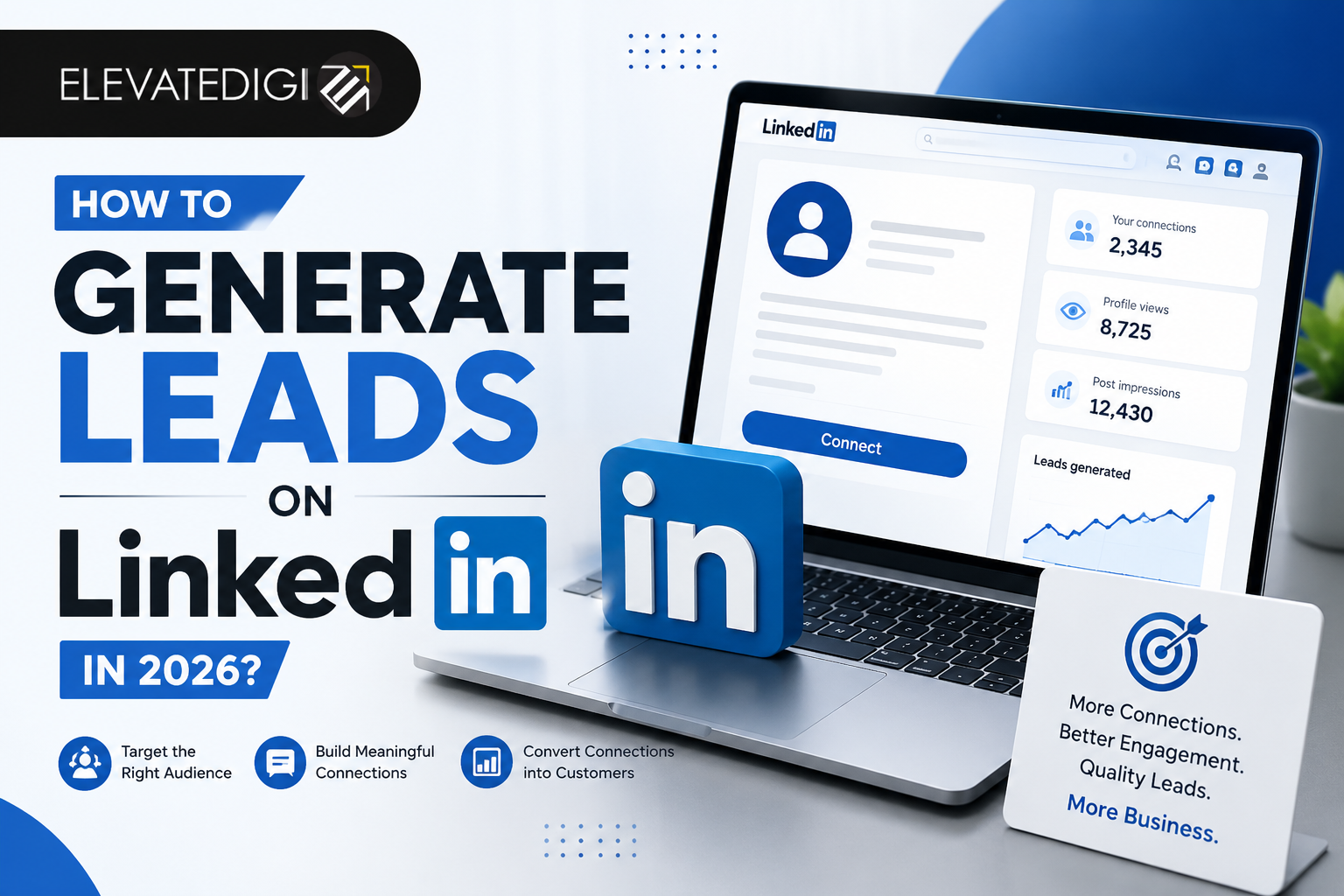
    How to Generate Leads on LinkedIn in 2026?

     LinkedIn has become more than just a platform for professional networking. Today, businesses use it to connect with decision-makers, build brand credibility and generate qualified leads. Whether you run a startup, a B2B company or a service-based business, LinkedIn can help you reach potential customers who are genuinely interested in what you offer.

    However, simply creating a company page or posting regularly does not guarantee results. To generate leads, you need a clear strategy that combines valuable content, targeted networking, personalised communication and consistent follow-ups.

    In 2026, successful LinkedIn marketing is about building meaningful professional relationships rather than collecting random connections. With the right approach, businesses can turn LinkedIn into a reliable channel for attracting potential customers and creating new sales opportunities.

    For businesses looking to strengthen their online presence, partnering with a LinkedIn Marketing Agency in Kolkata like ElevateDigi can help bring these activities together through a structured digital marketing strategy.

    Why Is LinkedIn Important for Lead Generation in 2026?

    LinkedIn provides businesses with an opportunity to reach professionals based on their industries, job roles, company information and areas of expertise. This makes it particularly useful for B2B companies that want to connect with business owners, marketing managers, founders and other decision-makers.

    Unlike platforms where users primarily look for entertainment, LinkedIn allows businesses to participate in professional conversations, share industry knowledge and demonstrate their expertise. These interactions can help potential customers understand a company’s capabilities before making a purchasing decision.

    For example, a digital marketing agency can share insights about improving website traffic, generating qualified enquiries or building brand visibility. A business owner who finds this information useful may eventually explore the agency’s services.

    The key is to focus on the right audience. LinkedIn lead generation works best when your content, networking efforts and marketing campaigns are aligned with the needs of your potential customers.

    1. Define Your Target Audience Before Generating Leads

    One of the most common mistakes businesses make on LinkedIn is trying to reach everyone. Having thousands of connections might look impressive, but it does not necessarily mean those connections will become customers.

    Before starting your campaign, identify the people who are most likely to need your services. Consider their industry, job title, company size, location and business challenges.

    Understand Your Ideal Customer

    Suppose you offer digital marketing services. Your ideal audience might include startup founders, business owners, marketing heads and companies looking to improve their online visibility.

    Understanding this audience helps you create content that addresses their actual problems instead of publishing generic promotional messages.

    If your business primarily serves local customers, targeting relevant professionals in Kolkata can make your efforts more focused. Businesses serving clients across India can expand their targeting accordingly.

    A clearly defined audience helps you spend less time on irrelevant connections and more time building relationships with people who have genuine business potential.

    2. Optimise Your LinkedIn Profile and Company Page

    Your LinkedIn profile is often one of the first places potential customers visit after discovering your content. If they cannot understand what you do or how your services can help them, they may move on to another provider.

    Start by creating a professional headline that explains your expertise and the value you offer. Your summary should communicate whom you help, the problems you solve and what makes your approach relevant.

    Your Company Page should provide a clear description of your services, an appropriate website link and consistent brand information. Use relevant keywords naturally so that visitors can understand your business without encountering repetitive or forced phrases.

    Build Credibility Through Your Profile

    Instead of simply stating that your company provides digital marketing services, explain the types of challenges you help businesses address. Where available, include genuine case studies, client testimonials, relevant certifications or examples of your work.

    For ElevateDigi, maintaining a consistent professional presence across LinkedIn and the company website can help potential customers better understand the brand’s digital marketing expertise.

    A well-optimised profile will not generate leads on its own, but it can make the difference between a visitor leaving your page and deciding to start a conversation.

    3. Create Valuable Content That Attracts Potential Customers

    Content plays an important role in building visibility and trust on LinkedIn. However, posting only company announcements, service promotions and generic motivational quotes may not give your audience enough reason to engage with your business.

    Instead, focus on creating content that answers questions, solves problems and shares useful industry knowledge.

    Share Insights That Your Audience Can Apply

    Think about the challenges your customers face before purchasing your services. For example, businesses looking for digital marketing support may struggle with low website traffic, poor conversion rates, ineffective advertising or inconsistent social media engagement.

    You can turn these challenges into educational posts, practical guides, short videos and industry discussions.

    A post explaining why a website receives visitors but generates few enquiries is more likely to attract the attention of a business owner facing that problem than a generic post promoting digital marketing services.

    Where you have genuine client experience, share examples that explain the original challenge, the actions taken and the results achieved. Always ensure that claims are accurate and that you have permission to share confidential client information.

    A consistent LinkedIn content marketing strategy helps businesses demonstrate their expertise and remain visible to potential customers over time.

    4. Use Personalised Outreach to Build Relationships

    Sending connection requests is easy. Turning those connections into business relationships requires a more thoughtful approach.

    Many professionals receive generic sales messages every day. If your first interaction immediately asks them to purchase a service, there is little reason for them to respond.

    Instead, research the people you want to connect with and look for genuine opportunities to start a relevant conversation.

    Start Conversations Instead of Sending Sales Pitches

    For example, if you want to connect with a business owner, you could refer to a recent post they shared or mention a relevant industry topic. Your connection request should be brief, professional and personalised.

    Once the connection is accepted, focus on understanding the person’s business priorities rather than immediately promoting your services.

    If the conversation reveals a challenge that your company can genuinely address, you can introduce your solution naturally. If there is no immediate requirement, continue building the relationship without repeatedly pushing for a sale.

    This approach makes LinkedIn networking for business more meaningful and helps you identify prospects who are genuinely interested in what you offer.

    5. Generate Leads Through LinkedIn Ads

    Organic content and networking can help businesses build relationships over time. However, companies that want to reach specific professional audiences may also consider LinkedIn advertising.

    LinkedIn Ads allow businesses to target audiences using professional attributes such as job roles, company information and seniority. Depending on the campaign objective, businesses can promote content, drive website visits or collect enquiries through lead generation forms.

    Create an Offer That Encourages Action

    Before launching an advertising campaign, decide what you want potential customers to do. You might invite them to book a consultation, download an industry guide, register for a webinar or request a service proposal.

    Your offer should address a specific need and provide a clear reason for the audience to respond.

    LinkedIn Lead Gen Forms can simplify the enquiry process by allowing interested users to submit their information within the platform. However, the form should collect only the details necessary for your follow-up process.

    Businesses should also monitor campaign performance carefully. Track the number of qualified enquiries, the cost of acquiring those leads and the opportunities that eventually convert into customers.

    A successful LinkedIn Ads strategy is not simply about getting more clicks. It is about attracting the right prospects and making the advertising investment worthwhile.

    6. Combine LinkedIn Marketing With SEO and Website Optimisation

    LinkedIn can generate awareness, but your website often plays an important role in helping potential customers evaluate your business.

    A prospect might discover your brand through a LinkedIn post, visit your website to learn more about your services and later contact your team after reviewing your expertise.

    This is why LinkedIn should be connected with your broader digital marketing strategy.

    Make It Easy for Visitors to Become Leads

    When you share a blog, service page or case study on LinkedIn, make sure the linked page provides useful information and a clear next step. Your website should explain your services, communicate your value and make it easy for visitors to contact you.

    Search engine optimisation can help potential customers discover your website through relevant Google searches, while LinkedIn content can help establish familiarity and trust.

    For businesses looking for a LinkedIn Marketing Agency in Kolkata, an integrated approach can help connect social media activity, website performance and lead generation objectives.

    7. Follow Up With Potential Customers

    Not every person who engages with your LinkedIn content will be ready to purchase immediately. Some prospects may be researching available options, while others may need time to discuss a decision internally.

    Consistent and relevant follow-ups can help maintain these relationships.

    If someone expresses interest in your services, respond with information that addresses their specific requirements. If a prospect downloads a resource or attends a webinar, use that interaction as a starting point for a relevant conversation.

    Avoid sending repeated messages that offer no additional value. Instead, focus on understanding the prospect’s needs and determining whether your services are a suitable fit.

    A clear follow-up process also helps your sales team understand which leads need immediate attention and which may benefit from further nurturing.

    Remember, lead nurturing on LinkedIn is about building trust over time, not pressuring every connection to become a customer.

    8. Measure Your LinkedIn Lead Generation Performance

    To understand whether your LinkedIn strategy is working, look beyond likes, comments and follower counts. These metrics can indicate engagement, but they do not necessarily demonstrate business growth.

    Track the number of relevant profile visits, website clicks, enquiries and qualified leads generated through your efforts. If you run paid campaigns, compare advertising costs with the quality and value of the opportunities created.

    It is also important to understand which types of content attract your ideal customers. An educational post that generates a few relevant enquiries may be more valuable than a promotional post that receives hundreds of likes but no meaningful business interest.

    Review your results regularly and use the findings to improve your content, targeting and follow-up process.

    There is no universal formula that guarantees a particular number of leads. Results depend on your audience, industry, offer, marketing budget and sales process. Measuring performance allows you to make informed decisions instead of relying on assumptions.

    9. How Can a LinkedIn Marketing Agency in Kolkata Help?

    Managing LinkedIn effectively requires time, planning and a clear understanding of your target audience. Businesses must develop relevant content, optimise their professional presence, identify prospects and monitor the performance of their marketing activities.

    A LinkedIn Marketing Agency in Kolkata can help businesses organise these activities into a more consistent and measurable strategy.

    The right agency should understand your business objectives before recommending a campaign. It should also explain how its approach will reach the intended audience, measure lead quality and evaluate performance.

    How ElevateDigi Can Support Your Digital Marketing Goals

    At ElevateDigi, businesses can explore digital marketing approaches designed around their objectives, target audience and growth opportunities.

    A structured marketing strategy can bring together content creation, social media management, search engine optimisation and lead generation activities to build a stronger online presence.

    Rather than focusing only on impressions or follower growth, businesses should aim to attract relevant prospects and create opportunities for meaningful conversations with potential customers.

    If your company wants to improve its B2B visibility and explore LinkedIn as a lead generation channel, ElevateDigi can be a starting point for discussing a strategy that fits your business needs.

    Conclusion

    Generating leads on LinkedIn in 2026 requires more than sending connection requests or publishing promotional content. Businesses need to understand their ideal customers, share valuable insights, build professional relationships and follow up with relevant prospects.

    Combining organic content with personalised outreach, LinkedIn Ads and website optimisation can create a more structured approach to B2B lead generation. Regularly measuring results helps you identify what works and where improvements are needed.

    If you want to build a stronger professional presence and attract more relevant business enquiries, working with a LinkedIn Marketing Agency in Kolkata can help you plan your next steps.

    ElevateDigi can help you explore digital marketing solutions aligned with your business goals and long-term growth plans.

    Frequently Asked Questions (FAQs)

    1. How can I generate leads on LinkedIn in 2026?

    You can generate leads by defining your target audience, optimising your LinkedIn profile, sharing useful content, connecting with relevant professionals and following up on genuine interest. LinkedIn Ads and Lead Gen Forms can also help capture enquiries when used as part of a clear strategy.

    2. Is LinkedIn effective for B2B lead generation?

    Yes, LinkedIn can be an effective B2B lead generation channel because it allows businesses to reach professionals and decision-makers based on relevant professional attributes. Its effectiveness depends on your audience targeting, content quality, offer and follow-up process.

    3. How often should I post on LinkedIn to generate leads?

    There is no single posting frequency that guarantees results. Focus on publishing useful content consistently at a pace you can maintain. Review engagement, relevant enquiries and lead quality to determine which schedule works best for your audience.

    4. How much does LinkedIn marketing cost in Kolkata?

    The cost depends on the services you require, such as content creation, profile optimisation, campaign management or paid advertising. Agency fees and advertising budgets may be separate. Request a proposal based on your business objectives and marketing requirements.

    5. How do I choose the right LinkedIn Marketing Agency in Kolkata?

    Choose an agency that understands your target audience, explains its strategy clearly and measures performance using meaningful business metrics. Ask about its experience, reporting process, approach to lead qualification and how it plans to support your marketing objectives.
  • Why Your Website Is Not Appearing in AI-Generated Answers

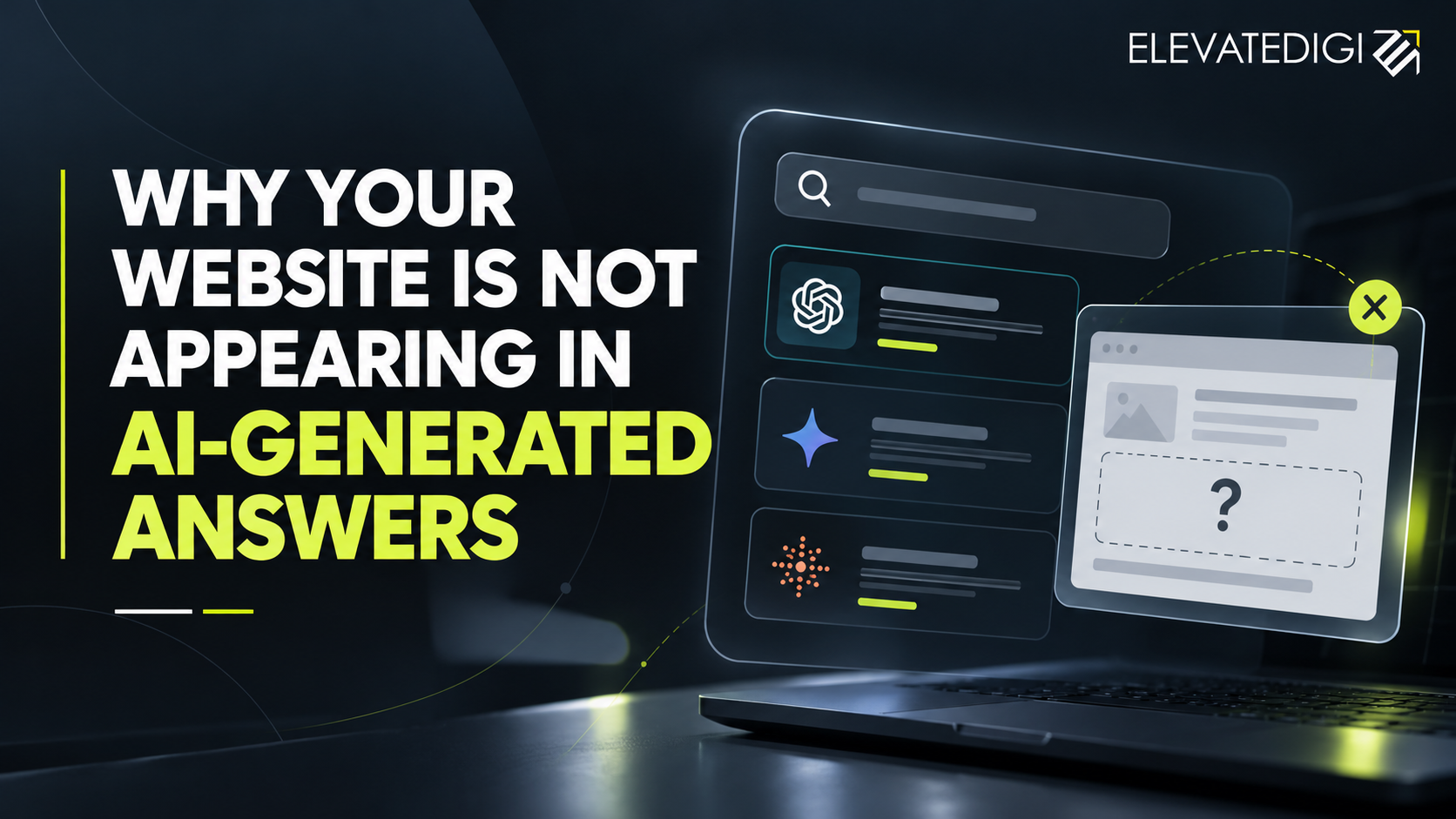
    Why Your Website Is Not Appearing in AI-Generated Answers

    Search behaviour is changing. People are no longer relying only on traditional search results to find information, compare services, or choose a business. They are increasingly asking AI-powered platforms such as ChatGPT, Google’s AI Overviews, and Perplexity direct questions and expecting clear, relevant answers.

    For businesses, this shift creates a new challenge. Your website may be indexed by Google, your SEO strategy may be performing reasonably well, and your content may be attracting visitors, yet your brand might not appear in AI-generated answers.

    So, why does this happen?

    The answer is not always a lack of keywords or backlinks. AI search visibility depends on several factors, including content quality, website accessibility, topical relevance, brand credibility, and how clearly your information answers a user’s question.

    This is where Answer Engine Optimization (AEO) becomes important. With the right strategy, businesses can improve how their content is understood, evaluated, and potentially referenced by AI-powered answer engines.

    In this blog, we will explore the common reasons your website may be missing from AI-generated answers and what you can do to improve its visibility.

    What Does It Mean When Your Website Does Not Appear in AI-Generated Answers?

    AI-generated answers are responses created by artificial intelligence systems using information from their training, available search results, connected data sources, or a combination of these, depending on the platform.

    When someone asks an AI tool a question, it may provide a direct answer, recommend relevant businesses, summarise information from websites, or cite selected sources.

    If your website is not appearing in these responses, it does not automatically mean that your website has a technical problem. The platform may simply be using other sources that it considers more relevant to the question.

    For example, imagine someone asks an AI search platform to recommend a reliable digital marketing agency in Kolkata. If your website clearly explains your services but provides limited evidence of your experience, expertise, or relevance to the query, the platform may reference other businesses instead.

    This is one reason businesses are exploring AEO Services in Kolkata to complement their existing SEO efforts and improve their chances of being discovered through AI-powered search experiences.

    Why Is Your Website Not Appearing in AI-Generated Answers?

    There is rarely one explanation for poor AI search visibility. In most cases, several content, technical, and authority-related factors may be involved.

    1. Your Content Does Not Directly Answer Users’ Questions

    One of the most common issues is content that focuses heavily on promoting a business without sufficiently answering the questions its audience actually asks.

    Consider a service page that repeatedly describes a company as a leading digital marketing agency but never explains how its services work, which business problems they solve, or what customers should consider before choosing a provider.

    Although the page may contain relevant keywords, it offers limited information that can help someone make a decision.

    AI answer engines are designed to provide useful responses to specific queries. Content that answers questions clearly, provides meaningful context, and explains complex topics in straightforward language can be easier for these systems to interpret.

    How to improve your content

    Review your important website pages and identify the questions your potential customers are likely to ask before contacting you. If you offer digital marketing services, these might include questions about campaign budgets, expected timelines, service suitability, reporting methods, and how results are measured.

    Address these questions naturally within your content. Use descriptive headings, provide direct explanations, and support your claims with relevant examples wherever possible.

    The goal is not to turn every paragraph into a short answer. It is to make sure the page provides genuine value rather than simply repeating promotional language.

    1. Your Website Has Weak Topical Authority

    Publishing one article about a subject does not necessarily establish your website as a reliable source of information on that topic.

    For example, a business that wants to be discovered for Answer Engine Optimization may have a single AEO blog but no supporting content explaining AI search visibility, content optimization, structured data, technical SEO, or the relationship between AEO and traditional search.

    This creates a limited picture of the website’s expertise.

    Building topical authority involves publishing useful, connected content that covers a subject from multiple relevant angles. Each page should serve a distinct purpose rather than repeat the same information using slightly different keywords.

    For a company such as ElevateDigi, a structured AEO content strategy could include practical guides, technical explanations, industry-specific use cases, and articles about measuring AI search visibility.

    Internal links between these resources can help visitors discover related information and help search engines understand the relationship between pages. However, internal linking alone does not guarantee inclusion in AI-generated answers.

    1. Your Website Is Difficult for Search Systems to Access

    Sometimes, the problem is technical rather than editorial.

    If important website pages are blocked from crawling, return errors, contain incorrect canonical tags, or are inaccessible because of rendering issues, search engines may struggle to discover or index their content.

    AI search platforms also differ in how they discover and retrieve information. Some use search indexes, while others rely on their own retrieval systems or additional sources. Therefore, appearing in one platform does not guarantee visibility in another.

    Technical issues worth checking

    Start by checking whether your important pages return successful HTTP responses and can be crawled by the relevant search engines. Review your robots.txt file, XML sitemap, canonical tags, indexing directives, and internal links.

    For platforms that use dedicated crawlers, review the platform’s official documentation to understand which crawlers or access rules may affect discovery. Do not assume that allowing one crawler automatically enables every AI search feature.

    It is also worth checking whether important page content is visible in the rendered HTML and whether mobile users can access the same essential information as desktop users.

    Technical accessibility creates the foundation for visibility, but it does not guarantee that a platform will select your website as a source.

    1. Your Website Lacks Clear and Verifiable Brand Information

    AI-generated answers may mention brands when responding to questions about products, services, or recommendations. For a business to be understood correctly, its online information should clearly establish what it does, who it serves, and what makes it relevant.

    If your website describes your company differently across multiple pages, provides little information about its team, or makes unsupported claims about its experience, it may be harder for users and automated systems to establish a consistent understanding of the brand.

    For instance, a digital marketing company should clearly explain whether it specialises in SEO, paid advertising, social media marketing, AEO, or a combination of services.

    Your website should also provide accurate company information, clear service descriptions, relevant contact details, and evidence supporting important claims.

    External sources can help reinforce this understanding. Consistent business listings, credible industry mentions, relevant partnerships, and genuine customer reviews can contribute to your overall online reputation.

    These signals should reflect real business activity. Creating artificial mentions or publishing fabricated reviews is not a sustainable way to build brand credibility.

    1. Your Content Does Not Demonstrate First-Hand Experience

    Generic content is widely available online. When several websites explain the same topic using nearly identical definitions and advice, it becomes difficult to offer readers a compelling reason to trust one source over another.

    Google’s people-first content guidance emphasises usefulness, reliability, and the value of demonstrating first-hand experience where appropriate. These principles are also valuable when developing content intended to be discovered through AI search.

    Instead of publishing another article that merely defines AEO, explain how businesses can investigate their visibility, what technical problems they should check, and how they can assess whether their content answers relevant questions.

    Where possible, include original observations, practical examples, genuine case studies, expert commentary, and transparent explanations of your methods.

    If you discuss campaign results, provide accurate figures and explain the context in which they were achieved. Never invent performance data or present hypothetical outcomes as real client results.

    For ElevateDigi, this means creating content that demonstrates practical digital marketing knowledge rather than relying entirely on broad industry statements.

    1. You Are Relying Only on Traditional SEO Tactics

    Traditional SEO remains important, but improving keyword rankings alone does not guarantee that your website will appear in AI-generated answers.

    A page can rank well for a particular query and still be absent from an AI-generated response. The answer engine may use different retrieval methods, select other sources, or respond without citing your website.

    Similarly, a page with excellent keyword placement may still offer little original value.

    This is why businesses are increasingly considering Answer Engine Optimization alongside conventional SEO.

    AEO focuses on making information easy to understand, answer, and potentially reference in conversational and AI-powered search experiences. It involves many practices that overlap with SEO, including content quality, crawlability, structured information, and authority building.

    The objective is not to abandon keyword research. It is to use it as one part of a broader strategy that considers the questions people ask, the information they need, and how their preferred search platforms deliver answers.

    1. Your Website Structure Makes Information Difficult to Understand

    Even useful information can be difficult to interpret when it is poorly organised.

    Imagine a service page that contains several long paragraphs, vague headings, unrelated topics, and no clear distinction between services, benefits, processes, or frequently asked questions. A visitor may struggle to locate the information they need.

    A clearer structure improves the reading experience and makes the relationships between different sections easier to understand.

    Why headings and structured data matter

    Use descriptive H1, H2, and H3 headings to organise content logically. Keep each section focused on a specific question or subject, and explain unfamiliar terminology when it first appears.

    Structured data, such as relevant Organization, LocalBusiness, Article, or Service schema, can also help eligible search systems interpret specific information about your website.

    However, structured data should accurately reflect visible page content and comply with the relevant platform’s guidelines. Adding schema markup does not automatically improve rankings or secure citations in AI-generated answers.

    The most effective approach combines a logical page structure with useful content, accurate information, and a technically sound website.

    1. You Have Not Built a Consistent AI Search Monitoring Process

    Another possible reason your website appears to be missing from AI-generated answers is that you have not established a reliable way to measure its visibility.

    AI responses can vary according to the wording of a query, the user’s context, the platform, and the information available at the time. A single search is not enough to establish whether a website is consistently visible.

    Start by identifying the questions your potential customers are likely to ask. These should include informational queries, service comparisons, local searches, and questions about specific business problems.

    Test these queries across relevant AI search platforms and record whether your brand appears, whether your website is cited, and which competing sources are referenced.

    Repeat the checks periodically using consistent query wording. Separate branded queries from non-branded queries so you can distinguish existing brand awareness from broader discovery.

    Where available, use website analytics, search performance reports, referral traffic, and lead data to understand whether AI-related visibility is contributing to meaningful business outcomes.

    This approach provides a more useful picture than relying on isolated screenshots or assuming that a single successful mention proves a long-term improvement.

    How Can You Improve Your Website’s Visibility in AI-Generated Answers?

    Understanding the potential problems is only the first step. The next is to develop a practical improvement plan based on your website’s current condition.

    Create Content Around Real Customer Questions

    Begin with the questions customers ask during sales conversations, support enquiries, consultations, and product research. These questions often reveal the information people need before choosing a business.

    Build useful pages around those needs instead of creating multiple articles that target nearly identical keywords. Give readers clear answers, explain relevant trade-offs, and provide enough detail to help them understand the subject.

    FAQ sections can be useful when they address genuine questions. However, adding FAQs simply to increase word count or repeating the same answer across multiple pages is unlikely to provide much additional value.

    Strengthen Your Website’s Credibility

    Make it easy for visitors to understand who is behind your content and why they should trust it.

    Provide accurate information about your company, relevant team members, service expertise, and business experience. Where appropriate, include author information, publication dates, references to reliable sources, and details about how research or analysis was conducted.

    For service businesses, specific and verifiable information is more useful than unsupported claims of being the best or most trusted provider.

    Maintain consistency across your website and legitimate external business profiles. When your business information changes, update the relevant sources rather than allowing outdated details to remain online.

    Improve Technical SEO Before Expanding Your Content

    Publishing more articles will not solve a crawling or indexing problem.

    Check the technical health of your existing website before investing heavily in new content. Prioritise pages that matter to your business, including your homepage, key service pages, location pages, and high-value articles.

    Resolve indexing issues, improve internal linking, ensure important content is accessible, and use structured data where appropriate.

    Also review mobile usability and page performance. A fast, accessible website supports a better user experience, although no individual performance metric guarantees AI search visibility.

    Build a Connected Content Strategy

    Create a central resource around your primary service and support it with relevant articles that answer different customer questions.

    For example, a website promoting AEO Services in Kolkata could publish in-depth content about AEO fundamentals, AI search visibility, technical accessibility, content strategy, brand authority, and performance measurement.

    Link these articles to relevant service pages where doing so genuinely helps the reader. Each article should contribute something distinct rather than simply repeating the main service page.

    Over time, this approach can create a more useful resource for visitors while helping search systems understand the subjects your website covers.

    Measure Results and Keep Improving

    AEO is not a one-time optimisation task. Search platforms evolve, competitors publish new content, and the information selected for AI-generated answers can change.

    Review your priority queries regularly and look for patterns. Are other websites consistently being cited? Do they offer more specific explanations, original research, clearer business information, or stronger evidence?

    Use those observations to identify genuine gaps in your content and website experience.

    Avoid making large changes based on one unusual AI response. Instead, look for repeated patterns across relevant queries and platforms before deciding which improvements to prioritise.

    Why Businesses Are Investing in AEO Services in Kolkata

    For businesses operating in a competitive market, being discoverable only through traditional search results may not be sufficient to reach every potential customer.

    Consumers increasingly use different ways to research products, compare providers, and understand complex services. AI-powered search is one part of this changing landscape, alongside conventional search engines, social platforms, recommendations, and direct website visits.

    Professional AEO Services in Kolkata can help businesses evaluate how their websites perform in this environment and identify opportunities for improvement.

    The work may involve reviewing existing content, checking technical accessibility, analysing relevant search queries, improving page structure, strengthening brand information, and monitoring visibility across selected AI search platforms.

    The appropriate strategy depends on the business, its website, its target audience, and the platforms relevant to its customers. There is no universal formula that guarantees an AI-generated mention.

    At ElevateDigi, the objective is to help businesses build a stronger digital presence through practical, evidence-informed optimisation. By combining AEO with sound SEO principles and a clear content strategy, businesses can work towards making their expertise easier to discover and understand.

    How ElevateDigi Can Help Improve Your AI Search Visibility

    At ElevateDigi, we understand that digital visibility is about more than achieving a position in traditional search results. Businesses also need clear, useful information that helps potential customers understand their services and make informed decisions.

    Our approach begins with understanding your website, your target audience, your existing search performance, and the questions your customers are likely to ask.

    From there, we can identify content gaps, review technical SEO issues, improve the organisation of important pages, and develop a content strategy aligned with your business goals.

    We also recognise the importance of measuring outcomes realistically. Rather than promising guaranteed placement in ChatGPT, Google AI Overviews, or other answer engines, the focus should be on addressing identifiable barriers and improving the quality, accessibility, and relevance of your online information.

    If your business is investing in SEO but struggling to understand its visibility in AI-powered search, exploring AEO Services in Kolkata may be a useful next step.

    A structured assessment can help you understand where your website stands today and which improvements deserve attention first.

    Frequently Asked Questions (FAQs)

    1. Why is my website not appearing in AI-generated answers?

    Your website may not appear because its content does not sufficiently answer the user’s query, its pages are difficult to discover, its topical coverage is limited, or other sources provide more relevant information. The reason can vary by platform and search query, so reviewing technical accessibility, content quality, and brand credibility is a sensible starting point.

    1. Does traditional SEO help a website appear in AI search results?

    Yes, traditional SEO can support AI search visibility by helping search engines discover, crawl, and understand your website. High-quality content, relevant internal links, sound technical foundations, and credible information remain valuable. However, strong organic rankings do not guarantee that an AI platform will cite your website.

    1. How long does it take to improve AI search visibility?

    There is no fixed timeline. Results depend on the website’s current condition, the improvements required, the platform being monitored, and how frequently relevant content is discovered or retrieved. Some technical issues may be resolved relatively quickly, while building stronger content coverage and brand credibility can take considerably longer.

    1. Can small businesses benefit from AEO Services in Kolkata?

    Yes. Small businesses can use AEO principles to explain their services clearly, answer customer questions, strengthen their online information, and improve their overall search presence. A focused strategy built around relevant customer needs can be more practical than trying to compete for every broad industry query.

    1. What is the difference between AEO and SEO?

    SEO focuses on improving a website’s visibility in search engines through content, technical optimisation, authority, and other relevant factors. AEO focuses on making information suitable for discovery and use in direct answers and AI-powered search experiences. The two overlap significantly and are generally best approached as complementary strategies rather than competing alternatives.

  • What KPIs Should You Track in Performance Marketing?

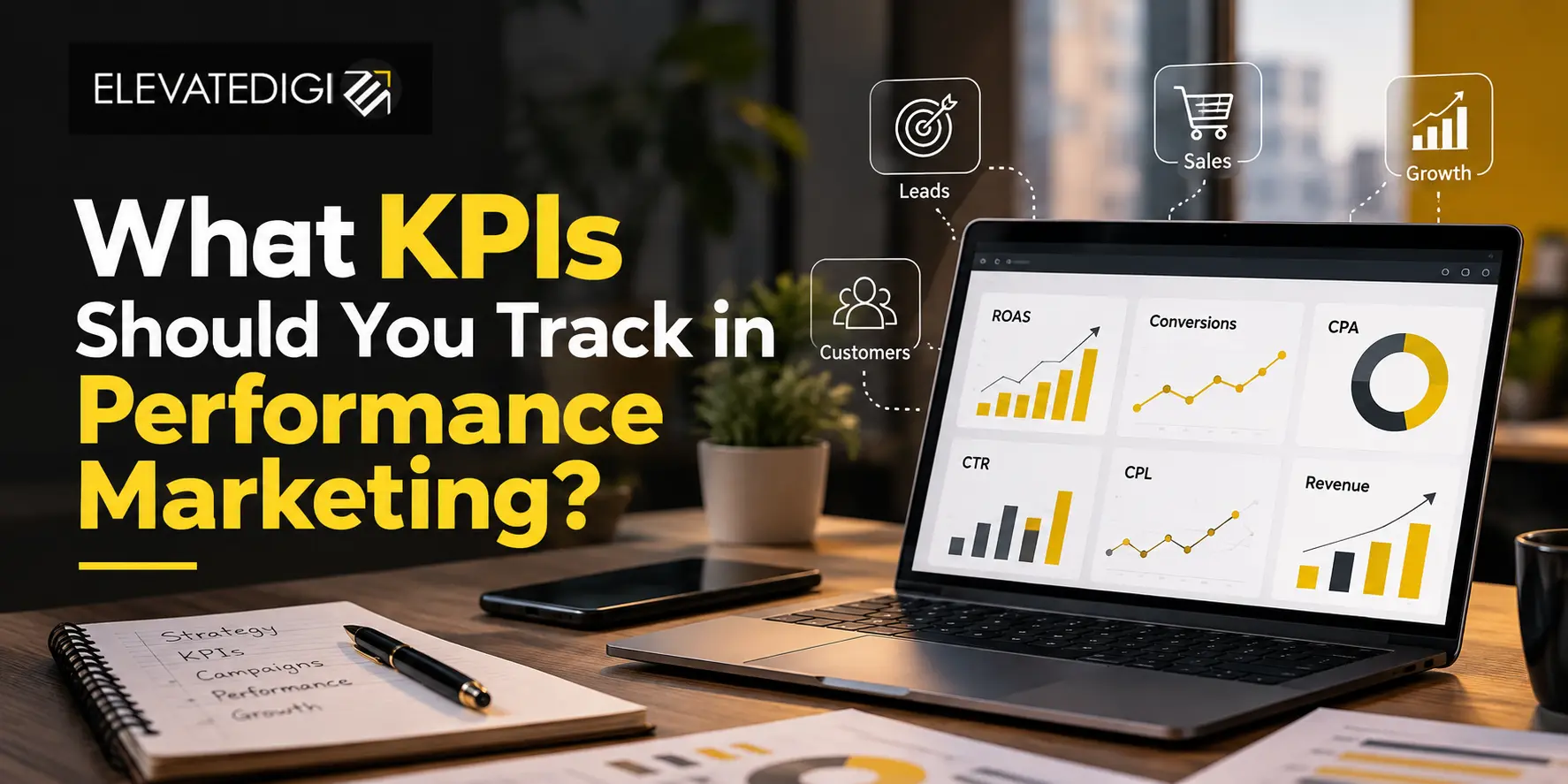
    What KPIs Should You Track in Performance Marketing?

    Performance marketing is often described as a numbers-driven approach to digital advertising. But simply collecting numbers does not mean you are measuring performance correctly. A campaign can generate thousands of clicks and still fail to bring meaningful business results. Similarly, a campaign with a relatively small number of conversions can be highly profitable if those conversions have strong customer value.

    This is why KPIs in performance marketing matter. They help businesses understand what is working, where money is being spent, and whether advertising activity is actually contributing to
    business growth.

    For businesses working with a Performance Marketing Agency in Kolkata, understanding these metrics can also make conversations around campaign performance much more meaningful. Instead of looking only at impressions or clicks, businesses can evaluate the metrics that directly connect advertising efforts with leads, sales and revenue.

    What Are KPIs in Performance Marketing?

    KPI stands for Key Performance Indicator. In performance marketing, KPIs are measurable values used to determine whether a campaign is achieving its intended objective.

    The right KPI depends heavily on the campaign goal. If the objective is brand awareness, impressions and reach may matter more. If the goal is lead generation, cost per lead and conversion rate become more important. For an e-commerce campaign, metrics such as ROAS, customer acquisition cost and revenue can provide a much clearer picture.

    The important thing is not to track every available metric. Instead, businesses should identify the numbers that tell them whether their advertising investment is producing the desired outcome.

    Why Are KPIs Important in Performance Marketing?

    Digital advertising generates a huge amount of data. Platforms such as Google Ads and Meta Ads can show everything from impressions and clicks to conversions and revenue.

    However, more data does not automatically mean better decision-making.

    KPIs help turn this data into useful business insights. They allow marketers to identify inefficient campaigns, understand customer behaviour and make informed decisions about budgets.

    For example, a campaign may have a high click-through rate but a poor conversion rate. This could indicate that the advertisement is attracting attention, but the landing page or offer is not convincing visitors to take the next step.

    A good performance marketing strategy therefore looks beyond surface-level numbers.

    What KPIs Should You Track in Performance Marketing?

    Return on Ad Spend (ROAS)

    ROAS is one of the most important metrics for campaigns focused on revenue generation.

    It measures how much revenue is generated for every rupee spent on advertising.

    For example, if a business spends ₹50,000 on advertising and generates ₹2,00,000 in attributed revenue, the ROAS is 4x.

    This metric helps businesses understand whether their advertising expenditure is generating sufficient revenue. However, ROAS should not always be viewed in isolation because revenue does not equal profit. Product margins, operational costs and other expenses also need to be considered.

    Cost Per Acquisition (CPA)

    Cost Per Acquisition measures how much it costs to acquire a customer or complete a desired conversion.

    If a campaign spends ₹1,00,000 and generates 200 customers, the CPA would be ₹500.

    CPA is particularly useful for businesses that have a clearly defined conversion action, such as a purchase, registration or subscription.

    Tracking CPA over time can also reveal whether campaigns are becoming more or less efficient as budgets increase.

    Cost Per Lead (CPL)

    For businesses focused on lead generation, Cost Per Lead is an important KPI.

    CPL tells you how much advertising expenditure is required to generate one lead.

    However, a low CPL does not necessarily mean that a campaign is successful. A campaign generating inexpensive but poor-quality leads can ultimately be less valuable than one producing fewer, more qualified leads at a higher cost.

    That is why CPL should ideally be evaluated alongside lead quality and eventual conversion into customers.

    Conversion Rate

    Conversion rate measures the percentage of users who complete a desired action after interacting with your campaign.

    Depending on the business, the conversion could be a purchase, enquiry, form submission, phone call, booking or sign-up.

    A simple example is a campaign that receives 1,000 landing page visits and generates 50 leads. The conversion rate would be 5%.

    Conversion rate can reveal issues that click-based metrics cannot. If advertisements receive plenty of clicks but very few conversions, marketers may need to investigate the landing page, messaging, offer, user experience or audience targeting.

    Click-Through Rate (CTR)

    Click-through rate measures how frequently people click an advertisement after seeing it.

    CTR is useful for understanding how effectively your advertisement captures attention and encourages users to take the next step.

    A strong CTR can indicate that the creative and messaging are relevant to the target audience. But it should not be treated as proof that a campaign is profitable.

    After all, getting people to click is only one part of the customer journey. Those clicks need to contribute to meaningful actions further down the funnel.

    Cost Per Click (CPC)

    CPC tells you how much you are paying, on average, for each click on an advertisement.

    It can help marketers understand advertising costs and compare campaign performance across different audiences, keywords, creatives and platforms.

    However, a lower CPC is not always better. A cheap click that never converts may be less valuable than a more expensive click from a user who becomes a customer.

    This is why CPC should be evaluated alongside conversion rate, CPA, CPL and revenue-related metrics.

    Customer Acquisition Cost (CAC)

    Customer Acquisition Cost goes beyond the cost of generating a lead or individual conversion. It looks at the overall cost involved in acquiring a new customer.

    For businesses investing significantly in marketing and sales, CAC can provide a more realistic understanding of customer acquisition efficiency.

    When tracked alongside customer lifetime value, CAC becomes even more useful because businesses can determine whether the cost of acquiring customers makes commercial sense over the long term.

    Customer Lifetime Value (CLV)

    Customer Lifetime Value estimates the total value a customer may generate throughout their relationship with a business.

    This metric is particularly relevant for subscription businesses, e-commerce brands, SaaS companies and businesses with repeat purchases.

    Suppose one customer initially purchases a product worth ₹2,000 but continues purchasing from the company over several years. Looking only at the first transaction would underestimate the actual value of that customer.

    Understanding CLV can therefore help businesses determine how much they can reasonably afford to spend on customer acquisition.

    Which KPIs Matter Most for Different Campaign Goals?

    There is no single KPI that works for every performance marketing campaign.

    For lead generation, businesses will generally pay close attention to CPL, conversion rate, qualified leads and eventual customer acquisition cost.

    For e-commerce campaigns, ROAS, revenue, CPA, conversion rate and average order value can provide a stronger picture of performance.

    For brand awareness campaigns, reach, impressions, video views and engagement-related metrics may be more relevant, although these should still connect to broader marketing objectives where possible.

    For app marketing, metrics such as cost per install, registration rate, cost per acquisition and in-app revenue can become important.

    This is why a good Performance Marketing Agency in Kolkata should not simply send clients a report filled with numbers. The reporting should explain what those numbers mean and how they relate to the business objective.

    Are Clicks and Impressions Enough to Measure Campaign Success?

    No.

    Clicks and impressions are useful, but they are often considered upper- or mid-funnel metrics. They tell you about visibility and initial user interaction, not necessarily business outcomes.

    Imagine an advertisement receives 100,000 impressions and 5,000 clicks. On the surface, those numbers may look impressive.

    But if only five people become customers, the campaign may not be commercially successful.

    On the other hand, another campaign might generate only 1,500 clicks but produce 100 high-value customers.

    The second campaign could potentially be far more valuable.

    This is why performance marketing measurement should gradually move from attention to action and finally to business outcomes.

    How Should Businesses Build a KPI Dashboard?

    A useful KPI dashboard should make performance easy to understand rather than overwhelming decision-makers with unnecessary information.

    At the top level, businesses should clearly identify their primary business objective. From there, they can select the metrics that directly measure progress toward that objective.

    For example, an e-commerce business may focus primarily on revenue, ROAS, CPA and conversion rate. Supporting metrics such as CTR and CPC can then help explain why performance is changing.

    This creates a more useful reporting structure because the dashboard answers two important questions: What happened? and Why did it happen?

    How ElevateDigi Uses KPIs to Evaluate Performance

    At ElevateDigi, performance marketing is approached with a focus on measurable outcomes rather than vanity metrics.

    Different businesses have different objectives. A real estate company may care about qualified enquiries, while an e-commerce brand may be more focused on profitable revenue and repeat purchases. Treating both campaigns in exactly the same way would not provide an accurate picture of success.

    That is why campaign analysis needs to consider the complete journey, from advertisement interaction to conversion and, where data is available, customer value.

    The role of a Performance Marketing Agency in Kolkata is not simply to spend a client’s advertising budget. It is to understand where that budget is creating value, identify areas of wastage and continuously improve campaign efficiency.

    How Often Should Performance Marketing KPIs Be Reviewed?

    The ideal reporting frequency depends on the campaign size, business model and advertising cycle.

    Large campaigns may require frequent monitoring because significant budget can be spent in a short period. Smaller campaigns may need more time before meaningful trends become visible.

    Daily monitoring can be useful for identifying unusual changes or technical issues, but not every daily fluctuation requires a strategic adjustment.

    Weekly and monthly analysis is often more useful for identifying meaningful trends. Over time, businesses can compare performance across campaigns, audiences, creatives and periods to understand what consistently works.

    What Makes a Good Performance Marketing Report?

    A good report should not simply present a collection of figures.

    It should provide context.

    If CPL increased by 20%, the report should ideally help explain why. Was there a change in audience behaviour? Did competition increase? Did the campaign expand into a new audience? Did conversion rates fall? Did the landing page change?

    Similarly, if ROAS improved, businesses should understand what contributed to that improvement.

    This approach turns reporting from a routine administrative task into a decision-making tool.

    Final Thoughts

    Performance marketing works best when advertising decisions are connected to measurable business outcomes. Metrics such as ROAS, CPA, CPL, conversion rate, CTR, CPC, CAC and CLV each provide a different perspective on campaign performance.

    The key is knowing which metrics matter most for your specific objective.

    A business should never judge a campaign solely by the number of impressions or clicks it generates. The more important question is whether those interactions are contributing to qualified leads, customers, revenue and sustainable growth.

    Whether you manage campaigns internally or work with a Performance Marketing Agency in Kolkata, having a clear KPI framework makes it easier to understand where your marketing investment is going and what needs to improve.

    For ElevateDigi, the goal is simple: use data not just to report what happened, but to understand what should happen next.

    Frequently Asked Questions

    1. What is the most important KPI in performance marketing?

    There is no single KPI that is universally the most important. The right KPI depends on the campaign objective. For revenue-focused campaigns, ROAS and revenue may be critical, while lead generation campaigns may focus more on CPL, qualified leads and conversion rate.

    2. What KPIs should I track for a lead generation campaign?

    Lead generation campaigns commonly track Cost Per Lead, conversion rate, Cost Per Acquisition, lead quality and qualified lead rate. Looking only at CPL can be misleading because inexpensive leads are not necessarily valuable leads.

    3. Is ROAS enough to measure performance marketing success?

    ROAS is an important metric, but it should not be viewed alone. It measures advertising-attributed revenue against advertising spend but does not account for every business cost. Profitability, customer acquisition cost, margins and customer lifetime value can provide additional context.

    4. How can a Performance Marketing Agency improve campaign KPIs?

    A performance marketing agency can analyse audience targeting, campaign structure, creative performance, landing pages, bidding strategies and conversion data to identify opportunities for improvement. The specific approach depends on the campaign objective and available data.

    5. Why are KPIs important when working with a performance marketing agency?

    KPIs give both the business and the agency a common framework for evaluating results. Instead of relying on subjective opinions about whether an advertisement “performed well,” both parties can assess measurable outcomes and make decisions based on data.


Copyright © ElevateDigi. All Rights Reserved.