Author: Debojyoti Das

  • SEO vs Google Ads: Which One Is Actually Better for Your Business?

    SEO vs Google Ads: Which One Is Actually Better for Your Business?

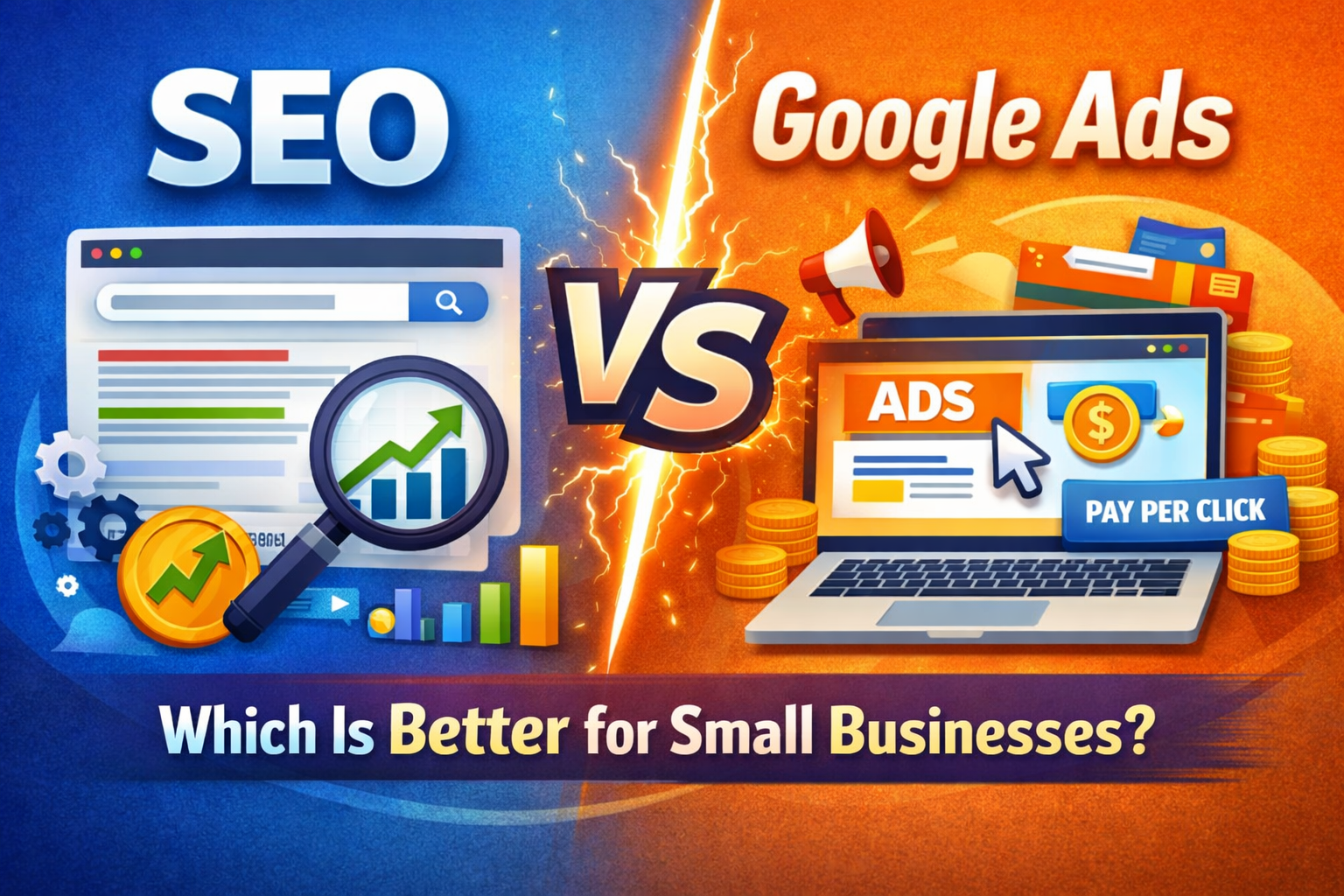
    If you run a small or growing business, chances are you’ve heard this question more times than you can count: SEO vs Google Ads which one should I invest in?

    Some marketers swear by SEO and call ads a money drain. Others say SEO is slow and Google Ads bring instant leads. The truth is, both sides are partially right, and partially wrong.

    Choosing between SEO or Google Ads isn’t about trends or opinions. It’s about understanding how each channel works, what it costs you, and what kind of results you realistically expect. Let’s break it down in a way that actually makes sense.

    Understanding SEO Without the Jargon

    SEO, or Search Engine Optimization, is all about earning visibility instead of buying it. When someone searches on Google and clicks an organic result, that click didn’t cost you anything directly. But don’t confuse “free” with “easy”.

    SEO works by optimizing your website content, structure, speed, and authority so Google trusts you enough to rank you higher. It’s a long-term process, and yes, it requires patience. You don’t wake up one day and suddenly rank on page one. But once you get there, the traffic doesn’t disappear overnight.

    This is why many businesses eventually partner with a professional SEO Agency in Kolkata or any experienced local provider. SEO isn’t just about keywords anymore; it’s about intent, user experience, and credibility. When done right, SEO becomes an asset that keeps working even when you’re not actively spending on ads.

    What Makes Google Ads So Tempting?

    Google Ads is the opposite side of the spectrum. You pay, you appear, you get clicks. Simple, fast, and powerful.

    With Google Ads, your website can show up at the very top of search results within hours. That’s incredibly attractive for new businesses, product launches, or time-sensitive campaigns. If someone searches for your service today, your ad can be there today.

    But here’s the catch. The moment you stop paying, your visibility disappears. There’s no residual benefit. That’s why many business owners later realize that Google Ads is more like renting traffic, while SEO is more like owning property.

    This difference becomes very obvious when we talk about Google Ads vs SEO cost, which we’ll come to shortly.

    SEO vs PPC: The Real Difference Most People Miss

    When people compare SEO vs PPC, they usually focus only on speed. PPC wins on speed, no doubt. SEO wins on longevity.

    But the bigger difference lies in trust. Users subconsciously trust organic results more than ads. Many people scroll past ads without even realizing it. Ranking organically tells users that Google considers you relevant and reliable.

    On the other hand, PPC gives you control. You can choose keywords, locations, budgets, and even the exact message users see. That level of control is hard to ignore, especially when you want immediate leads.

    So when someone asks, SEO or Google Ads which is better, the honest answer is: better for what?
    Let’s Talk About Cost, Because It Matters

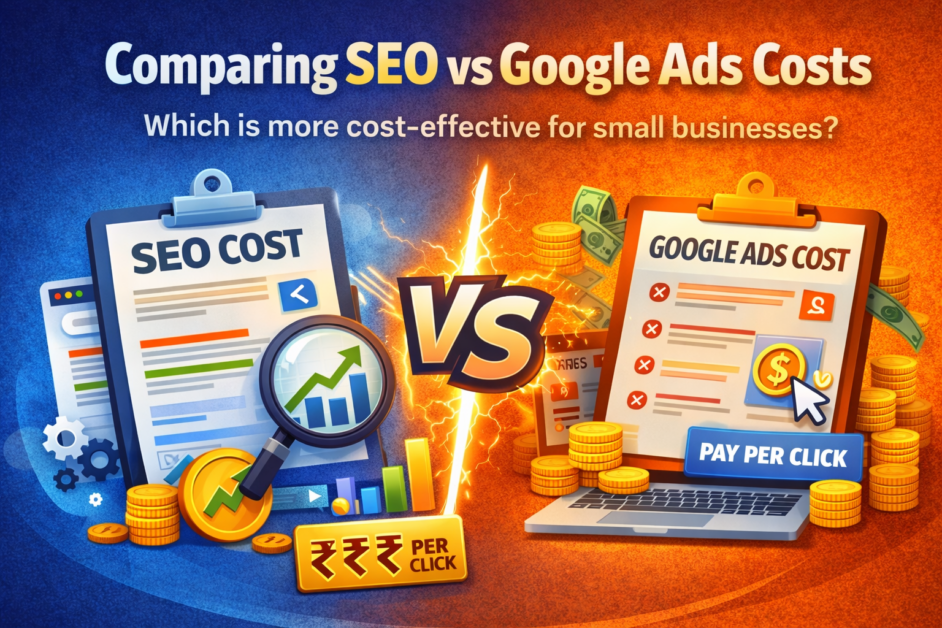
    For small businesses, budget is never unlimited. This is where the SEO vs Google Ads debate becomes very real.

    With SEO, you usually invest a fixed monthly amount. That investment goes into content, optimization, technical improvements, and link building. Over time, the cost per lead goes down because the traffic keeps coming.

    With Google Ads, every click costs money. In competitive industries, a single click can cost hundreds of rupees or more. If your landing page or targeting isn’t perfect, that money disappears quickly.

    This is why businesses that rely only on ads often feel stuck on a treadmill. They keep spending but don’t build anything lasting. On the other hand, companies that work with a reliable SEO Company in Kolkata often see compounding returns after a few months.

    So, Which One Should You Choose?

    If your business is new and you need leads immediately, Google Ads makes sense. It helps you test markets, offers, and messaging fast. Waiting six months for SEO results might not be practical in that stage.

    But if you’re serious about long-term growth, brand authority, and sustainable traffic, SEO is not optional. It’s foundational. Businesses that ignore SEO usually end up paying more for ads forever.

    The smartest businesses don’t choose one over the other. They combine them. Google Ads brings immediate visibility while SEO quietly builds momentum in the background. Over time, as organic traffic grows, ad dependency reduces.

    A Realistic Scenario You Might Relate To

    Imagine a local service business. In the beginning, they run Google Ads to generate calls quickly. At the same time, they invest in SEO, publish useful content, and optimize their site.

    Three months later, ads are still running, but organic traffic has started to show up. Six months later, several keywords rank on page one. Now, ads are used strategically instead of desperately.

    This is how SEO and Google Ads should work together, not against each other.

    Common Mistakes Businesses Make

    One of the biggest mistakes businesses make is choosing Google Ads without tracking conversions properly. Another is giving up on SEO too early because results didn’t show in a month.

    SEO is not slow because it’s ineffective; it’s slow because it builds trust. Google Ads is fast because you’re paying for attention. Both have their place, but misunderstanding them leads to wasted money.

    Final Thoughts: There’s No One-Size-Fits-All Answer

    The debate around SEO vs Google Ads will never end because businesses are different. Goals are different. Budgets are different.

    If you want instant traffic and quick testing, Google Ads is powerful. If you want long-term growth, credibility, and lower acquisition costs over time, SEO is unbeatable.

    And if you want the best results, you don’t choose. You balance.

    If you’re unsure where to start or how to combine both effectively, working with an experienced SEO Agency in Kolkata that understands both organic and paid strategies can save you a lot of trial-and-error.

    At the end of the day, marketing shouldn’t feel like gambling. It should feel like building.

    FAQ

    Is SEO better than Google Ads for small businesses?

    SEO is usually better for small businesses that want steady, long-term growth without depending on daily ad spend. It takes time to show results, but once it starts working, the traffic and leads are more consistent. Google Ads can still be useful when quick visibility or immediate leads are needed.

    How long does SEO take compared to Google Ads?

    Google Ads can start bringing traffic almost immediately after a campaign goes live. SEO, on the other hand, typically takes a few months before noticeable results appear. The difference is that SEO keeps working over time, while Google Ads stop the moment you pause the budget.

    Which is more cost-effective: SEO or Google Ads?

    When comparing Google Ads vs SEO cost, SEO is usually more cost-effective in the long run. Google Ads require payment for every click, which can become expensive in competitive industries. SEO involves upfront and ongoing effort, but the cost per lead generally decreases over time.

    Can SEO and Google Ads be used together?

    Yes, and in many cases, this works better than using only one. Google Ads can deliver quick results while SEO builds organic visibility in the background. Many businesses use this combined approach to reduce risk and improve overall marketing performance.

    Do I need an agency for SEO or Google Ads?

    You can manage both on your own, but it often takes time, experience, and constant testing. Working with a professional SEO Company in Kolkata or a digital marketing agency helps avoid costly mistakes and ensures both SEO and Google Ads strategies are aligned with your business goals.
  • 7 Content Optimization Tactics for SGE and AI Overview

    7 Content Optimization Tactics for SGE and AI Overview

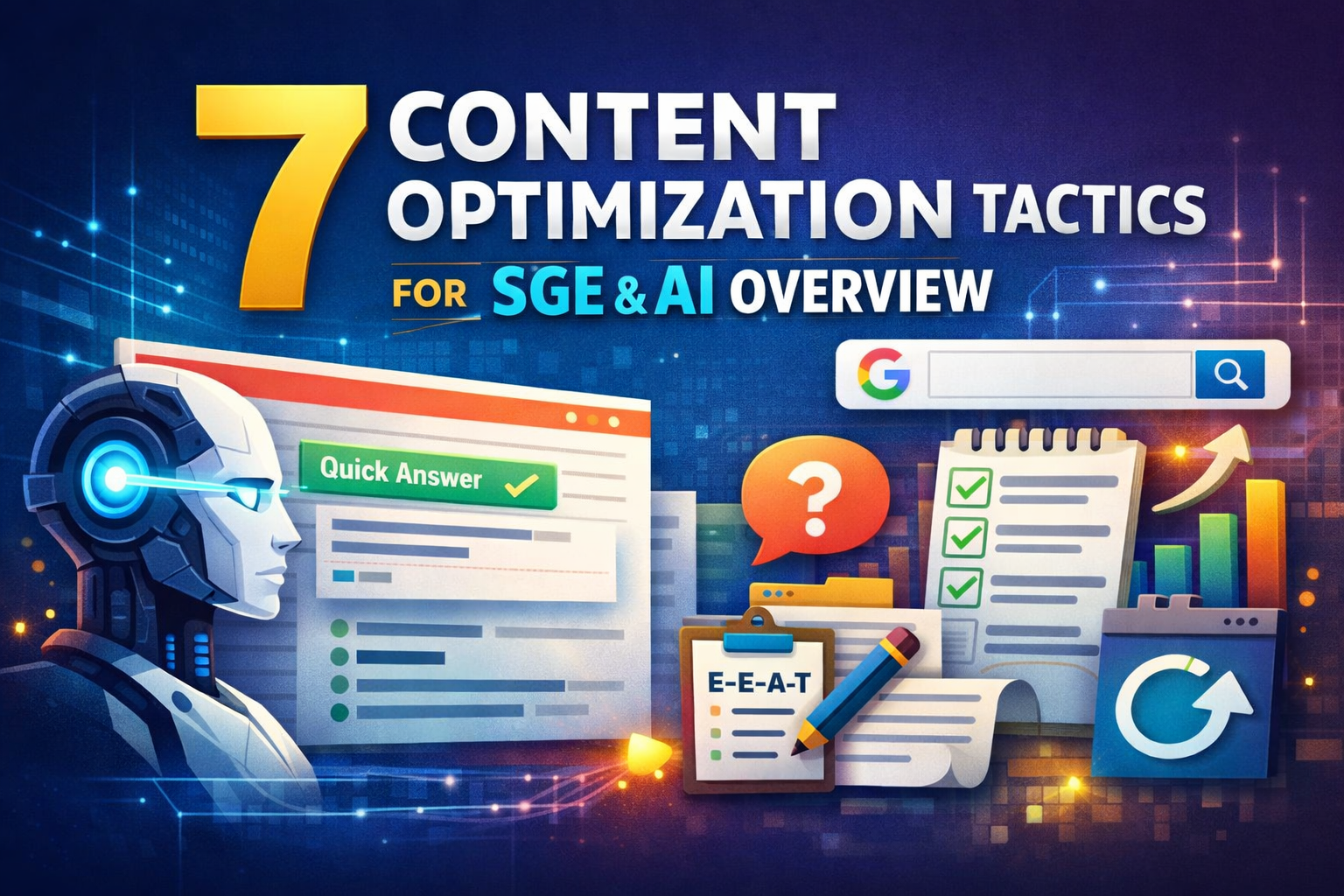
    Search engines no longer work the way they used to. With Google’s Search Generative Experience (SGE) and AI Overviews, ranking is no longer just about backlinks or keyword density. It’s about how clearly your content answers a question.

    AI doesn’t read your content like a human.
    It scans for meaning. It looks for structure. And it selects pages that deliver answers fast.

    If you want your pages to appear in AI-generated results, you need to rethink content optimization. Here are seven proven tactics that actually work in the SGE era.

    1. Why Should You Answer First and Explain Later?

    The most important answer should appear in the first 2–3 lines of your content.

    AI systems don’t wait for long introductions. If the answer is buried deep in your content, AI may never pick it up.

    Once the answer is clearly stated, you can expand on it with explanations, examples, and supporting details.

    Why this works

    SGE and AI Overviews are designed to extract direct answers, not stories. The faster your page delivers clarity, the higher the chance it gets featured.

    When it applies

    This works best for:

    • How-to guides
    • Definitions
    • FAQs
    • Problem-solution content

    If your introduction delays the answer, AI often skips the page entirely.

    2. How Does Writing Like You Speak Improve Content Optimization?

    AI prefers content that sounds natural and human.

    That means:

    • Short sentences
    • Simple words
    • No forced keywords

    If your content sounds robotic to a human reader, it won’t work for AI either.

    Why this matters

    Modern AI models are trained on real conversations. They recognize clarity and simplicity far better than complex, keyword-stuffed paragraphs.

    A good rule of thumb:
    If you wouldn’t say the sentence out loud, rewrite it.

    3. Why Are Question-Based Headings Better for AI Results?

    Headings act as signals for AI.
    When your headings are written as real questions, AI understands your content faster.

    Example

    ❌ Content Optimization Techniques
    ✔️ How do you optimize content for AI search results?

    Why this works

    SGE is built around search intent and questions. When your headings match how users search, AI can instantly map your content to a query.

    This small change can significantly improve how your content is interpreted.

    4.Why Should One Page Focus on One Clear Intent?

    SGE dislikes confused pages.

    Don’t mix:

    • Definitions
    • Comparisons
    • Tutorials
    • Multiple topics

    One page should answer one main question completely.

    Why this works

    AI tries to classify your page within seconds. If it can’t identify a single intent, it won’t trust your content enough to feature it.

    Clear intent is now a core principle of effective content optimization.

    5. Why Context Matters More Than Word Count

    Long content doesn’t win.
    Clear, helpful content does.

    Instead of adding fluff, focus on context:

    • When this approach works
    • When it doesn’t
    • Common mistakes to avoid

    Remove anything that doesn’t directly help answer the main question.

    Reality check

    AI does not reward length.
    It rewards relevance and usefulness.

    6. How Does Showing Experience Help with E-E-A-T?

    AI prefers content that feels real, not generic.

    Mention:

    • What you tested
    • What failed
    • What surprised you

    Generic advice blends in.
    Experience stands out.

    This is especially important for Experience and Expertise, two critical components of Google’s E-E-A-T framework.

    When strategies are tested and documented—like we do while working with clients as an SEO Agency Kolkata businesses rely on—it builds trust with both users and AI systems.

    7. Why Refreshing Old Content Is Critical for SGE?

    SGE strongly favors fresh, updated content.

    Refreshing old pages doesn’t mean changing dates. It means improving:

    • Opening answers
    • Examples
    • Structure
    • Overall clarity

    Many websites see faster gains by updating existing pages than by publishing new ones.

    This approach is often used by any serious SEO Company in Kolkata focused on long-term visibility rather than short-term traffic spikes.

    Final Takeaway

    If AI can’t understand your page in the first few lines, it won’t feature it.

    In the age of SGE and AI Overviews:

    • Clarity beats creativity
    • Structure beats storytelling
    • Experience beats theory

    Strong content optimization today means writing content that humans trust and AI can understand instantly.

  • Stop Blogging Daily: It’s Not Helping Your SEO

    Stop Blogging Daily: It’s Not Helping Your SEO

    For a long time, businesses have been told that consistency is the key to SEO success. The advice sounds simple: publish blogs daily, stay active, and rankings will follow.

    But in reality, SEO blogging doesn’t work that way anymore.

    Many websites publish content every day and still fail to grow. Traffic remains stagnant, rankings don’t improve, and leads never arrive. The issue isn’t a lack of effort—it’s a misunderstanding of how search engines evaluate content today.

    Blogging Daily Won’t Fix Your SEO — Here’s Why

    Daily publishing creates the illusion of progress. You see new URLs, fresh content, and regular activity. But Google doesn’t measure effort; it measures usefulness.

    Modern SEO blogging is not about how often you publish. It’s about whether your content genuinely helps users.

    That’s why most websites that blog daily still don’t grow.

    The Myth: More Blogs Automatically Mean Better Rankings

    Many website owners believe that publishing more blogs will naturally lead to better rankings. The logic feels sound—more pages should mean more chances to rank.

    So they keep publishing.
    Every single day.

    Unfortunately, Google doesn’t reward volume alone. Without focus, strategy, and intent, more content simply means more ignored pages.

    The Reality Shift: Google Doesn’t Reward Activity

    Search engines don’t care how busy your content calendar is. They care about results.

    Daily effort does not equal SEO growth.

    Google looks at signals like:

    • Does this page satisfy the search intent?
    • Does it offer clarity or depth?
    • Does it add something new compared to existing results?

    If the answer is no, frequency won’t help.

    This shift is why SEO blogging today requires strategy, not speed.

    Why Most Blogs Fail to Rank

    Most blogs fail because they lack purpose.

    They often:

    • Target random topics with no keyword strategy
    • Exist only to “post something”
    • Fail to solve a specific user problem

    From an SEO perspective, these pages don’t deserve to rank because they don’t provide value. They dilute authority instead of building it.

    One Helpful Page Beats Dozens of Average Posts

    A single focused, well-researched page can outperform thirty average blog posts.

    Why? Because quality compounds.

    Strong SEO blogging creates:

    • Long-term relevance
    • Higher engagement
    • Natural backlinks
    • User trust

    Quantity doesn’t compound. It just fills your website with pages Google has no reason to prioritize.

    Why Google Quietly Ignores Most Blogs

    Google doesn’t punish weak content—it simply ignores it.

    If your blog:

    • Doesn’t match what users are actually searching for
    • Repeats what already exists online
    • Doesn’t help users make decisions

    It won’t rank.

    During audits conducted by any experienced SEO Company in Kolkata, this is one of the most common findings: plenty of content, but very little value.

    What Actually Works in SEO Blogging

    Real SEO growth comes from fewer, stronger pages.

    Effective SEO blogging focuses on:

    • Clear intent and topic focus
    • Direct, useful answers
    • First-hand experience and expertise
    • Content written for humans, not algorithms

    This is why a professional SEO Agency in Kolkata will often recommend improving existing pages instead of publishing new ones daily.

    Optimization beats repetition.

    The Business Perspective Most Websites Miss

    Blogs don’t rank because they exist.

    They rank because they deserve to exist.

    Search engines follow users. If users trust, read, and engage with your content, rankings follow naturally. That’s the difference between content written to “stay consistent” and content written to create impact.

    The Biggest SEO Blogging Mistake

    Most websites blog daily to feel productive.

    But Google doesn’t reward productivity.
    It rewards results.

    If a blog post doesn’t educate, clarify, or solve a problem, publishing it more often won’t change the outcome.

    Conclusion

    Before writing your next blog, pause for a moment.

    Ask yourself:

    • Who is this content actually for?
    • What problem does it solve?
    • Why should this page rank?

    Understanding this is the foundation of effective SEO blogging. And reading this blog before publishing your next one might save you months of wasted effort.

    FAQ’s

    1. Does blogging daily help SEO?

    No, blogging daily does not automatically improve SEO. Search engines prioritize content quality, relevance, and user intent over publishing frequency. One well-optimized, helpful page can outperform dozens of low-quality posts.

    2. What is SEO blogging?

    SEO blogging is the practice of creating content that solves specific user problems, matches search intent, and provides clear, valuable answers that search engines can trust and rank.

    3. How often should I publish blog content for SEO?

    There is no fixed number. Publishing fewer high-quality, focused blog posts is more effective than posting daily without a clear strategy. Consistency matters only when content delivers value.

    4. Why don’t my blog posts rank on Google?

    Most blog posts fail to rank because they don’t match search intent, don’t add new insights, or don’t help users make decisions. Google quietly ignores content that lacks usefulness or originality.

    5. What matters more for SEO—quality or quantity?

    Quality matters far more than quantity. High-quality content builds authority, earns trust, and attracts backlinks, while large volumes of average content rarely improve rankings.


Copyright © ElevateDigi. All Rights Reserved.